


UNDP, KSBL workshop ‘sets stage for new generation of women leaders’
- Programme designed to strengthen leadership capabilities of women professionals in financial and economic decision-making roles
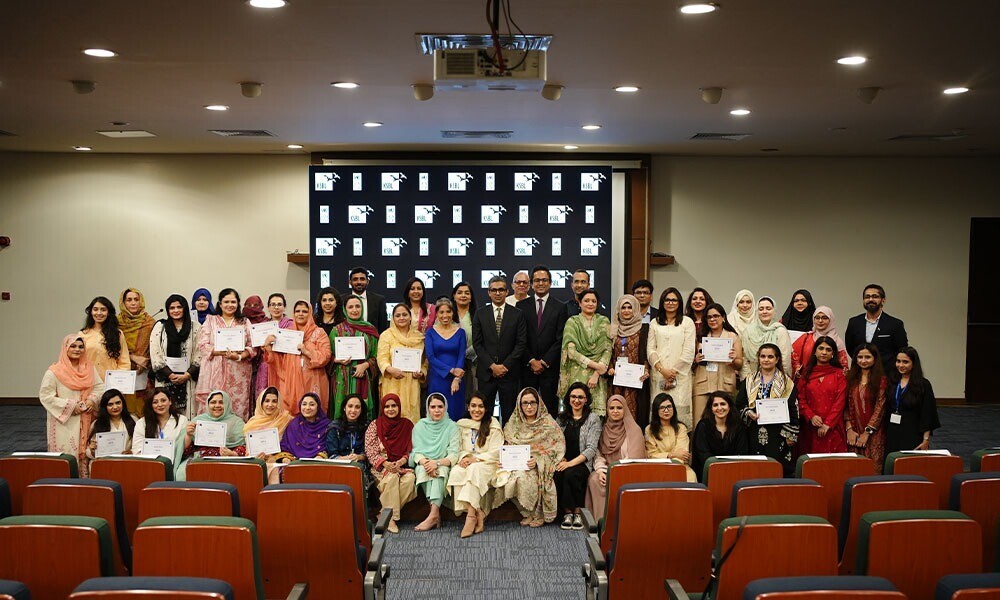
The United Nations Development Programme (UNDP) Pakistan, in partnership with the Karachi School of Business & Leadership (KSBL), recently concluded its three-day Women Economic and Financial Leadership Development (WELD) workshop.
The program was designed to strengthen the leadership capabilities of women professionals in financial and economic decision-making roles, equipping them with the tools to drive inclusive and resilient growth in Pakistan.
It was part of an effort to close Pakistan’s leadership gender gap by tackling institutional barriers and individual skill gaps.
“The challenges are real — from financial exclusion to systemic barriers that continue to hinder women’s full participation in decision-making,” said Van Nguyen, Deputy Resident Representative, UNDP Pakistan.
“But we also know the other side of the story: when women are given the tools, networks, and platforms to lead, they innovate, they create, and they transform entire communities. WELD is just the beginning — a foundation for stronger networks, shared purpose, and collective leadership that can accelerate Pakistan’s economic and social transformation.”
“As the first cohort graduates, WELD sets the stage for a new generation of women leaders who will shape Pakistan’s economic future with integrity, vision, and resilience,” she added.
According to a statement, WELD blended technical training with values-based leadership. Participants were told how to navigate complex policy and financial environments.
Guest speakers included Naz Khan, Principal Country Officer, IFC Pakistan, who spoke about navigating global financial systems, Sammer Sultan, Co-Chairperson, Shan Foods, discussed private sector leadership.
Sessions also explored economic resilience in uncertain contexts, financial literacy and insights for decision-making, and data-driven policy choices.
This inaugural edition brought together over 50 women leaders from organizations across Sindh, Punjab, Balochistan, and Khyber Pakhtunkhwa.
The cohort included professionals from the private sector such as Engro Corporation, Bank Alfalah, and Shan Foods. It also brought together senior representatives from federal and provincial government departments including Planning and Development, Finance, the State Bank, Health, and Education.
Speaking at the WELD Gala Dinner, Dr. Ahmad Junaid, Rector of KSBL, said: “WELD reflects our belief that leadership in finance and economics must be anchored in both competence and values.“
“At KSBL, we see this not just as a training program, but as a national capacity-building initiative — shaping leaders who can make decisions with integrity and a long-term vision for Pakistan’s prosperity.”






















Comments
Comments are closed for this article.