



ISLAMABAD: Pakistan’s auto industry, particularly Japanese assemblers, is reportedly making a last-ditch effort to block the government’s plan to allow the commercial import of five-year-old used cars, expected to be implemented from October 1, 2025, well-informed sources told Business Recorder.
Representatives from Original Equipment Manufacturers (OEMs) and auto parts vendors recently held detailed discussions regarding the proposed used car import policy and its potential impact on domestic auto industry.
The new import tariff policy is expected to adversely affect existing OEMs — especially Japanese companies — while Chinese firms, primarily focused on electric vehicles (EVs), are seen as less vulnerable to the tariff rationalization due to their EV-centric product lines.
Old car importers: Anti-Benami zone of FBR initiates big crackdown
According to industry sources, stakeholders informed the government that the total new car market in Pakistan is approximately 200,000 units annually. Under the current regime, around 40,000 used vehicles are imported each year.
Nadeem Malik, a leading manufacturer, warned that further relaxing import conditions for used cars would severely undermine the domestic industry’s access to its own market. “The volume is already so low that new investment and localization are struggling to survive,” Malik stated.
Shehryar Qadir, Senior Vice President of the Pakistan Association of Automotive Parts & Accessories Manufacturers (PAAPAM), informed the Minister that 17 WP29 regulations have been adopted by the local auto industry. However, he pointed out that these standards apply only to domestically manufactured vehicles, with no quality checks imposed on imported used cars.
“This creates an uneven playing field, putting local industry—which already faces significant challenges—at a serious disadvantage,” Qadir said.
He further noted that pressure is mounting to adopt additional WP29 regulations, which would further increase operational costs for local manufacturers.
“With the imposition of a carbon tax and now enhanced quality standards, policy direction seems to be artificially inflating the price of Internal Combustion Engine (ICE) vehicles to make EVs appear economically viable,” sources quoted industry stakeholders as saying adding that “Otherwise, EVs are currently so expensive that they don’t make business sense in a country like Pakistan.”
Akhlaq, General Manager of a large OEM, highlighted Pakistan’s limited purchasing power, with a vast majority of consumers at the lower-income level and only a small segment able to afford high-end vehicles.
“If prices are pushed up artificially, most of the population will be priced out of the market for new, locally manufactured cars,” he warned and added that “This policy shift risks turning Pakistan into a trading economy and a dumping ground for used vehicles from around the world.”
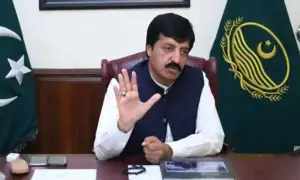
Following extensive discussions, the Minister announced the formation of a joint committee, including members from the Pakistan Automotive Manufacturers Association (PAMA) and PAAPAM. The committee will work on formulating a balanced policy regarding the commercial import of used cars.
According to an official statement, a government strategy is being developed to support the growth and export of the auto sector.
“After tractors and motorcycles, Pakistan will now export cars as well. The auto industry will be a key part of the new industrial policy,” the Minister stated.
Jam Kamal added that healthy competition in the Pakistani auto market is increasing and that tariffs will be gradually reduced over the next five years. He emphasized that all imported used cars must meet environmental and quality standards.
“The tariff reduction agreement with the United States has opened new opportunities for auto exports,” he continued.
Copyright Business Recorder, 2025













Comments
Comments are closed for this article.