


Lebanon president tells Iran security chief he ‘rejects all interference’
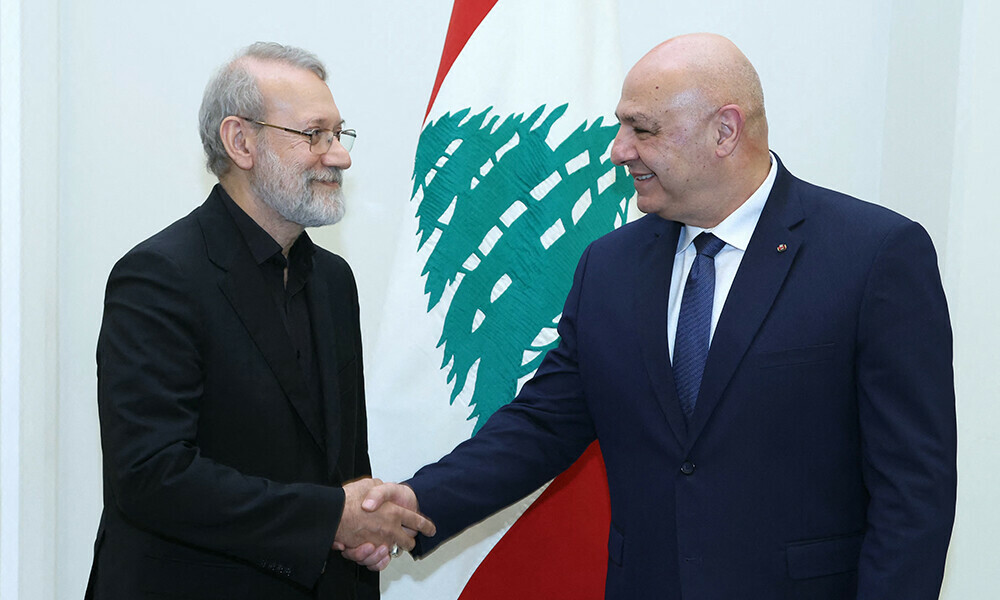

BEIRUT: Lebanese President Joseph Aoun told Iran’s visiting security chief on Wednesday that he rejected any interference in the country’s internal affairs, branding as “unconstructive” Iran’s statements on plans to disarm Hezbollah.
Iran’s Supreme National Security Council chief Ali Larijani’s visit to Lebanon comes after the Lebanese government ordered the army to devise plans to disarm Hezbollah.
Following his arrival in Beirut, Larijani vowed that his government would continue to provide support, after it expressed opposition to the disarmament plan.
“We reject any interference in our internal affairs,” Aoun said, adding that “it is forbidden for anyone… to bear arms and to use foreign backing as leverage,” according to a statement from the Lebanese presidency posted on X.
Iran and its so-called “axis of resistance” have suffered a series of blows in their long-running rivalry with Israel.
Iran and Israel went to war in June, with the United States stepping in briefly to bomb Iranian nuclear facilities.
Hezbollah suffered devastating losses in a year of hostilities with Israel that ended with a November 2024 ceasefire.
Iran names Larijani to head top security body
A month later, Syria’s president Bashar al-Assad was ousted, depriving Hezbollah of its main conduit for weapons and supplies from Iran.
Iran has declared its firm opposition to the Lebanese government’s bid to disarm Hezbollah, while the movement itself has slammed the decision as a “grave sin”.
Weakening grip
Before the war with Israel, Hezbollah was believed to be better armed than the Lebanese military.
It long maintained it had to keep its arsenal in order to defend Lebanon from attack, but critics accused it of using its weapons for political leverage.
In Beirut, Larijani vowed continued support.
“If… the Lebanese people are suffering, we in Iran will also feel this pain and we will stand by the dear people of Lebanon in all circumstances,” Larijani told reporters.
As well as President Aoun and Prime Minister Nawaf Salam, Larijani was due to meet parliament speaker Nabih Berri, who is close to Hezbollah.
Hezbollah’s grip on power has slipped since the ceasefire with Israel and the new Lebanese government, backed by the United States, has moved to further restrain it.
Iran’s “axis of resistance” is a network of armed groups in the region, including Hamas in Gaza and Yemen’s Huthi rebels, united in their opposition to Israel.























Comments
Comments are closed for this article.