



Against all odds of what appeared as insurmountable obstacles, Mohammed Ali Jinnah carved a Nation for the Muslims of the subcontinent. He is possibly the only leader to have created a country through resolute negotiations against two hostile parties, the British government and the Indian National Congress. His task was formidable because he was pitted against giant politicians like Gandhi and Nehru, with the Viceroy Lord Mountbatten openly supporting them.
The transition was expected to be troublesome but no one anticipated the bloody carnage it would bring. The bloodshed followed the independence. This too happened because of Hindu zealots led by Vallabhai Patel, who refused to accept the partitioning of the subcontinent and the creation of an Islamic country.
The riots were bloody. Muslims were massacred. Gandhi, a possibly noble soul and Nehru, the politically correct and astute person, aligned with the oppressed Muslims. Gandhi went on a fast. Patel disliked Gandhi for his softness towards Muslims.
My father, in his personal copy, underlined in red while reading, (in year 1995) Maulana Abul Kalam Azad’s much publicized book, “India Wins Freedom”, the following lines: “Sardar Patel was not alone in this attitude towards Ganhiji’s fast… A section of Hindus under the leadership of the Mahasabha and the RSS went about openly saying that Gandhiji was helping Muslims against Hindus. They organised opposition even to his prayer meetings where under instructions of Gandhiji, verses from the Quran and the Bible were read along with Hindu scriptures.
After he came to Delhi in September 1947, they asked him to stop this practice. People were incited against Gandhiji by describing him as the enemy of the Hindus. One pamphlet went so far as to say that if Gandhiji did not change his ways, steps should be taken to murder him“. They did it.
Nathuram Godse, a worker of RSS, did it by pumping enough bullets into Mohandas Karamchand Gandhi’s frail body. I quote this for readers to know and correlate Patel’s actions with what Narendra Modi is doing in India today. The massacre of Muslims continues unabated. Narendra Modi is reincarnation of Vallabhai Patel. We however remain still thankless to Jinnah for getting us this freedom. We have ruined Jinnah’s Pakistan.
Jinnah in an interview to the then famous and popular US magazine “LIFE”, which was carried in their edition of 5th January 1948, mentions and enumerates the several challenges besetting the fledgling new country. A reading of those challenges today makes me sad and fills me with regrets that those very challenges continue to dominate our lives even after over seven decades.
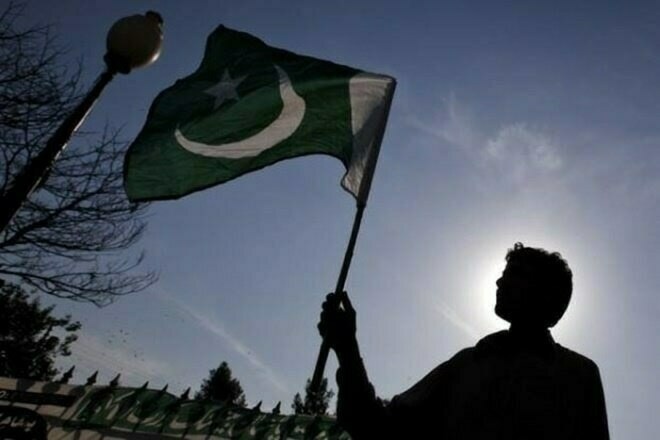
We shall celebrate tomorrow our 78th Independence Day anniversary. A time to rethink; a day to faithfully and sincerely indulge into self-introspection, asking what each of us has done to strengthen our Nation. All improvements begin with self. The process of self-correction must dominate the itch and temptation to “correction of others”.
The decade of 1947-57 was a period of turmoil and instability, which otherwise should have been a period of rebuilding and strengthening the nascent State. This period saw the departure of many of our founding fathers, including Quaid e Azam. This was followed by the tragic assassination of Nawabzada Liaqat Ali Khan, our first premier. The country had gone into a tail spin.
The political instability only grew with each new experimentation on the form of government the country needed: from Westminster model of parliamentary democracy to authoritarian model. The writing of the Constitution remained in the factory till the promulgation of the 1956 Constitution. This had a very short shelf-life.
The Constitution construction became both an enabling and a disabling exercise in forging unity between provinces, one of which was separated by 1,000 kilometers of enemy territory. We were struggling with decision on what should be the national language. We attempted to impose Urdu upon a 100 percent Bengali population. Riots after riots dominated the political scene.
The changes within the governments and of the governments in Pakistan were so sudden, rapid and regular that Nehru made a jovial remark that “I m prepared to talk to Pakistan on all issues including Kashmir, but by the time I change my Sherwani (tunic) they change their government.” The nation, politics, economics and people were in absolute disarray.
In view of the game of musical chairs that was being played out by the politicians, the armed forces sitting on the sidelines were slowly acquiring power to intrude in the political arena.
Following the adoption of the 1956 Constitution, the Governor General Iskander Mirza was elected President by the Constituent Assembly. This period marked for serious skirmishes between the army and the government. President Mirza made a cardinal mistake of Himalayan proportion: he appointed the serving Army Chief, Gen Ayub Khan as the defence minister. In less than a year, in October 1958, Gen Ayub Khan deposed the President, imposed Martial Law and exiled Iskander Mirza. The curtain on the fragile and strong as a spider cobweb fortress of democracy fell, and was to last till the country’s dismemberment in December, 1971.
The decade between 1958 and 1968 was one of stability, economic growth and development. The political laboratory remained at work. They developed and brought in the concept of Basic Democracy. In other words, controlled and monitored democracy under a Presidential form of government was introduced. Again it withered away at great speed.
In the neighbourhood, however, India kept building and consolidating its institutions. They were fortunate to have Jawaharlal Nehru rule without interruption for 17 long years. He set India’s direction. Democracy gained a complete foothold.
Ayub Khan and his team did extremely well in setting up industrialization. Pakistan emerged as a rising star of South Asia. Our Foreign Policy architects balanced themselves well between Washington and Beijing. The tight rope walk was a classic act without the cover of base nets.
Z. A. Bhutto emerged as a young, charismatic and dynamic foreign minister. He framed closer relations with both Beijing and Moscow, alongside cooing up to the power across the Atlantic. Pakistan had gained a place and respect in the comity of nations.
The misjudged war of 1965 with India put us behind economically. Ayub Khan was disappointed with its outcome. This started to tell upon his health. He became sick, frail and weak. Additionally, Z. A. Bhutto turned his guns on President Ayub following the Tashkent declaration. Bhutto resigned from the cabinet in protest. He became the leader of the masses, particularly the youth. He formed Pakistan People’s Party.
The mass agitation against President Ayub resulted in his resignation. Instead of handing charge to the Speaker of the Assembly, he stepped down by making way for the army chief, Gen Yahya Khan, who imposed martial law and announced elections.
The decade of 1968- 78 made Pakistan witness its historic lows. The first-ever fair and free elections marked the beginning of the clash of egos. The refusal to give power to the elected representatives led to widespread rioting in the then East Pakistan, eventually leading up to calls for secession and independence. The enemy neighbour exploited our internal unrest .The 1971 war with India was a political and military disaster. The surrender that took place in Dhaka was the worst in the Muslim history. Bangladesh was created.
Jinnah’s Pakistan was dismembered. The intoxicated military junta handed power to the most popular ever leader of West Pakistan, Bhutto. As travesty of democracy, ZAB crowned himself as the first-ever civilian martial law administrator and President, in December, 1971.
As part of his economic policy he nationalised key industries including banking. The move was popular but disastrous and its remnants still ails us. He restored dignity for Pakistan. He negotiated the release of over 90,000 Prisoners of War from India. He regained more than 5000 sq miles of territory that was lost in war. The greatest credit that ZAB deserves is that he gave hope to a nation in utter despair. He restored respect for the armed forces whose morale was at the lowest ebb.
In the arena of foreign policy he gave fresh impetus to relations based upon mutual respect. He aligned the Arabs with us. He became extremely popular in the Islamic world. Pakistan under his leadership hosted the historic Lahore Islamic Summit under the aegis of Organisation of Islamic Cooperation (OIC). The ties with China were made more formidable. He exported manpower to the Middle East, a policy that continues to benefit us till date. He began the nuclear programme.
All great leaders make small mistakes and end up with gigantic negative results. He called for snap elections, which he would have any case won hands-down but the over enthusiastic sycophants indulged in rigging the results. The consequence was mass agitation supported by dollars that came from somewhere, as he himself put it. Just when the talks with the opposition over re-elections were to be agreed and signed, the wily General Ziaul Haq arrested him in a coup and declared martial for the third time in the country’s short history.
(To be continued)
Copyright Business Recorder, 2025
The writer is a Senior Banker & Freelance Contributor




















Comments
Comments are closed for this article.