



This is apropos two letters to the Editor titled above carried by the newspaper on Tuesday and yesterday. This extension is not purely theoretical.
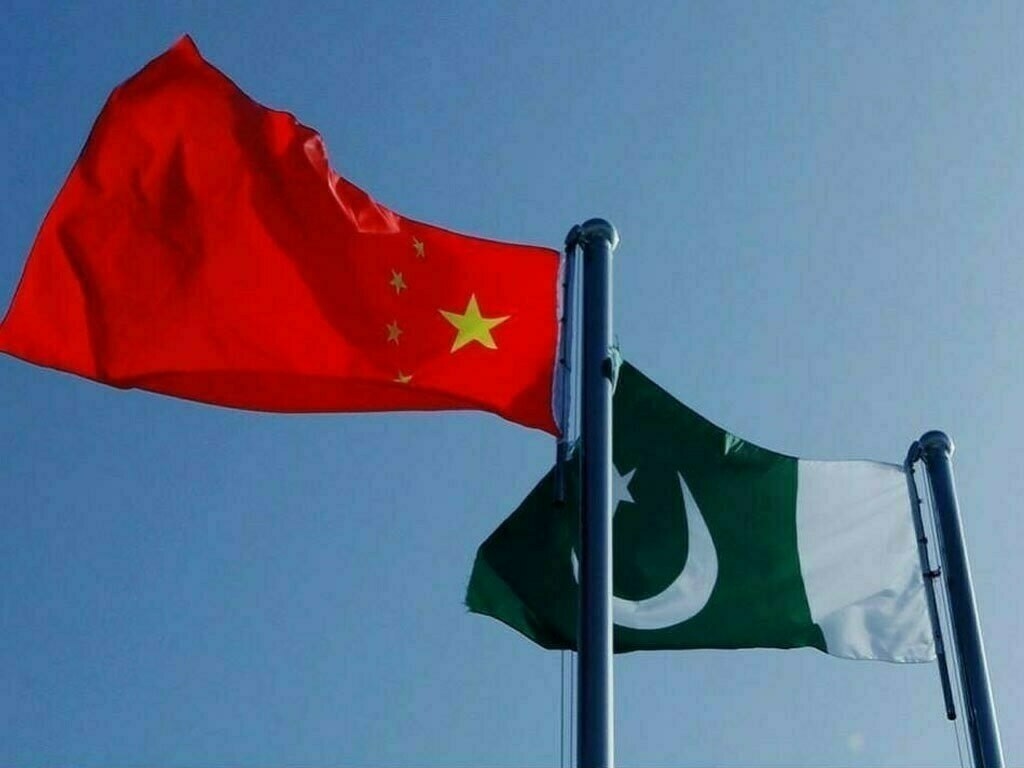
China is already involved in several proxy confrontations—with the United States over Taiwan and trade, with the Philippines over the South China Sea, and now, possibly, with India over Pakistan. It’s no surprise, then, that Gao warned of the catastrophic consequences of escalation:
“The deterioration of the situation between India and Pakistan is a reason for great concern. These are two big countries, both armed with nuclear weapons… the consequence will be too much for either India or Pakistan to bear.”
He warned against viewing such a crisis through a limited lens:
“This is the time for both India and Pakistan, and all other stakeholders, to work very closely to get to the bottom of the situation, rather than allowing this attack to be the trigger.”
Perhaps the most alarming yet underappreciated part of Gao’s message came in his remarks about the weaponization of water — a real threat in a region reliant on the Indus basin. India has previously threatened to cut or reduce Pakistan’s water access under the Indus Waters Treaty.
Professor Gao minced no words:
“In the context of war, any stopping of a dam or the flow of the water causing drought or loss of life in another country may be considered a war crime. In a non-war context, any such action may be considered a crime against humanity.”
This was more than a caution. It was a legal and diplomatic shield, warning that Chinese diplomatic and possibly legal mechanisms would be employed to protect Pakistan from such strategic sabotage.
Copyright Business Recorder, 2025
The writer is a former Press Secretary to the President, An ex-Press Minister at Embassy of Pakistan to France, a former MD, SRBC Macomb, Detroit, Michigan




















Comments
Comments are closed for this article.