


Opposition alliance chief puts his full weight behind anti-govt protest plan
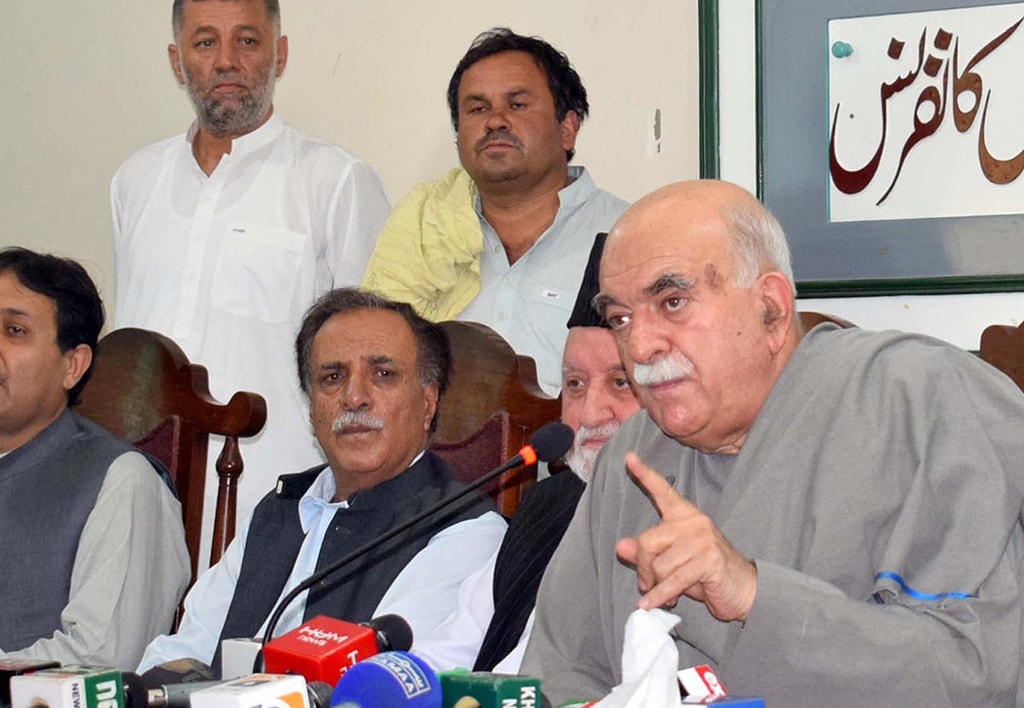

ISLAMABAD: Amid a deepening political crisis, an opposition alliance led by Tehreek-e-Tahafuz-e-Ayeen-e-Pakistan (TTAP) on Thursday announced plans for a pivotal two-day All Parties Conference (APC) on July 31 and August 1.
The gathering aims to bring together political leaders, civil society members, and institutional representatives to address the country’s mounting constitutional and governance challenges.
Speaking at a press conference alongside senior leaders of opposition parties particularly Pakistan Tehreek-e-Insaf (PTI), TTAP chairman Mahmood Khan Achakzai described the moot as more than symbolic.
“From Gilgit-Baltistan to Gwadar, we will mobilise – street by street, door to door – but without violence,” he said, emphasising the alliance’s commitment to a constitutional and peaceful struggle for reform.
Achakzai, a longtime advocate for democratic transparency, criticised the ruling coalition’s use of force against political opponents.
He accused the government of suppressing dissent through intimidation and incarceration, warning that the current climate reflected coercion rather than democracy.
A central demand of the alliance is the establishment of an independent election commission to restore genuine electoral representation.
“We demand that Pakistan be governed by the ballot, not by force,” Achakzai asserted.
PTI Secretary General Salman Akram Raja, citing directives from jailed party founding chairman Imran Khan, echoed these concerns.
“This is not just a PTI movement; it is a voice for all those denied justice and silenced by fear,” Raja said, calling on citizens to peacefully express their grievances in a nationwide protest scheduled for August 5.
Raja also alleged that state authorities violated due process in Khan’s ongoing legal proceedings, claiming the former prime minister was denied access to legal counsel during a recent hearing.
“This jail trial is a clear affront to judicial transparency,” he added.
Allama Nasir Abbas, leader of Majlis Wahdat-e-Muslimeen (MWM), criticised recent government decisions regarding the Supreme Court’s
ruling on seats reserved for women, calling them emblematic of systemic manipulation.
While rejecting armed resistance, Abbas warned of significant protests on August 5 and cautioned that any state efforts to disrupt peaceful demonstrations would have serious consequences.
Meanwhile, PTI spokesman Sheikh Waqas Akram condemned the government’s intensified crackdown on opposition leaders, citing detentions and arrest warrants against senior figures including Raja Basharat, Ali Amin Gandapur, Dr Arif Alvi, Omar Ayub, and others.
He described these moves as politically motivated attempts to stifle dissent ahead of the protests.
“The government’s tactics will neither intimidate nor silence us,” Akram said. “We stand firm for constitutional supremacy, judicial independence, and the restoration of democracy.”
Highlighting the personal toll of the political strife, PTI’s Babar Awan painted a grim picture of Imran Khan’s incarceration.
He accused authorities of subjecting Khan to solitary confinement under harsh conditions, denying him access to medical care and basic necessities – violations he likened to breaches of international prisoner rights.
“Imran Khan is not just the most popular leader in Pakistan; he is a symbol of hope,” Awan said. “Yet he is treated worse than a prisoner of war.”
Despite these challenges, Awan insisted that Khan remains “unbroken and unwavering,” continuing to inspire millions amid political uncertainty.
Copyright Business Recorder, 2025


























Comments
Comments are closed for this article.