


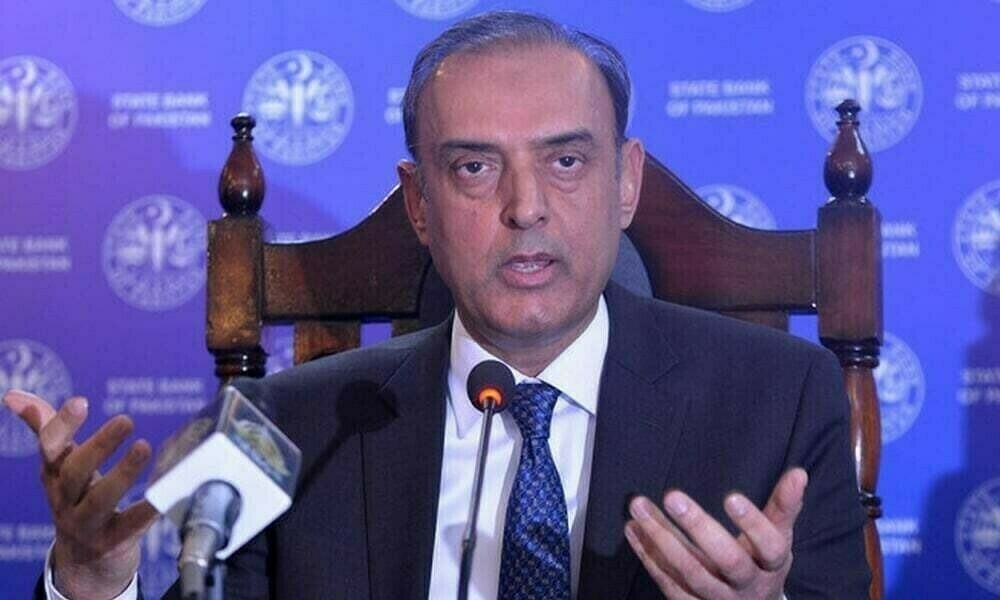
EDITORIAL: The Governor State Bank of Pakistan while speaking at the launch ceremony of Women Entrepreneurs Finance Code stated that unlike in the previous boom-bust cycles the current policy mix is conducive to lasting rise in economic activity rather than a short-sighted, fragile and populist sugar rush.
This observation is backed by an optimism displayed in the last four Monetary Policy Statements (MPS). It is significant that the 11 September 2024 International Monetary Fund (IMF) staff report for the 2024 Article IV consultations and request for an Extended Arrangement under the Extended Fund Facility noted that: “Economic volatility has only increased over time, with a tight correlation between Pakistan’s boom-bust economic outcomes and its macroeconomic policies.
The repeated attempts to boost economic activity through fiscal and monetary stimulus have not translated into durable growth, as domestic demand increased beyond Pakistan’s sustainable capacity, resulting in inflation and depletion of reserves, given a strong political preference for stable exchange rates.
Each subsequent bust has further harmed Pakistan’s policy making credibility and investment sentiment.” Tellingly, a detailed analysis by the Fund led to the conclusion that these cycles lead to recurrent balance of payment crises, and what the Governor would do well to note is that the discretionary monetary policy (an example being the demand for a low discount rate to jump-start private sector borrowing that in turn would raise industrial output and growth) induces boom-bust inflation cycles and significantly hinders economic growth.
The 16 June 2025 statement issued by SBP maintains that “the MPC anticipates the industry and services sectors to continue to drive economic growth in FY26. This assessment is supported by the sustained momentum in high-frequency indicators — including credit to private sector, imports of machinery and intermediate goods, and business sentiments — and easing financial conditions,” with higher imports a key component of the boom-bust cycle; and the 5 May 2025 statement making the same optimistic observation, “incoming high-frequency indicators suggest that economic activity is maintaining momentum, as reflected by rising sales of passenger vehicles and petroleum products (excluding furnace oil), increasing electricity generation, and improving business and consumer confidence.”
However, these sentiments are not backed yet by corroborating macroeconomic data particularly large-scale manufacturing sector’s growth rate that registered negative 1.52 percent July-April 2025 against 0.26 percent in the comparable period of the year before. And while credit to private sector did double from the 323.5 billion rupees July-June 2024 to 676.6 billion rupees in comparable period of 2025 yet the Governor has not yet refuted claims by independent economists that the rise in private sector credit is linked not to the output sector but to the stocks and securities sector.
The Governor further noted that the government and the apex bank remain steadfast in transitioning from recently hard-earned economic stability to a medium term economic transformation adding that this resolve is reflected in (i) prudent and cautious monetary policy though there is no consistency in the rationale provided while taking key discount rate decisions leading to the conclusion that the decisions are made by the IMF staff; (ii) fundamentals aligned exchange rate which has remained steady against the dollar even when the dollar plummeted against all major currencies after President Trump announced the imposition of tariffs; (iii) ongoing fiscal consolidation with sustained above 75 percent reliance on indirect taxes for revenue whose incidence on the poor is greater than on the rich; and (iv) improving debt dynamics which have certainly improved due to a reduction in the discount rate from 21 percent in June past year to 11 percent this year though total debt to GDP has risen to around 76 percent.
It is concerning that structural reforms continue to focus on raising revenue primarily through raising tax rates rather than amending the inequitable, unfair and anomalous tax structure, reducing debt by lowering the discount rate (which requires IMF approval) and the 1.2 trillion-rupee circular debt retirement indicates lower interest costs due to the lower applicable discount rate rather than any other management or structural reforms.
Debt rescheduling as a means to resolving sustained macroeconomic distortions and inefficiencies is unlikely to generate a lasting rise in economic activity and the focus must now shift to on well-defined structural reforms.
Copyright Business Recorder, 2025




















Comments
Comments are closed for this article.