


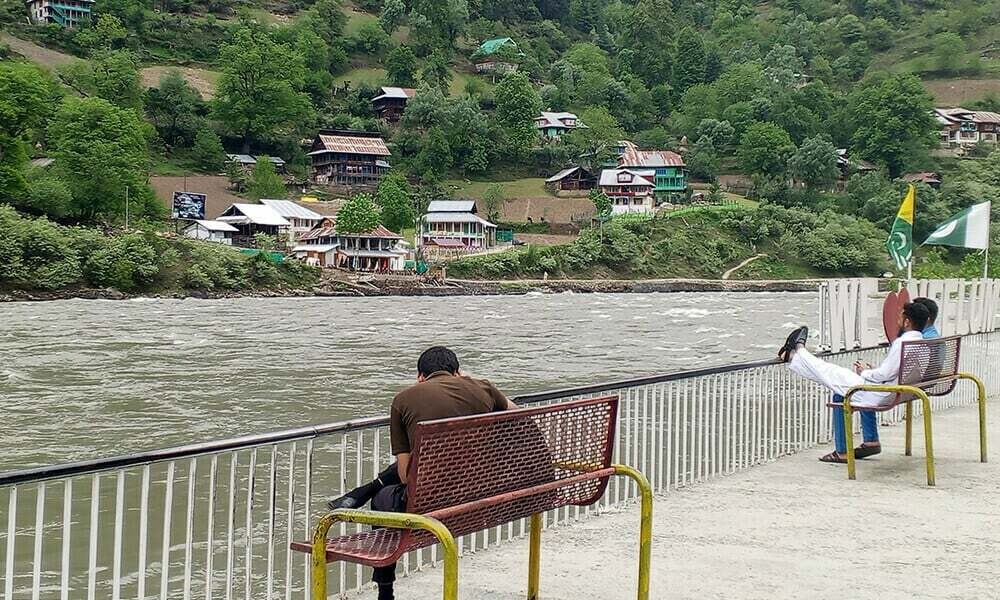
EDITORIAL: The 2025 Global Peace Index designates Kashmir as one of the world’s foremost escalation hotspots where tensions between India and Pakistan remain “perilously high” — a sobering assessment shared by independent political and defence analysts.
The Index put out by Sydney-based Institute for Economics and Peace explains that the situation in Kashmir exemplifies the fragility of ceasefire agreements in volatile geographic settings and underscores the dangers posed by non-state actors capable of triggering international crises.
Such a danger, however, can also arise from suspected false flag operations, like the 2019 Pulwama attack on a convoy of Indian security personnel in the illegally Indian Occupied Jammu and Kashmir (IIOJ&K), and last April’s Pahalgam terrorist attack.
Prime Minister Narendra Modi’s government used both incidents to launch military misadventures inside Pakistan only to face a punishing retaliation. The four-day May 7-10 conflict between the two countries was their deadliest in decades, brought to a halt by a ceasefire brokered by US President Donald Trump.
The Kashmir dispute, rooted in the unfinished agenda of Partition, has sparked three wars between Pakistan and India as well as limited skirmishes over the Line of Control in the disputed region.
The Modi government’s decision in August of 2019 to revoke Article 370 of the Indian constitution, — which granted limited autonomy to IIOJ&K — led to bifurcation of the disputed region into two entities, Jammu and Kashmir and Ladakh — over much of which China has territorial claims — and made Union territories.
PM Modi’s critics at home, including the main opposition Congress Party leader Rahul Gandhi, have been accusing his government of creating a common interest for Pakistan and China in wresting back Kashmir from India. In any case, the risk of escalation between the two nuclear-armed nations carries grave implications.
Even a conventional conflict, as seen last May, holds the potential of rapidly spiralling into a serious crisis. Discomfited by the outcome, Modi refuses to even acknowledge that the US played any role in defusing tensions in the latest stand-off with Pakistan. This hardline stance resonates with his far-right Hindu nationalist support base, but leaves little room for constructive diplomacy.
It is more than obvious that PM Modi feels let down by President Trump’s persistent assertions that he had helped bring about ceasefire between the two countries at India’s request. At the risk of annoying him, New Delhi has denied having made any such request.
Modi also passed on President Trump’s invitation to stopover in Washington on way back from the G7 Summit in Canada, on the pretext of some pressing business at home. Yet as the Global Peace Index indicates, without some sort of diplomatic engagement the chance of miscalculation or inadvertent escalation will only grow. Reinstating dialogue mechanisms, whether backchannel or bilateral, is essential for establishing durable peace and stability in South Asia.
Copyright Business Recorder, 2025










Comments
Comments are closed for this article.