


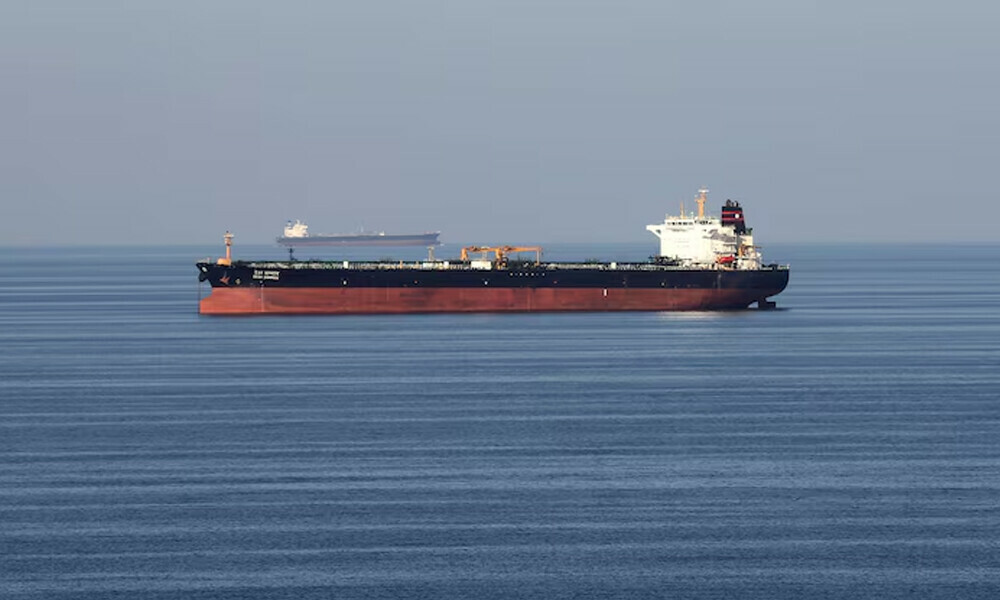
SINGAPORE: The costs of chartering tankers to move oil from the Middle East to Asia have climbed and ship bookings have slowed as the Israel-Iran conflict fuels worries of potential disruptions, industry sources told Reuters on Monday.
The global benchmark rate for a very large crude carrier (VLCC) moving oil from the Middle East Gulf (MEG) to Japan, known as TD3, rose over 20% on Friday after the tensions broke out, according to LSEG data.
On Monday, the MEG-Japan rate for crude held steady at about W55 on the Worldscale industry measure, according to a shipbroker.
However, further gains in freight rates were limited as traders, shipbrokers and charterers take a wait-and-watch stance even as market participants said they did not expect the Strait of Hormuz, a key shipping passage, to be shut.
“Fixing on Friday from the region all but came to a standstill. Physical marks may therefore not be indicative. Ships inside the gulf are still looking for outbound charters,” said Anoop Singh, global head of shipping research at Oil Brokerage.
“But the situation remains dynamic, and we expect to hear more on market open today,” said Singh.
Oil prices volatile as Israel-Iran conflict ramps up
“We have noted a minor increase in freight rates so far, but expect them to rise further as the week progresses,” according to Sentosa Shipbrokers.
Emril Jamil, senior analyst for crude and fuel oil at LSEG Oil Research, said freight rates will depend on any continued escalation and potential action by Iran on the Strait of Hormuz.
About 18 million to 19 million barrels per day of oil and oil products flow through the waterway, which connects the Gulf to the Gulf of Oman.
“The war risk premium is expected to remain high in the near-term given the continued exchange of tensions between the two countries. This will exponentially rise if other Middle East oil and gas infrastructure are attacked,” said Jamil.
He added that cargo insurance premiums could range from an additional $3 to $8 a barrel if there are further attacks.
For clean products, freight rates to ship around 90,000 tons of either gasoline, diesel or jet fuel from the Middle East to markets west of the Suez Canal were at $3.3 million to $3.5 million late last week, before the conflict, according to estimates from three shipping sources, but new offer levels have yet to emerge.
Some brokers are already giving market indications at $4.5 million levels, according to one Singapore-based trade source.
Several shipowners are holding back offering vessels for routes in the Gulf until the situation becomes more clear, which may increase opportunities for voyages from the Far East to the west of Suez and from northwest India, Sentosa shipbrokers said in a note to clients.




















Comments
Comments are closed for this article.