


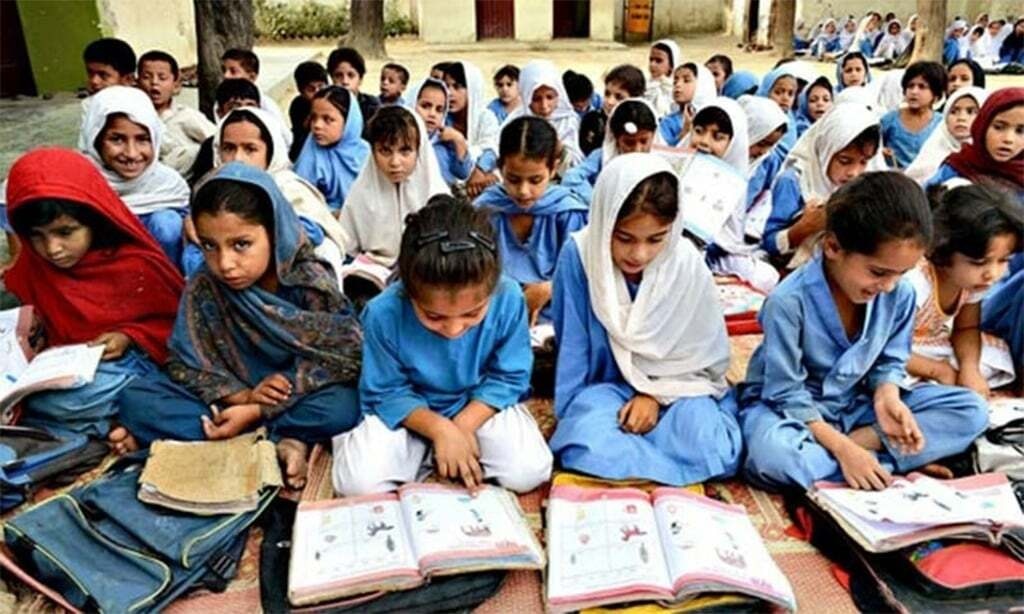

ISLAMABAD: The literacy rate in urban regions is considerably elevated, recorded at 74.1 percent, compared to 51.6 percent in rural areas, reveals the Economic Survey of Pakistan released on Monday.
According to the survey, Punjab exhibits the highest literacy rate among the provinces at 66.3 percent, followed by Sindh at 57.5 percent, Khyber Pakhtunkhwa at 51.1 percent, and Balochistan at 42.0 percent. According to the Population and Housing Census of 2023, Pakistan’s literacy rate stands at 60.7 percent. The male literacy rate of 68.0 percent is notably higher than the female literacy rate of 52.8 percent, the Economic Survey remarked.
One of the government’s key targets is to ensure that, by 2030, all girls and boys have access to and complete quality primary and secondary education, achieving relevant and effective learning outcomes.
A significant advancement of the census is to include literacy data pertaining to the transgender community, which has been reported at 40.2 percent. Furthermore, as per the Pakistan Education Statistics 2022-23 released by the Pakistan Institute of Education in Islamabad, the rate of Out of School Children (OOSC) stands at 38 percent, with 35 percent being male and 42 percent female. The distribution of OOSC is as follows: Punjab at 32 percent, Khyber Pakhtunkhwa at 30 percent, Sindh at 47 percent, and Balochistan at 69 percent. During the current fiscal year, the Government has allocated Rs61.1 billion to the Higher Education Commission (HEC), which includes Rs12.0 billion dedicated to a laptop scheme, aimed at implementing 159 development projects (comprising 138 ongoing and 21 new) in public sector universities and institutions under the HEC.
During July-April FY 2025, Rs32.6 billion were released. The HEC has initiated the IT Component of the Higher Education Development Programme in Pakistan (HEDP), a World Bank-supported project with a budget of US$ 400 million, which aims to modernize the technological infrastructure of the education sector in Pakistan.
Around 67 percent of schools in the country have access to electricity. There are disparities among provinces, with Punjab and ICT having higher access while Balochistan consistently lags behind. Punjab and ICT have higher percentage of primary schools equipped with water facilities, but Balochistan and AJK faces challenges, with only 23 percent coverage. Toilet access in schools varies widely among provinces.
Punjab, Khyber Pakhtunkhwa, and ICT have high coverage, but Balochistan struggles with only 40 percent access at the primary level. Pakistan maintains a moderate level of boundary wall access in schools, with Punjab, Khyber Pakhtunkhwa, and ICT leading in this area. As schools progress to higher levels, the availability of electricity, drinking water, toilets, and boundary walls increases.
The current government is investing considerable efforts and resources into the education sector, with initiatives designed to ensure quality education for all, promote access to girls’ education, facilitate the enrollment of diverse groups of out-of-school children, enhance teacher capacity, upgrade educational institutions, and foster skill development.
Copyright Business Recorder, 2025











Comments
Comments are closed for this article.