


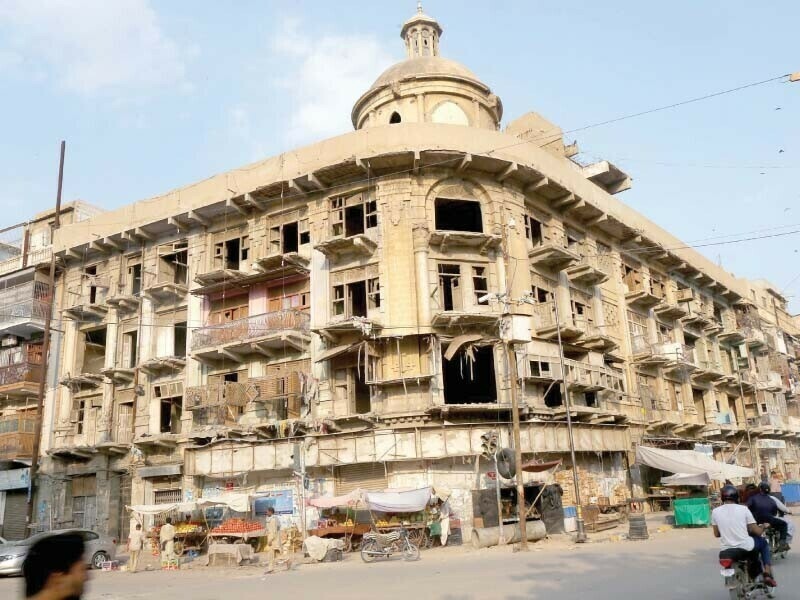
KARACHI: Mayor Karachi, Barrister Murtaza Wahab, has stated that the restoration of the city’s historic buildings is ongoing.
Following the restoration of Khaliq Dina Hall, Frere Hall, and Empress Market, the historic Denso Hall and Library has been reopened after renovation.
He emphasized the commitment to fulfilling promises, digitizing all KMC assets, and preserving the city’s heritage to educate the younger generation about Karachi’s rich history.
Speaking at the inauguration ceremony of the renovated Denso Hall and Library on M A Jinnah Road, Mayor Wahab urged various institutions, banks, and multinational companies to join hands in serving the city. He was accompanied by Deputy Mayor Salman Abdullah Murad, Parliamentary Leader Karamullah Waqasi, Deputy Parliamentary Leader Dil Muhammad, Labor Bureau President Aslam Samoo, Mumtaz Tanoli, Senior Director of Culture and Sports Mehdi Maloof, and other officials.
Mayor Wahab expressed that Karachi has everything, and what’s missing is a love for its soil. He said critics will keep criticizing, but the work will continue to make Karachi more beautiful and vibrant, restoring historic structures that represent the true essence of the city. He noted that Denso Hall, built in 1886, was the first public library open to locals. Previously, libraries and halls were only accessible to British officials and their families.
He expressed regret that the building was converted into a government office in the 1980s, depriving children and students in the area of its use. In 2007, the building was handed over to a private party, after which it remained closed until December 31, 2023. Now, it has been reopened for citizens as promised.
Mayor Wahab encouraged the public to use the space for literary, academic, and cultural events. He envisioned gatherings of religious recitations, qawwalis, inter-collegiate debates, poetry readings, and storytelling. He assured that the KMC budget was used transparently for the renovation.
He highlighted the spirit of the city’s past, noting that philanthropists once donated generously – such as Rao Ram Das gifting a clock for the hall, and over 3,000 books being donated by Persian and Khoja communities. The KMC itself is historically significant, having registered its first birth and death in 1872.



















Comments
Comments are closed for this article.