


ECP raises fresh questions over PTI leadership after alignment with SIC
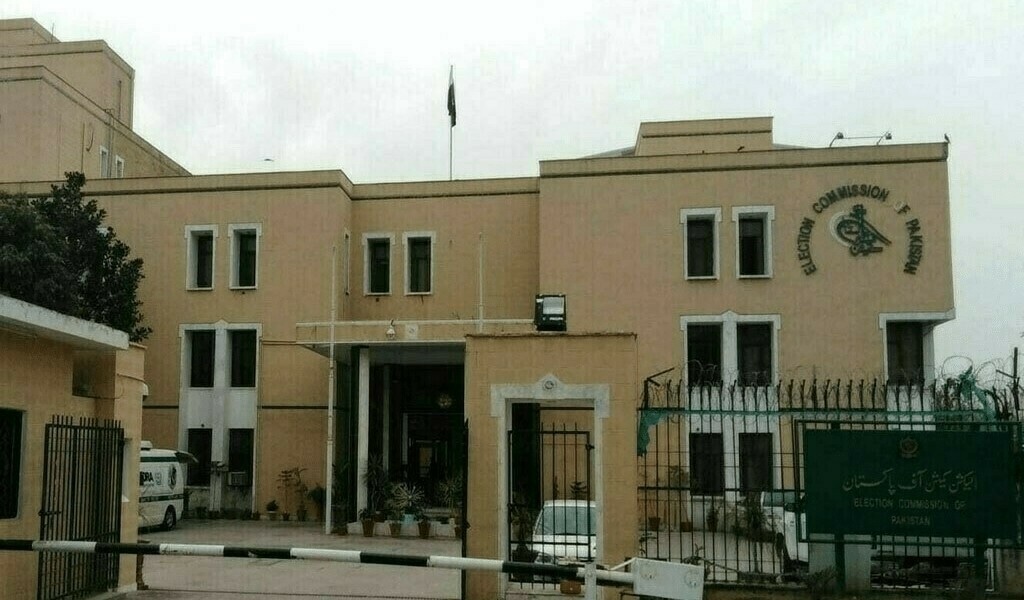
ISLAMABAD: The Election Commission of Pakistan (ECP) on Tuesday raised fresh questions over the leadership of Pakistan Tehreek-e-Insaf (PTI), casting doubt on whether Barrister Gohar Ali Khan can continue to serve as the party’s acting chairman after its alignment with the Sunni Ittehad Council (SIC).
A three-member bench of the ECP, headed by Chief Election Commissioner (CEC) Sikandar Sultan Raja, heard a case to examine whether PTI had fulfilled its obligations under electoral law, including the requirement to conduct intra-party elections.
The scrutiny follows a 2024 Supreme Court of Pakistan ruling which revoked PTI’s electoral symbol, citing its failure to conduct intra-party elections in accordance with electoral laws.
As a result, PTI candidates were forced to contest the general elections as independents. In the days that followed, they joined the SIC – a move in line with legal requirements mandating that independent lawmakers must align themselves with a political party shortly after their elections.
Justice (retired) Ikramullah Khan, a commission member representing Khyber Pakhtunkhwa, questioned the legitimacy of Barrister Gohar’s leadership. “How can he be the chairman of PTI if he has already joined SIC,” he questioned.
Aziz Bhandari, the counsel for PTI, responded sharply, arguing that the commission had overstepped its authority. He referred to a ruling from the Lahore High Court (LHC), stating that the ECP is not empowered to interfere in the internal affairs of political parties or to determine the legality of their internal electoral processes.
While Chief Election Commissioner Raja clarified that no final judgment would be issued at this stage, the commission’s Director General for Law underlined the statutory importance of intra-party elections.
The DG Law pointed out that PTI had failed to hold these elections as scheduled in 2021, instead ratifying a new party constitution through what he described as a “so-called general body,” bypassing the officially recognised National Council.
“How can financial audits be validated when a party does not have a properly constituted administrative framework,” he asked, raising doubts over PTI’s internal governance.
Akbar S Babar, a longstanding critic of PTI and petitioner in several related cases, alleged widespread dysfunction within the party’s administrative structure.
He urged the ECP to freeze PTI’s financial accounts and initiate a full investigation into its intra-party electoral process. “There is no organisational structure,” he claimed. “The elections held cannot be deemed legitimate.”
Defending the hearing, Barrister Gohar argued that PTI had complied with legal requirements, noting that full documentation of the intra-party elections was available on the party’s official website.
ECP member from Sindh, Nisar Durrani, acknowledged that PTI did conduct internal elections but maintained that the process fell short of legal standards.
PTI’s legal team also highlighted what they described as inconsistency in the ECP’s actions, saying the commission had instructed the party to conduct elections on 23 November last year but later rejected the results.
“If a political party fails to hold intra-party elections, does it cease to exist,” Bhandari questioned. “And if a decision has already been made, what purpose does today’s hearing serve.”
With the status of one of the country’s most prominent political parties and its leadership hanging in the balance, the hearing of the case was adjourned indefinitely.
Meanwhile, talking to journalists outside ECP building, Barrister Gohar said that the Jamiat Ulema-e-Islam-Fazl (JUI-F) has not yet informed his party whether it intends to join the opposition alliance.
“We will talk to Maulana Fazlur Rehman, and only then will it become clear what he plans to do,” he added.
Copyright Business Recorder, 2025



















Comments
Comments are closed for this article.