


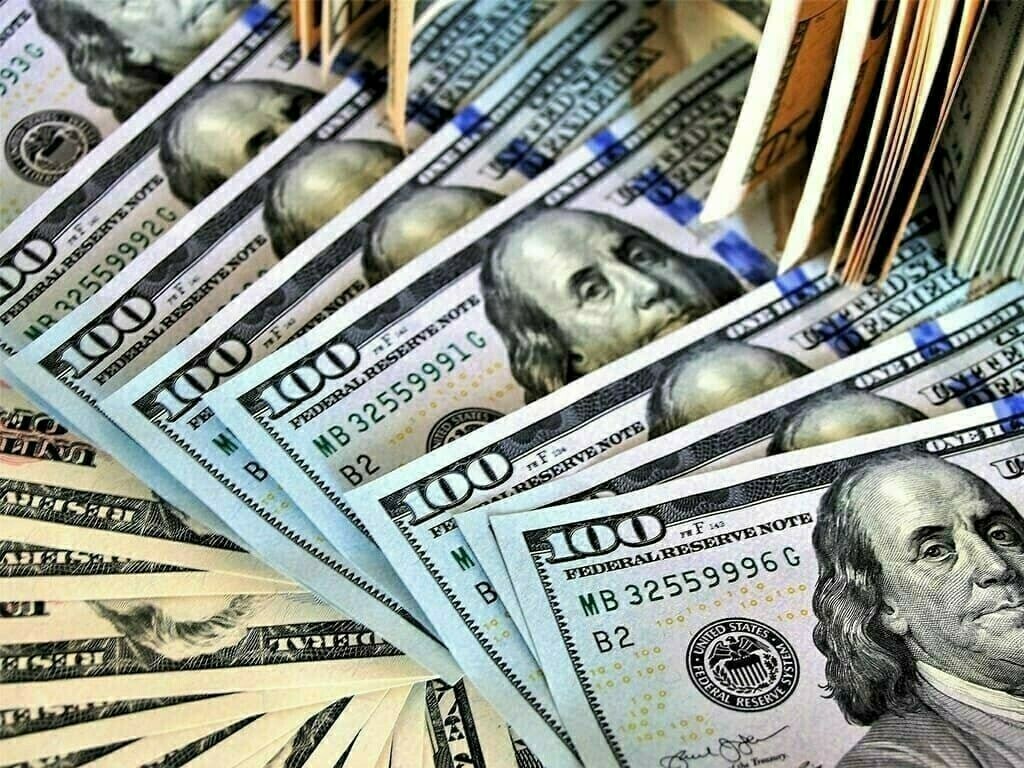

TOKYO: The U.S. dollar hovered near a 7-1/2-month high against the Japanese yen after the heads of the respective central banks reaffirmed the stark divergence in their policy paths at a European Central Bank conference overnight.
Federal Reserve Chair Jerome Powell - speaking on a panel with ECB President Christine Lagarde, Bank of Japan Governor Kazuo Ueda and Bank of England Governor Andrew Bailey – noted that two rate rises are likely this year, and did not rule out the possibility of a hike in July.
By contrast, Ueda reiterated that “there’s still some distance to go” in sustainably achieving 2% inflation accompanied by sufficient wage growth, the conditions the BOJ has set for considering an exit from ultra-easy stimulus.
Dollar flat; Aussie slides as inflation slows
The dollar’s surge of as much as 11.55% since late March to reach 144.62 yen on Wednesday for the first time since Nov. 10 has prompted increased verbal warnings from Japanese government officials this week that the move may have been too rapid.
The ministry of finance and BOJ intervened in the currency market last autumn when the dollar strengthened beyond 145 yen.
The U.S. currency eased back 0.15% to 144.265 yen in the Asian morning on Thursday.
For intervention, “the threshold may be higher this time because there’s just less public criticism of yen weakness right now,” due to a backdrop of a rising stock market, lower energy price pressures, and the return of foreign tourists, said Shinichi Kadota, senior FX strategist at Barclays in Tokyo.
“I’m not going to rule anything out, because they always try to surprise” when they intervene, he added. “But for it to have a sustainable effect, the underlying driver - which is monetary policy - also has to turn … and that monetary policy divergence is unlikely to change anytime soon.”
The U.S. dollar index - which measures the currency against six major peers, including the yen, euro and sterling - was little changed at 102.94, after climbing 0.46% overnight.
The euro was flat at $1.09125, following Wednesday’s 0.45% slide. Sterling edged up 0.07% to $1.26445, clawing back a little of the previous session’s 0.88% tumble.
Elsewhere, the Australian dollar largely shrugged off stronger than expected retail sales data for May. The currency was last up 0.3% at $0.66205, regaining some composure following Wednesday’s 1.27% tumble.
The Reserve Bank of Australia decides policy next week, and a sharp drop in headline inflation in a report released on Wednesday saw traders paring the odds of another rate increase.
China’s yuan was not far from Wednesday’s 7-1/2-month low of 7.2694 per dollar in offshore trading. Investors are watching carefully for the central bank’s next move after the official exchange rate was set in line with market projections, breaking a two-day run of firmer-than-expected fixings.
China’s monetary authorities took firm action to support the sliding yuan for the first time in nearly eight months on Tuesday, signaling discomfort with the currency’s recent weakness.



















Comments
Comments are closed for this article.