


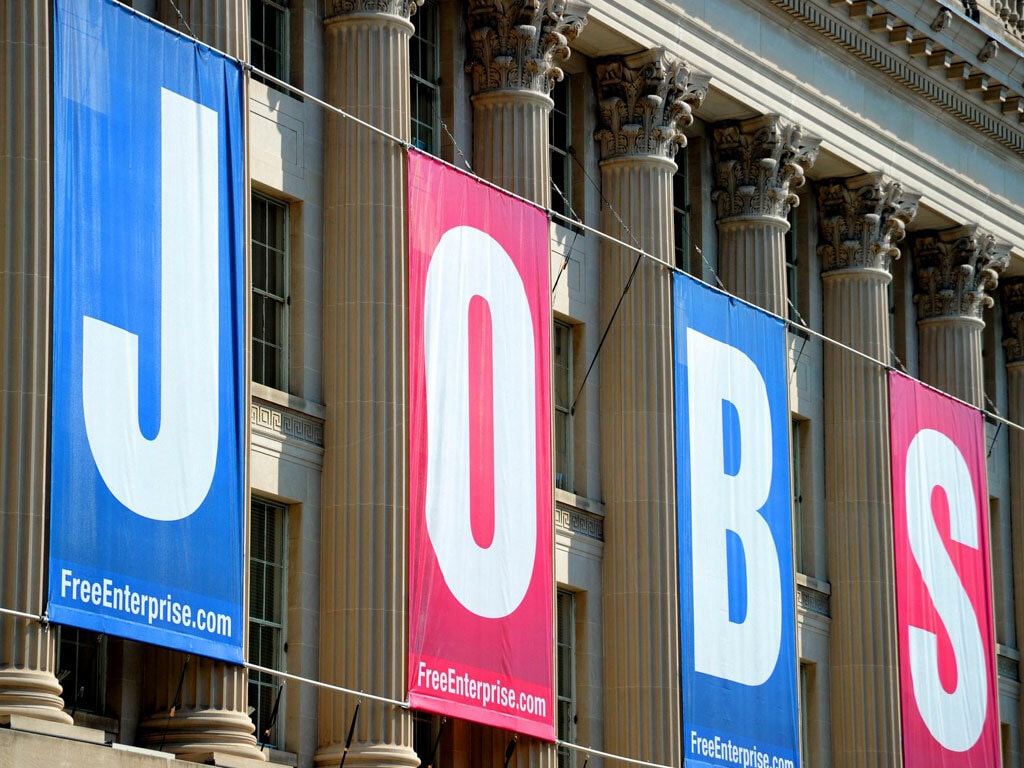
WASHINGTON: The number of Americans filing new claims for unemployment benefits held below pre-pandemic levels last week, while consumer spending increased solidly, putting the economy on track for a strong finish to 2021.
But price pressures continued to build up, with a measure of underlying inflation recording its largest annual increase since the 1980s in November. The reports on Thursday came as the nation was struggling with a resurgence in COVID-19 infections, driven by the Delta and highly transmissible Omicron variant, which could crimp economic growth in the first quarter.
Initial claims for state unemployment benefits were unchanged at a seasonally adjusted 205,000 for the week ended Dec. 18, the Labor Department said. Early this month, claims dropped to a level last seen in 1969.
Economists polled by Reuters had forecast 205,000 applications for the latest week. Claims have declined from a record high of 6.149 million in early April of 2020.
Applications typically increase during the cold weather months, but an acute shortage of workers has disrupted that seasonal pattern, resulting in lower seasonally adjusted claims numbers in recent weeks. Discounting the weekly volatility, the labor market is tightening, with the unemployment rate at a 21-month low 4.2%.
"The normal December build-up in layoffs has been more muted than usual this year, resulting in historically low levels of claims in seasonally adjusted terms," said Lou Crandall, chief economist at Wrightson ICAP in Jersey City.
There were a record 11.0 million job openings at the end of October. Higher wages as companies scramble for scarce workers are helping to underpin consumer spending.
A separate report from the Commerce Department on Thursday showed consumer spending, which accounts for more than two-thirds of US economic activity, rose 0.6% last month. Data for October was revised up show spending rising 1.4% instead of 1.3% as previously reported. Economists polled by Reuters had forecast consumer spending advancing 0.6%.
US weekly jobless claims rise moderately as labor market tightens
Services such as travel during the Thanksgiving holiday accounted for much of the rise in consumer spending. Outlays on goods were weaker after Americans started their holiday shopping early to avoid empty shelves because of shortages.
The economy grew at a 2.3% annualized rate in the third quarter, with consumer spending rising at a 2.0% pace. Growth forecasts for the fourth quarter are as high as a 7.2% rate. For the whole of 2021, the economy is expected to grow 5.6%, which would be the fastest since 1984, according to a Reuters survey of economists. The economy contracted 3.4% in 2020.
But clouds are gathering over the economy's outlook next year. COVID-19 infections are soaring and President Joe Biden's signature $1.75 trillion domestic investment bill known as Build Back Better, which aims to expand the social safety net and tackle climate change, suffered a blow on Sunday when moderate Democrat Senator Joe Manchin said he would not support it.
That prompted economists to slash their growth estimates for next year.
Inflation increased further in November. The personal consumption expenditures (PCE) price index, excluding the volatile food and energy components, rose 0.5% after a similar gain in October.
In the 12 months through November, the so-called core PCE price index accelerated 4.7%. That was the largest increase since the 1980s and followed a 4.2% year-on-year advance in October.















Comments
Comments are closed for this article.