



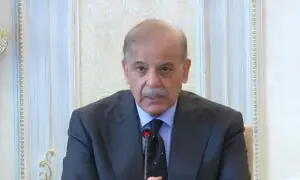
It was not long ago when the then Finance Minister Shaukat Tarin was vehemently opposing any idea of power tariff increase. The Prime Minister has been on that bus too, only to give in to the IMF earlier this year, when the power base tariff went up by Rs1.95/unit across categories. This time, the increase is proposed to be Rs1.39/unit – and will soon by ratified through notification.
Recall that the previous increase was termed a “prior action” for the Programme by the IMF. It so appears, the revised tariff likely to be applicable from November will also be a “prior action” for the funds to flow. Details are still awaited, and more often than not, that is where the devil lies.

As per preliminary reports, domestic consumers using up to 200 units will be insulated from the revision. This is where it will be significantly different from previous revision, as the introduction of Circular Debt Management Plan Phase-I means new slabs have been introduced alongside new categories. The consumption that will not likely undergo increase would be 22 billion units (out of 50 billion). This is reduced from 29 billion units which would have been insulated from this price increase, had the slab based not changed.
This is a much needed and welcome change, as it sets the basis for rationalization of subsidies. That said, the implications for PBS in terms of inflation computation would be significant, and one hopes the Bureau does not wait for another round of base price revision to make the necessary adjustments in consumption weights, to accurately reflect electricity inflation.

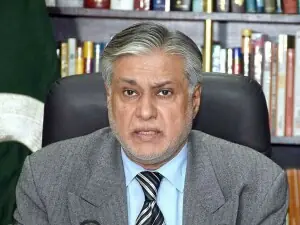
On to the details. The Minister has been quoted saying that industries’ support package will continue and there will be no increase. One has to wait and watch if the exemption applies across all industries, or just the export-oriented ones. Mind you, the government has budgeted adequate subsidy for both export and general industries in 2021-22 budget at Rs41 billion. It remains to be seen if the budgeted subsidy will be revised upwards to accommodate for the relief. For that, details of Power Purchase Price for the reference period will be the critical component.
One must not lose sight of the fact that the government had set aside the highest ever power sector subsidy for FY22 at Rs596 billion. This is twice the 5-year average power sector subsidy. Inter-disco tariff differential is budgeted at Rs184 billion – enough to subsidize the entire consumption by uniform Rs1.8/unit. There is Rs118 for PHPL in lieu of Circular Debt Management Plan, and another Rs136 billion for IPPs.

If the proposed increase does absolve protected domestic and industrial categories – how much will the government achieve through increasing Rs1.39/unit for half the consumption, that won’t fetch more than Rs70 billion. It appears the IMF is having its way, which it could not when the budget was presented. The subsidy amount is likely to be brought significantly down. All eyes are now on the detailed Nepra workings, that will likely answer all questions. Prices are for sure going up. Remains to be seen if it is at the expense of subsidy or otherwise. Either way, inflation calling.












Comments
Comments are closed for this article.