


US natural gas retreats 3% as outlook turns cooler, Ida weakens
- On its first day as the front-month, gas futures for October delivery were down 1.5 cents, or 3.4%, to $4.237 per million British thermal units (mmBtu)
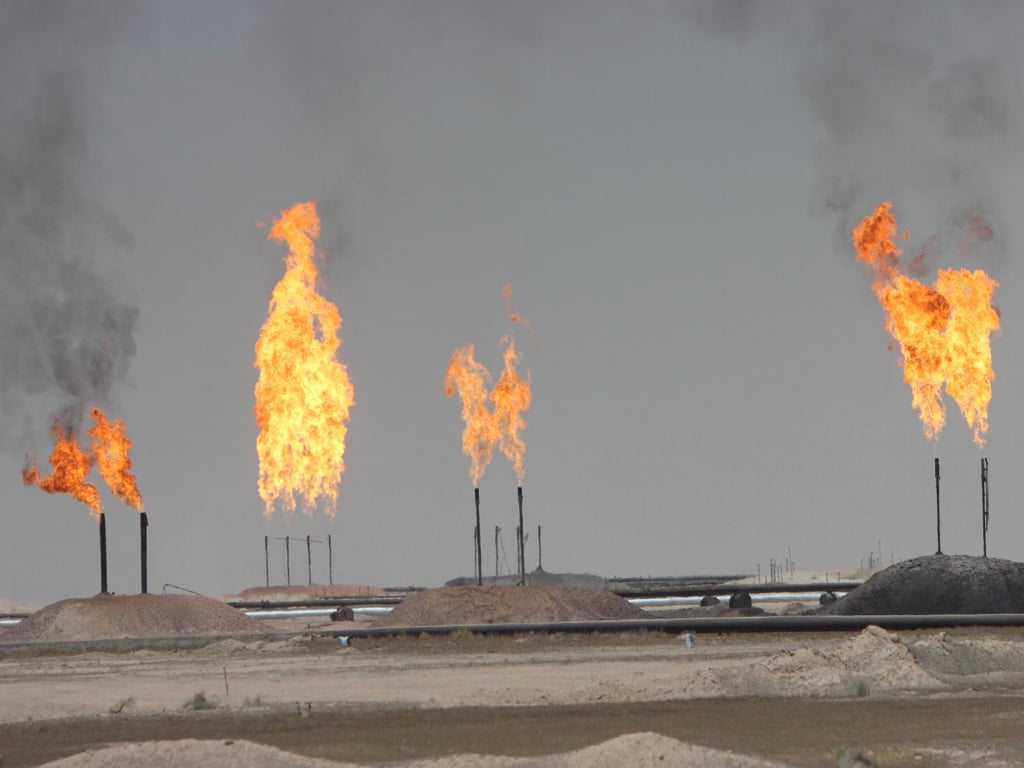

US natural gas futures dropped more than 3% on Monday from nearly three-year highs on projections for lower temperatures in the immediate term, and as Tropical Storm Ida quickly weakened after making landfall on the US Gulf Coast.
Storms typically lead to temporary price spikes due to impacts to production in the Gulf of Mexico, but they lead to lower temperatures, "causing demand destructions as well. So the longer-term effect depends on the relative magnitude of supply and demand changes," said Zhen Zhu, economist at Oklahoma City-based C.H. Guernsey.
Ida lost some of its punch over southwestern Mississippi on Monday after making landfall in Louisiana as one of the most powerful hurricanes to hit the region, but it could still trigger heavy flooding, the National Hurricane Center said.
Oil slips as Hurricane Ida weakens, OPEC+ in focus
"As we head into the shoulder months, demand from power generation is coming down, putting lower pressure on prices ... We may see some declines in prices after the storm passes, but that may be quite limited, especially when we're just entering the active stage of the hurricane season," Zhu added.
On its first day as the front-month, gas futures for October delivery were down 1.5 cents, or 3.4%, to $4.237 per million British thermal units (mmBtu) by 10 a.m. EDT, giving up gains after scaling their highest level since December 2018, at $4.526 per mmBtu, earlier in the session.
Temperatures for the next two weeks are forecast to be slightly cooler, with Refinitiv projecting 148 cooling degree days (CDDs), in line with the 30-year normal for the period, but down from Friday's 181 CDDs estimate.
CDDs, which are used to estimate demand to cool homes and businesses, measure the number of degrees a day's average temperature is above 65 degrees Fahrenheit (18 degrees Celsius).
Data provider Refinitiv said total US production has averaged 91.8 bcfd so far in August, versus 91.6 bcfd in July. That compares with an all-time monthly high of 95.4 bcfd in November 2019.
With the coming of seasonally cooler weather, Refinitiv projected average US gas demand, including exports, would slide from 94.3 bcfd last week to 92.1 bcfd this week, as power generators burn less of the fuel with air conditioning demand easing.
The amount of gas flowing to US LNG export plants has slipped to an average of 10.5 bcfd so far in August from 10.8 bcfd in July. Traders, however, noted LNG feedgas was already increasing as companies operating the Cameron and Sabine plants in Louisiana and the pipelines that serve them finish maintenance work. That compares with a record 11.5 bcfd in April.
With European and Asian gas both trading over $16 per mmBtu, compared with just over $4 for the US fuel, analysts said buyers around the world would keep purchasing all the LNG the United States can produce.

























Comments
Comments are closed for this article.