


Experts call for trade-in-services agreement with China
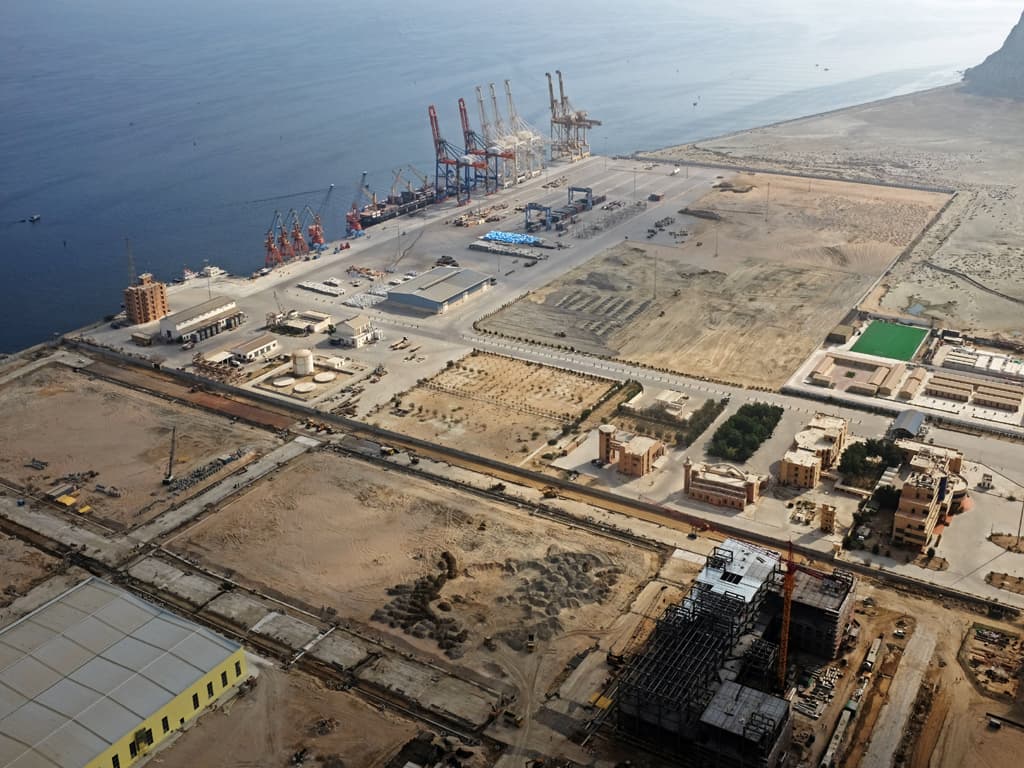

LAHORE: Economy and investment experts during a webinar titled "better business regulation for the services sector in Punjab" have called upon the federal government to initiate a trade-in-services agreement with China which can bring down costs for Pakistani firms longing for integration with Chinese services under economic zones of the China-Pakistan Economic Corridor (CPEC).
The experts, during the webinar organised by the Sustainable Development Policy Institute (SDPI) on Thursday, observed that though the services sector has a critical importance for any vibrant economy, but several steps are still required to tap the real potential of this sector, especially in Punjab.
Group Head at the Bank of Punjab Khawar Ansari informed the participants that banking services were being innovated to respond to the Covid19-related needs of businesses. However, he added, businesses would need to develop a decent history of using banking channels. "We would like to see that businesses applying for a loan have secured their future cash flows. In addition, we need to be more receptive to venture and angel investors," he added
Punjab Board of Investment and Trade (PBIT) Director Policy Sohail Qadiri Director while citing examples of some Chinese enterprises which are relocating due to higher labour costs said they were now opting for the Mekong countries that were known for quick harmonizing their regulatory regime with China.
He said IT parks could help promote IT-enabled businesses which were much desired by the Chinese, adding "we need to channel our new graduates towards understanding the needs of the Chinese services sector and how to integrate in Chinese value chains."
Joint Executive Director at the SDPI Dr Vaqar Ahmed while moderating the webinar shared findings of the SDPI's recent survey with the participants and said the services sector in Punjab was finding it hard to grow due to difficult access to business premises. Besides rental spaces, fragmented tax regime demanding compliance with over three dozen taxes and difficulties in accessing running finance and fixed investment sources, particularly in Covid-19 times are key hurdles, he added.
He said that some other challenges affecting the sustainability of services sector firms included weak access to public procurement opportunities, inadequacy of e-commerce, online and digital payments infrastructure as well as weak linkages with regional and global value chains and arbitrary imposition of labour, municipal and environmental laws.
Dr Vaqar asked the government to initiate a trade-in-services agreement with China which could bring down costs for Pakistani firms wishing to integrate with Chinese services sector under economic zones of the CPEC.
Imran Jattala, Director (Innovation) at Lahore Garrison University, was of the view that the knowledge of building services businesses and scaling it up was limited to select family groups in Pakistan. "Although we have the National Incubation Centres, we need more such centres in second-tier cities of Pakistan," he added.
Senior Research Fellow at Punjab Economic Research Institute (PERI) Dr Shehzada Naeem asserted that the provincial government was trying to improve engagement with business associations to better understand the needs of the private sector in the wake of Covid-19. To boost productivity in the services sector, he emphasized on the importance of improving Pakistan's ranking in ICT adoption and logistics indicators which are closely watched by foreign investors.
Mahnoor Arshad, a researcher on the issues being faced by women-led enterprises, was of the opinion that women-led enterprises had been the hardest hit during Covid-19. She said the learning needs of women businesses needed to be explored during and after Covid-19 scenario including orientation to online ways of doing business and overcoming constraints to mobility and attracting investors during the pandemic.
Head of the SDPI for Private Sector Engagement Ahad Nazir shared threw light on the impacts business in the wake of Covid-19 and said the federal government should streamline the regulatory environment and e-commerce and cluster-based services sector development should be promoted in Punjab.
Copyright Business Recorder, 2020




















Comments
Comments are closed for this article.