


IMF urges 'equity-like' government support for virus-hit firms
- Gopinath said the massive scale of the shock meant more firms will become insolvent as they suffer lower revenues for many months.
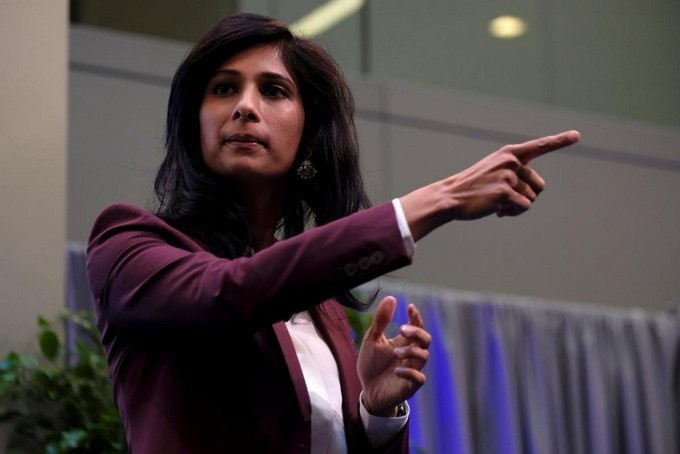

TOKYO: International Monetary Fund Chief Economist Gita Gopinath urged governments to shift to “equity-like” support from one focused on loans as the coronavirus pandemic inflicts prolonged damage on companies.
Gopinath said the massive scale of the shock meant more firms will become insolvent as they suffer lower revenues for many months.
Government support in the form of loans would saddle such companies with huge debt, which would serve like a tax that makes it difficult for them to emerge from the crisis, she said.
“Because there’s a bigger insolvency issue here, government support would have to shift more towards being equity-like as opposed to debt-like. Otherwise, you would end up with a lot of firms that exit this crisis with a huge amount of debt over-hang,” she said.
“If the lending takes form more like equity ... then that’s less onus on the firms. That will make it easier for firms to recover from the crisis,” Gopinath said in a webinar co-hosted by the IMF and the University of Tokyo on Friday.
She did not elaborate on how such financing support would work. During its domestic banking crisis in the late 1990s, Japan injected capital into firms via schemes where state-affiliated bodies bought preferred shares issued by these firms.
Gopinath said any recovery of the global economy will be “highly uneven and highly uncertain,” urging countries to continue deploying aggressive fiscal and monetary stimulus measures to support their economies.
While food price inflation has risen in some countries, overall consumer inflation will likely stay low in most parts of the world because job losses will curb wages, Gopinath said.
“We have more concerns of inflation going too low, rather than inflation going too high,” she said.
The IMF views the current recession as the worst since the 1930s Great Depression. In its latest projections made in June, it expects 2020 global output to shrink by 4.9%, compared with a 3.0% contraction predicted in April.





















Comments
Comments are closed for this article.