



 SINGAPORE: Most emerging Asian currencies dipped on Wednesday as investors booked profits, offsetting hopes of the European Central Bank's action to ease the debt crisis and further policy stimulus by the Federal Reserve for growth.
The Singapore dollar eased on caution over intervention after dealers said the central bank was spotted preventing it from strengthening past 1.24 per US dollar.
The Malaysian ringgit turned slightly weaker after hitting a near three-month high as it failed to stay firmer than a resistance at 3.1000 to the US dollar.
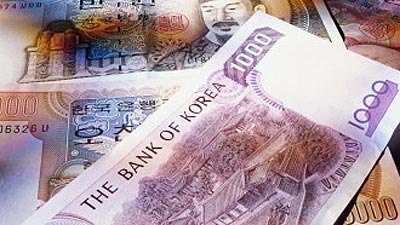
The South Korean won closed local trade firmer on stock inflows, but the local unit also gave up an earlier advance on profit-taking and domestic importers' dollar demands.
"The expectation is priced in that the ECB will bring in supportive measures," said Sacha Tihanyi, senior currency strategist for Scotiabank in Hong Kong.
"Definitely, disappointment risk remains fairly high," Tihanyi said, when asked if emerging Asian currencies were vulnerable to any negative developments in the euro zone's debt crisis.
Most regional units have appreciated since last week on growing hopes of the European Central Bank's action to lower borrowing costs in indebted countries such as Spain and Italy.
More investors expected the Fed to take further policy stimulus next month after a rise in the US jobless rate.
On Tuesday, Boston Fed Bank President Eric Rosengren said the US central bank should launch another bond-buying program of whatever size and duration necessary to get the economy back on its feet.
Short-term money investors added long positions in emerging Asian currencies while momentum funds appeared to start adding such bets, said a European bank dealer in Singapore.
Maybank's FX research head Saktiandi Supaat said investors built up bullish positions in emerging Asian currencies "based on verbal signals", adding such positions were a bit excessive.
Still, regional units are likely to stay firm as long as expectations for policy moves remain alive, said Supaat in Singapore.
"In the interim, what we will see is 'no news is good news'. So a lack of strong negative headlines and event risk is seen as risk appetite," he added.
Investors will be turning to data from China on Thursday, including industrial output, retail sales and inflation, for indications of whether the world's second-largest economy can regain momentum in the second half of the year.
WON
The won ended local trade slightly firmer as foreign investors continued to buy Seoul shares and traders chased the local unit, expecting corporate demand linked to large overseas deals.
The South Korean currency started the day softer at 1,129.0 per dollar and weakened to 1,130.9. But it quickly reversed the direction.
Foreign investors purchased a net 730.4 billion won ($647.0 million) worth of stocks, extending their net buying spree to a third consecutive session.
Earlier, Hyundai Engineering said it had won an $895 million order from a Kazakhstan company, while POSCO Engineering & Construction separately said it had secured a $700 million order in Iraq.
The news helped the local unit strengthen to 1,126.0, but traders took profits as they had not seen much won demand linked to the deals. Domestic importers also bought dollars on dips.
Investors are keeping an eye on the central bank's rate meeting on Thursday when the Bank of Korea is likely to hold fire after a surprise rate cut last month, a Reuters poll showed.
RINGGIT
The ringgit earlier hit 3.0910 per dollar, its strongest since May 16, but turned weaker in the afternoon as traders took profits.
However, the Malaysian unit continued to advance against the Singapore dollar as the city-state's currency found strong resistance at 1.2400 to the greenback with intervention spotted, dealers said.
The Singapore dollar fell 0.1 percent versus the ringgit to 2.4942.
The city-state's unit has room to slide further, probably to 2.4802, the 38.2 percent retracement of its March-July gains.
The next level would be 2.4718, a 100-day moving average. The Singapore dollar has been staying above the average since April.
PHILIPPINE PESO
The Philippine peso edged up on demand from interbank speculators.
The peso is expected to stay firm, given the country's strong economic fundamentals, but caution over possible intervention by the central bank to stem its strength is seen forming a resistance at 41.60 per dollar, dealers said.
An Asian bank dealer in Manila said investors will be wary of the central bank's dollar purchases around 41.60, adding "we will see if there will be support bids once that level is reached."




















Comments
Comments are closed for this article.