


Canberra fire downgraded as heatwave eases
- Fire crews battling a large blaze on the Australian capital's southern flank said it was no longer at emergency level as temperatures fell back from heatwave highs and rain was forecast.
- Australian Capital Territory Rural Fire Service Chief Officer Joe Murphy said that crews had worked through the night to contain the fire.
- On Saturday, temperatures in Canberra passed 41 degrees Celsius (105 degrees Fahrenheit), the Bureau of Meteorology reported.
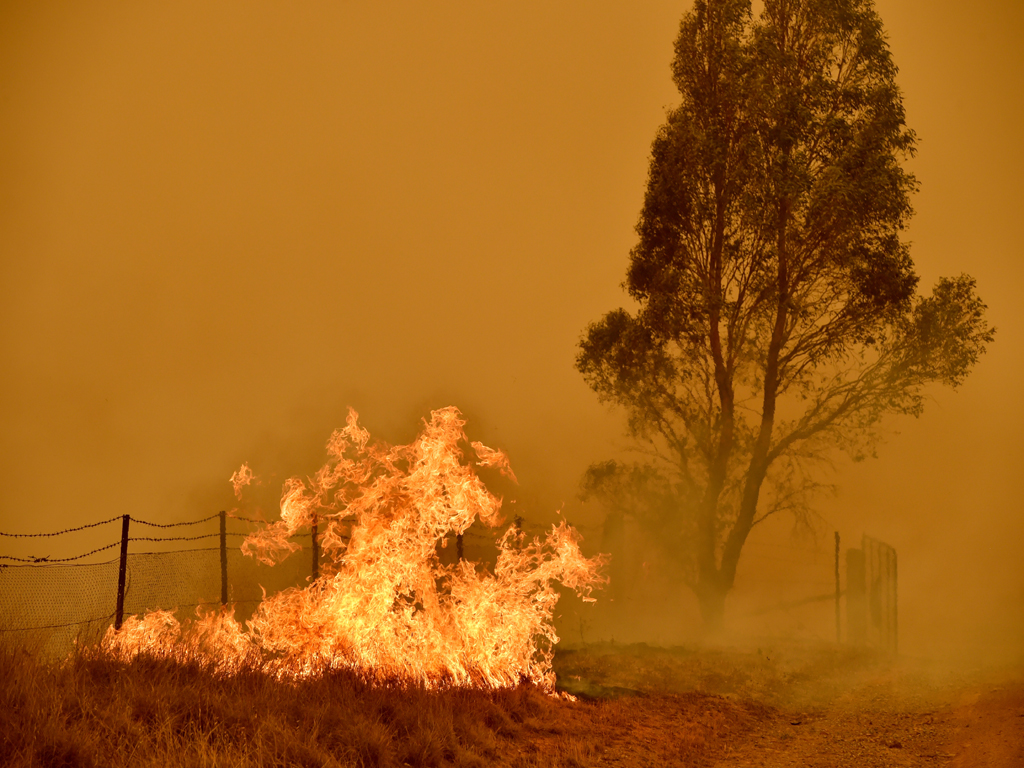
CANBERRA: A fire that threatened Canberra's southern suburbs was downgraded early Sunday, allowing firefighters to strengthen containment lines and protect residents.
Fire crews battling a large blaze on the Australian capital's southern flank said it was no longer at emergency level as temperatures fell back from heatwave highs and rain was forecast.
Australian Capital Territory Rural Fire Service Chief Officer Joe Murphy said that crews had worked through the night to contain the fire.
At one point, the fire service warned residents to "please remain alert, not alarmed" as they would see flames on the horizon as controled burns were carried out.
The city had declared its first state of emergency in nearly two decades last week in anticipation of a heatwave and predictions that fires could hit the southern suburbs.
On Saturday, temperatures in Canberra passed 41 degrees Celsius (105 degrees Fahrenheit), the Bureau of Meteorology reported.
The state of emergency declared on Thursday was the first in the Australian Capital Territory, which includes Canberra and some surrounding townships, since 2003, when fires destroyed almost 500 homes.
The main threat came from the Orroral Valley fire, which has burned around 52,000 hectares (128,000 acres) of mostly remote bushland and linked up with a blaze in New South Wales.
"Crews have worked tirelessly overnight to protect homes and slow the spread of fire, which they will continue to do today with favourable weather," said the New South Wales Rural Fire Service.
More than 80 fires are still burning across the New South Wales and Victoria.
Storms are forecast to follow the heatwave, bringing rain that could help dampen fires but also carry the potential for wild weather, including flash flooding.
Extreme weather has battered parts of Australia in recent weeks, bringing giant hail, floods and landslides.
On Sunday, Sydney was again shrouded in toxic smoke haze, now an almost daily problem in what had been one of world's least polluted major cities.
At least 33 people have died and vast swaths of the country have been burned since September.
The months-long crisis has sparked renewed calls for Australia's conservative government to take immediate action on climate change, with street protests urging Prime Minister Scott Morrison to reduce the country's reliance on coal.
Scientists say the bushfire disaster was likely exacerbated by climate change, coming on the back of a crippling drought that turned forests into tinderboxes and allowed blazes to spread out of control quickly.



















Comments
Comments are closed for this article.