


PM inaugurates LPG plant: Imported LNG to help generate 2500mw of power

 AHMAD MALIK & ABDUL RASHEED AZAD
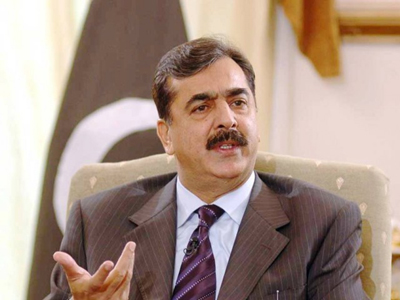
KARACHI: Prime Minister Syed Yousuf Raza Gilani Saturday said Pakistan would import 500 million cubic feet of LNG per day from Qatar, which would be provided to power houses to generate 2500 megawatt of electricity in the country.
Speaking at the inaugural ceremony of SSGC LPG plant located at Port Qasim Industrial Area here on Saturday, the Prime Minister said during his recent visit to Qatar, Pakistan concluded a Memorandum of Understanding (MoU) with the government of Qatar for the import of 500 million cubic feet of LNG per day.
Sindh Governor Dr Ishratul Ebad Khan, Chief Minister Syed Qaim Ali Shah, Federal Minister for Ports and Shipping Babar Khan Ghori, provincial ministers and high officials of SSGC, Port Qasim and other public sector entities were also present on this occasion.
Gilani said the country was facing acute energy shortages for the last many years. The growing gap between demand and supply had hampered the socio-economic development of the country.
However, he said, the energy crisis that the nation faced today was in fact the result of neglect by successive governments. An integrated and coherent ‘power vision’ should have been worked out by keeping the future energy demands in view. Ironically, he added, due focus was not given to this sector, which served as a lifeline to the engine of economy.
He said the present government had undertaken some key mega projects to meet energy demands in the country. These projects include Diamir Bhasha dam, Thar Coal power project, Tapi project, and CASA-1000 in addition to dozens of small and medium-sized dams across the country.
He reiterated that Pakistan was also committed to Iran-Pakistan gas pipeline project, which would help the country overcome its energy problems to a large extent. Not only would the implementation of these mega projects enhance overall energy supplies and provide energy diversity, it would also lead to a greater energy security.
Gilani said that despite economic constraints imposed by natural disasters, energy deficits, global recession and the war on terrorism, macroeconomic fundamentals of Pakistan’s economy were showing positive signs. Given the size and diversity of country’s economy, its total energy requirements were expected to grow substantially during the next decade. It is in this context that achieving self-sufficiency is a key factor to keep the engine of economy running as well as meeting the future demands of the economic growth, according to him.
He noted that Pakistan had been meeting 53 percent of its total energy requirements through indigenous oil and gas production, whereas other indigenous resources further helped the country meet 19 percent of its energy needs. The remaining 27 percent of the energy needs were currently being met through imports. The energy imports were likely to increase as domestic gas production and supply presently failed to meet the demand of domestic users, the industrial sector and power generation.
He pointed out that due to their all-pervasive use by these sectors, the country’s gas reserves might be insufficient to meet the rising demand and deplete fast. Such a situation would force the country to resort to importing large volumes of gas at international prices to feed the domestic market if local production was not enhanced in relation to demand.
He said the escalating energy import bill would put the economy under stress and hamper country’s economic revival. The government was alive to the dramatic changes that had taken place in the price and cost environment of the international oil and gas industry. The fluctuating nature of crude oil prices in the international market had posed serious challenges to global economies. Hence, reliance on imports could not be a feasible long-term solution, he added.
The PM said the situation called for adopting a creative approach to respond to emergent energy challenge as well as work out a comprehensive strategy on a sustainable basis.
He said the National Petroleum Exploration and Production Policy 2012 had been approved and the policy recognised the operating challenges and key considerations that faced Pakistan’s oil exploration and development industry. It signified the government’s commitment to providing fiscal and regulatory incentives to E&P companies, which would provide an impetus to them to speed up their exploration and development programmes with a view to maximizing domestic oil and gas production in coming years.
According to him, the core policy objectives of the National Petroleum Exploration and Production Policy 2012 are to accelerate Exploration & Production activities in Pakistan with the purpose to achieve optimum self-sufficiency in energy by increasing oil and gas production; to promote direct foreign investment in the country’s energy sector by increasing competitiveness of its terms of investment; to encourage the Pakistani oil and gas companies to get fully involved in the investment opportunities and to promote increased E&P activity in the onshore frontier areas by providing globally competitive incentives.
He said the salient features of this policy were indigenous production and decreased reliance on imported energy in a phased manner. It is in this background that recourse to LNG and LPG was critical to bridge the gap between demand and supply and ease pressure on local production.
Due to its attractive geo-strategic location and immense natural resources, Pakistan has the potential to become the regional hub of economic activity. “However, what we need to make it happen is the continuity of policies and political will to stay the course,” he said, adding that the present government was committed to making Pakistan a self-sufficient in energy production.
“It gives me immense pleasure to inaugurate the SSGC-LPG Plant in Karachi today. At the outset, I would like to congratulate the management of SSGC and the Ministry of Petroleum & Natural Resources on this occasion,” he said.
Gilani also said the commissioning of this SSGC-LPG plant demonstrates the democratic government’s commitment to meeting the acute energy needs of the country on a fast-track basis. The establishment of SSGC-LPG Terminal at Bin Qasim would greatly facilitate the handling of energy imports in the shortest possible timeframe. “This is the first ever fully integrated LPG plant constructed in the country,” he said.
Speaking on this occasion, Special Advisor to the Prime Minister on Petroleum and Natural Resources Dr Asim Hussain said Pakistan would need to import a large amount of its energy requirements over the next 20 years.
He said a liberalized and deregulated Liquefied Petroleum Gas (LPG) sector would result in the standardisation of this market through free availability of this vital, clean and plentiful fuel, as opposed to the desire by the cartel to maintain the LPG market as a place where they could continue to make “super profits”.
He was of the view that the local production was expected to remain flat over the foreseeable future, while imports were expected to rise substantially to over 1.8 million MT by 2020 to cater for the increased demand for LPG, which had been growing at 8 percent annually.
He said the LPG was a perfect fuel for domestic consumption due to its transportable and clean nature, thereby reducing indoor pollution and acting as a bridge fuel for consumers to graduate from biomass and kerosene to LPG and then to natural gas and electricity.
He said it was important for gas companies to enter the market to supply LPG in cylinders in those areas where natural gas supplies were not available. “The displaced gas would become available for critical users of this fuel, specially the power sector,” he added.
Managing Director, SSGC Azeem Iqbal Siddiqui said the purpose of SSGC entering the LPG business was to supply LPG in bulk by importing large quantum of LPG and purchasing locally produced LPG from state and private producers and then selling it to all LPG marketing companies on a weighted average pricing model through auctioning the product on a month to month basis. “This will actually stop the quota culture, reduce overall prices and cartelization, increase availability and market completion,” he said adding the benefit of this large supply of LPG would result in the demise of the black marketing LPG. Imports can only come through an import facility, hence the reason to purchase the Progas assets, he said.
Eh said the SSGC-LPG terminal was critical to the country to be able to land energy imports in shortest possible time frame. It is the first fully integrated LPG plant ever constructed in Pakistan, according to him.
There are five LPG storage tanks with a total capacity of 6,500 metric tons. The annual through-put capacity is two million metric tons of LPG, which is the largest in the country.
The bottling facility is fully automatic and requires minimum staff to operate having 24 filling head LPG cylinders with a capacity of handling 7,000 metric tons per shift of LPG per month.



















Comments
Comments are closed for this article.