


Sukuk market growing at 22% CAGR, but foreign investment remains underwhelming, says Aurangzeb
Pakistan's Sukuk market has grown significantly, but foreign investment remains low. The finance minister stresses diversifying instruments, promoting international interest, and using digital platforms to scale up the market.
- Growth and diversification of Pakistan's Sukuk market.
- Efforts to attract foreign investment in Sharia-compliant instruments.
- Introduction of hybrid and shorter-tenor government Sukuk.
- Role of digital platforms for retail Sukuk participation.
- First corporate listed Sukuk setting a new benchmark.
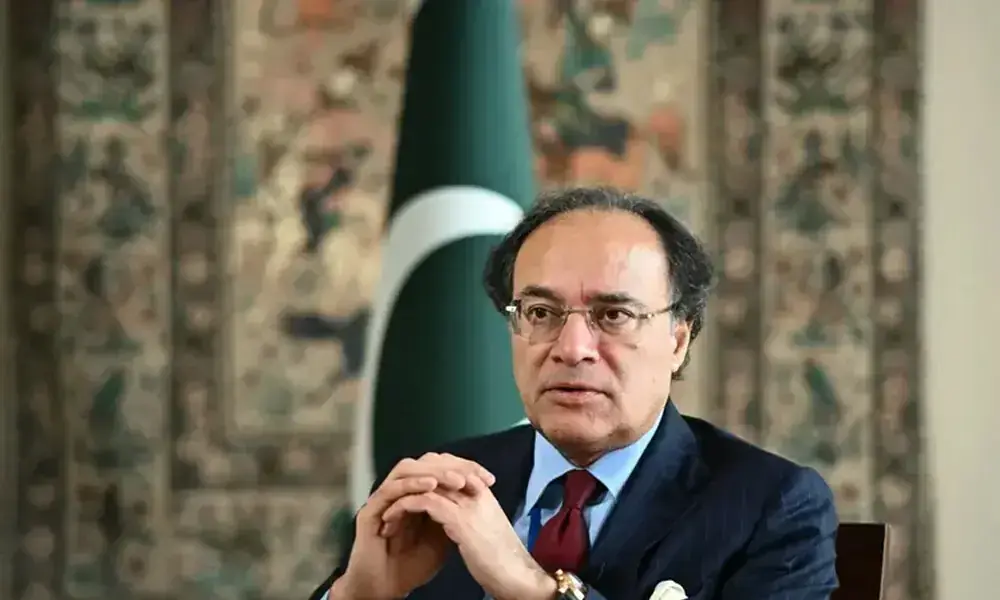
Finance Minister Senator Muhammad Aurangzeb said Pakistan’s Sukuk market has grown at a compound annual growth rate of around 22%, but foreign investment in Sharia-compliant instruments remains underwhelming and needs to be actively promoted.
The finance minister made the comments while addressing a ceremony marking the achievement of Rs10 trillion in Sovereign Sukuk, alongside the issuance of Hybrid and Short-Term Sukuk.
“It is not about the absolute numbers that we are celebrating today, but the efforts taken to diversify the Sukuk market and introduce greater flexibility in sovereign financing instruments,” he said.
- Sukuk, also known as Islamic bonds, are financial instruments that comply with Islamic law (Shariah) and its investment principles. Unlike traditional bonds, which represent debt and pay interest, Sukuk represents ownership in a tangible asset or a pool of assets. Investors in Sukuk receive a share of ownership or profits generated by these underlying assets, rather than just receiving interest payments.
He highlighted the introduction of hybrid government Sukuk, developed by the Ministry of Finance Debt Management Office in conjunction with the State Bank of Pakistan, as an important development. “This instrument combines different Sharia-compliant structures and provides greater flexibility in the use of government-owned assets.”
Aurangzeb sets priorities for Pakistan’s G-24 Chairmanship
Another key step, he said, was the introduction of shorter-tenor Sukuk, including three- to six-month instruments. “This was a big gap in the market and was an important step towards developing a credible Sharia-compliant yield curve across different maturities.”
Despite the progress, Aurangzeb said foreign investment in recent months in Sukuk remained below potential.
“Foreign investment in Sukuk quite frankly remains underwhelming,” he said. “Therefore, there is a need to highlight and actively promote Sukuk among international investors and diversify foreign portfolio investment into Sharia-compliant instruments.”
He said banks, primary dealers and brokers would “all have to work together on this”.
On retail participation, Aurangzeb said digital platforms were key to scaling up the market. He noted the State Bank’s platform and telecom platforms to facilitate retail investment and Sukuk.
“The way to move forward and scale it up is through digital platforms.”
For the long-term corporate debt market, he said the first mandate had been given by the Ministry of Power for National Grid Company to issue its first-ever listed Sukuk. “If successful, this would set a benchmark for other corporates to come in.”
“These are the areas where we need to constantly work together, including SBP, SECP, PSX and CDC, to develop a more comprehensive Sukuk market ecosystem,” he said.
Speaking at the event, Dr Syed Amir Ali, President & CEO of Meezan Bank, appreciated the leading role of the Ministry of Finance and the State Bank of Pakistan in expanding the sovereign Sukuk market in Pakistan.
Dr Muhammad Imran Ashraf Usmani, Shariah Board Member, Meezan Bank, while discussing Shariah perspectives on the way forward for Pakistan’s Sukuk market, said that the recent innovations in the form of short-term Sukuk will become a viable alternative to conventional T-Bills and will support the transformation journey of Pakistan.




















Comments