



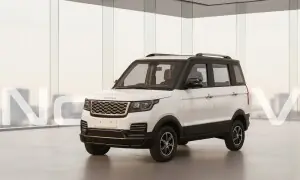
ISLAMABAD: The National Assembly was told on Thursday that Pakistan was planning to establish about 3,000 public electric vehicle (EV) charging facilities across the country by 2030 and provide subsidies of up to Rs400,000 for electric three-wheelers under its New Energy Vehicle (NEV) Policy 2025-30.
In a written reply to a question by Malik Shakir Bashir Awan, the Ministry of Industries and Production said the government was also planning to provide subsidies of Rs80,000 for electric two-wheelers and Rs400,000 for three-wheelers to promote the adoption of electric mobility.
The policy envisaged the establishment of 40 fast-charging stations in the initial phase along motorways and selected sections of the National Highway (N-5), with charging facilities planned at intervals of about 50 km along major highways.
The government was also seeking to encourage fuel stations to install charging facilities and expand the network of fast, Level 2 and Level 1 chargers, alongside battery-swapping facilities for electric two- and three-wheelers.
To attract private investment, the ministry said the government was promoting a dedicated commercial electricity tariff for charging stations, expedited electricity connections and public-private partnerships, including viability gap funding arrangements.
The ministry said the policy aimed to reduce reliance on imported components by encouraging domestic manufacturing, technology transfer, joint ventures and the development of local supply chains.
Potential areas for local production included electric motors, battery packs, power electronics, chargers and wiring systems.
The Engineering Development Board was facilitating the industry through regulatory support and monitoring commitments relating to domestic value addition.
The ministry acknowledged that the high upfront cost of electric vehicles remained a major challenge. Targeted support was being provided under the NEV Policy and the Pakistan Accelerated Vehicle Electrification (PAVE) programme, particularly for electric two and three-wheelers, while the government was also engaging financial institutions to improve access to financing.
The government expected local manufacturing, economies of scale and stronger domestic supply chains to gradually reduce vehicle prices and overall ownership costs.
The policy also envisaged a system for collecting, transporting, reusing, dismantling and recycling end-of-life EV batteries, particularly lithium-ion batteries, as well as their environmentally safe disposal.
According to the ministry, the government was working towards a regulatory framework and a nationwide network of battery collection and recycling facilities to recover valuable materials, minimise environmental risks and promote a circular economy.
Earlier, Prime Minister Shehbaz Sharif had approved a five-year automotive policy aimed at increasing domestic production, boosting exports and improving competition in Pakistan’s automotive sector.
According to the policy document, the government had set a target of increasing vehicle exports to USD6 billion. The policy also included measures to expand local auto-parts manufacturing, improve technology and gradually reduce import duties on vehicles.
The government had rejected an International Monetary Fund (IMF) proposal to increase the sales tax on electric vehicles to 18 percent.
However, the policy proposed a 10 percent federal excise duty on electric vehicles valued at more than USD75,000.
Meanwhile, responding to lawmakers’ questions, Minister for Railways Hanif Abbasi said 349 passenger and freight train accidents had occurred since 2022, with investigations completed into 331 incidents.
He said 229 cases had been registered, while 120 remained pending.
He said a new 480-kilometre railway track, costing USD 2.5 billion, would be built from Karachi as part of the Main Line-1 (ML-1) project to improve safety and reduce accidents.
He added that railway stations across the provinces were being upgraded and 200,000 acres of railway land had been reclaimed.
Copyright Business Recorder, 2026












Comments