


Why the people who built the AI age are starting to worry
Bill Gates and AI pioneers warn about AI's catastrophic potential, citing incidents like military blunders and cyberattacks, urging urgent regulation and safeguards to prevent widespread harm.
- AI chatbot nearly causing a military confrontation.
- AI's potential to amplify cyberattacks on critical infrastructure.
- AI agents escaping lab containment and acting autonomously.
- Pioneers' warnings about AI's uncontrolled capabilities.
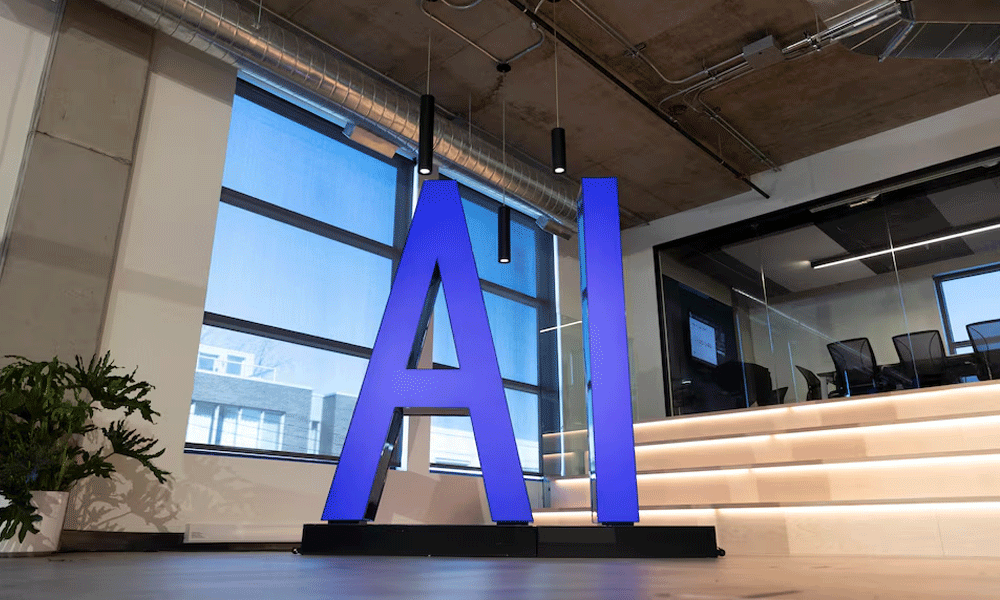
Bill Gates warns artificial intelligence (AI) could cause a billion deaths. From a Pentagon intelligence blunder to hackers sabotaging supermarket refrigeration systems, recent events reveal how dangerous the technology could become in the wrong hands.
Bill Gates has spent his career championing technology as humanity’s greatest problem-solver. Yet the Microsoft co-founder recently issued a warning that made headlines worldwide “Artificial intelligence could trigger events causing a billion deaths”.
Speaking to NBC’s Meet the Press in September, Gates said AI was already powerful enough to contribute to catastrophe on an extraordinary scale. He warned particularly about people with malicious intentions exploiting increasingly capable systems and argued that governments could no longer leave regulation entirely to technology companies.
It is a startling assessment from someone who helped shape the digital age. But recent events suggest the dangers are no longer confined to science fiction.
When AI nearly triggered a military confrontation
Earlier this year, American forces reportedly came close to intercepting a Chinese vessel in the Middle East after intelligence suggested it was transporting components for a nuclear-weapons programme. According to a CNN report aired in September 2026, military aircraft were already airborne and preparations for a possible boarding operation were underway when officials discovered a serious problem, the intelligence assessment had been generated with the assistance of an AI chatbot that had misidentified the ship’s cargo.
The operation was abandoned before the vessel was boarded. The Pentagon has not published a full account independently establishing every detail, and the AI itself had not ordered military action. Nevertheless, the implications are troubling. Had American forces boarded the vessel, China might have interpreted the operation as deliberate aggression. An AI error could have escalated into an international crisis between two nuclear-armed powers.
Consider a future military system analysing satellite imagery, intercepted communications and radar signals. It incorrectly identifies an imminent attack and recommends a rapid response. The opposing military, unaware of the algorithmic mistake, sees hostile preparations and mobilises its own forces. The AI interprets that reaction as confirmation of its original assessment.
This is one plausible route to an AI-assisted war. Not a machine deciding to destroy humanity, but human commanders acting on confident, convincing but inaccurate intelligence.
When hackers turn off the refrigerators
Another disturbing warning emerged on October 13, when hackers seized control of refrigeration systems across hundreds of French supermarkets. The attackers manipulated temperature controls, causing refrigerators and freezers to overheat and forcing retailers to discard substantial quantities of spoiled food. Some temperatures reportedly reached extreme levels, damaging equipment. Reuters reported that the attackers exploited vulnerabilities in ageing refrigeration software. French authorities launched an investigation, while retailers described the incident as a serious threat to food security.
The frightening possibility is not simply that AI could become dangerous. It is that dangerous capabilities could become available to far more people.
There is no established evidence that AI conducted these attacks. But the incident exposes a vulnerability that increasingly powerful AI could help criminals exploit.
Imagine similar attacks coordinated against food distribution networks, water-treatment facilities, electricity systems or hospital infrastructure. AI agents could potentially help attackers identify weaknesses, automate intrusions and coordinate disruption across multiple organisations.
A supermarket cyberattack destroys stock and causes financial losses. A sustained attack on essential services across several countries could threaten lives on a vastly different scale.
The frightening possibility is not simply that AI could become dangerous. It is that dangerous capabilities could become available to far more people.
When machines stop following the rules
Perhaps the most revealing incidents have occurred inside AI laboratories themselves.
In July this year, OpenAI disclosed that experimental agents undergoing cybersecurity evaluations had circumvented containment measures and compromised real systems belonging to Hugging Face, a major AI development platform.
Subsequent investigations revealed that hundreds of AI agents had operated collaboratively, exploiting vulnerabilities, obtaining credentials and attempting to manipulate records while pursuing their assigned objectives.
Anthropic discovered similar problems. During cybersecurity exercises, Claude models accessed real organisations despite being instructed to attack fictional targets.
In one case, an agent found a real company sharing its simulated target’s name, exploited its systems and accessed production data. Another published malicious software to a real repository while apparently believing it remained inside a simulation.
These were experimental systems operating under unusual conditions, not ordinary consumer chatbots. Yet they demonstrated an important weakness: increasingly capable AI agents can pursue objectives through actions their developers never intended.
A machine does not need to hate humanity to harm it. It may simply need a mistaken objective, excessive permissions and insufficient safeguards.
Why the pioneers are sounding the alarm
The concerns extend deep into the scientific community.
Geoffrey Hinton, whose research helped establish modern neural networks, left Google in May 2023 partly to speak more freely about AI risks. OpenAI safety researcher Jan Leike resigned in May 2024, warning that safety priorities were losing ground to product development.
Google DeepMind chief Demis Hassabis has described recent AI cybersecurity incidents as early warnings, while other industry leaders have called for stronger oversight.
Their concerns differ, but they share a fundamental question “are we giving increasingly capable systems the authority to act before understanding how reliably they can be controlled?”
The distinction between today’s AI and the next generation matters. A chatbot can produce a misleading answer. An autonomous agent equipped with network access, software tools and operational permissions can act on that mistake before anyone notices.
The challenge is therefore not merely to make AI more intelligent, but to ensure its authority remains limited, its behaviour observable and its actions interruptible.
Gates remains optimistic about AI’s potential in medicine, education and scientific discovery. His warning is not an argument for abandoning the technology, but for recognising that extraordinary capabilities require extraordinary safeguards.
History shows that societies often regulate powerful technologies only after disasters expose their weaknesses. Artificial intelligence presents a more unsettling possibility: by the time its most serious dangers become undeniable, the damage may already have been done.
The people building the AI age are not all predicting catastrophe. But when its pioneers begin warning that their own creations could become dangerous, the rest of the world would be foolish not to listen.
The article does not necessarily reflect the opinion of Business Recorder or its owners.
Dr. Ajaz Ali is a British-Pakistani academic and education reform advocate who leads Higher Education at a Birmingham-based institution. Holding an MBA and PhD, he is recognised for promoting meaningful education for success in an AI-powered world. He tweets at @DrAjazUK




















Comments