


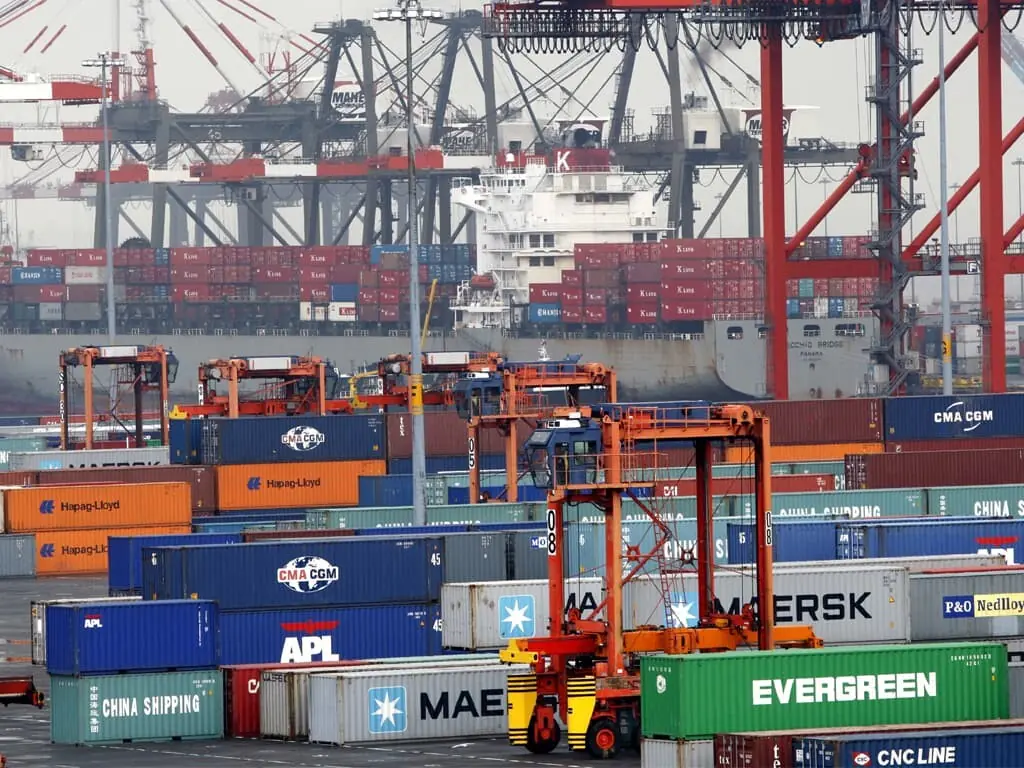
ISLAMABAD: Patron-in-Chief of the Pakistan Textile Exporters Association (PTEA), Khurram Mukhtar, has cautioned the government about a steep decline in Pakistan’s goods exports in the second quarter of FY27, warning that the textile sector is facing mounting pressure from multiple directions.
He said high inflation in Western markets had sharply depressed buyer demand, while sea freight charges had surged 1.5 to 2.5 times, further eroding already thin profit margins. Rising input and logistics costs were also making Pakistani exports increasingly uncompetitive in international markets.
“The decline in export trade volume is unprecedented,” he said, adding that only the most competitive businesses would survive in the current environment. Once market share was lost, he warned, regaining it would be extremely difficult.
READ ALSO: Textile exporters: PTEA chief identifies rising cost of production as foremost challenge
Mukhtar stressed that exporters were the driving force behind the entire textile value chain and that any decline in exports affected every stage of production. Domestic demand had also weakened because of high inflation, delivering a double blow to the sector. Consequently, ginning, weaving, spinning, processing and knitting segments were facing severe pressure on their survival.
He urged the government to take immediate measures to support the industry, including temporary Drawback of Local Taxes and Levies (DLTL) at 6-8 percent to help exporters retain their international market share. He also called for the immediate disbursement of substantial refunds pending under various heads to ease the liquidity crisis across the supply chain, alongside the urgent removal of cross-subsidies embedded in energy tariffs.
Mukhtar also pointed to serious anomalies in the Export Finance Scheme (EFS). He said the government had announced in the Finance Bill for FY27 that the financing rate would be fixed at 4.5 percent, but the decision had yet to be implemented. Banks were charging a minimum rate of 5.5 percent, while some continued to charge as much as 8.5 percent, he added.
He further noted that around Rs200 billion had been extended under the EFS to yarn exporters, despite yarn exports being on the scheme’s negative list. Sugar exporters had also reportedly received EFS financing, even though sugar was a highly regulated sector.
Meanwhile, eligible textile exporters whose export performance was five to six times the State Bank of Pakistan’s (SBP) mandatory requirement of twice the financing amount were not being allocated funds under the scheme, he said.
According to Mukhtar, this misallocation of financing discouraged value addition and penalised exporters generating substantial foreign exchange earnings for the country.
He described the substantial increase in the EFS allocation for small and medium enterprises (SMEs) as a major development but questioned whether the additional financing could be effectively utilised. He said an additional Rs300 billion in financing for SMEs would require incremental export performance of Rs600 billion, which, in his assessment, was not available.
Last year, he added, an allocation of Rs100 billion for SMEs had lapsed without being utilised. He urged the government to review EFS allocations in line with the contribution of each segment and distribute financing proportionately.
“The top 100 exporters drive up to 60 percent of export volume, so they must be financed adequately,” he said.
Mukhtar also called for targeted intervention by the federal government and the SBP to strengthen the ginning, sizing, weaving and processing sectors and enable them to compete internationally. SMEs operating in these segments required tailor-made short- and long-term financing to undertake urgently needed balancing, modernisation and replacement (BMR), he said. He proposed allocating Rs20 billion for ginning, Rs20 billion for sizing, Rs50 billion for weaving and Rs50 billion for processing, bringing the total proposed financing to Rs140 billion.
The proposed package, he said, would help these segments upgrade their facilities and improve productivity, efficiency, automation and sustainability.
“We are ready to work with the federal government on this specifically tailored programme to strengthen the foundation of the textile value chain,” he said.
“Historically, we have been reactive. The current situation demands a proactive approach,” Mukhtar said, adding that timely intervention would cost far less than rebuilding lost export markets in the future. He stressed the need for a 10-year strategic plan based on Pakistan’s existing expertise and export potential across different textile segments. With the necessary structural reforms and a clear long-term strategy, he said, the country’s textile exports could achieve substantial growth.
Mukhtar urged the Ministry of Commerce, the Ministry of Finance and the SBP to ensure implementation of the announced EFS rate, review financing allocation criteria without delay, prioritise genuine value-added exporters and engage with industry stakeholders in developing a long-term export roadmap.
Copyright Business Recorder, 2026













Comments