


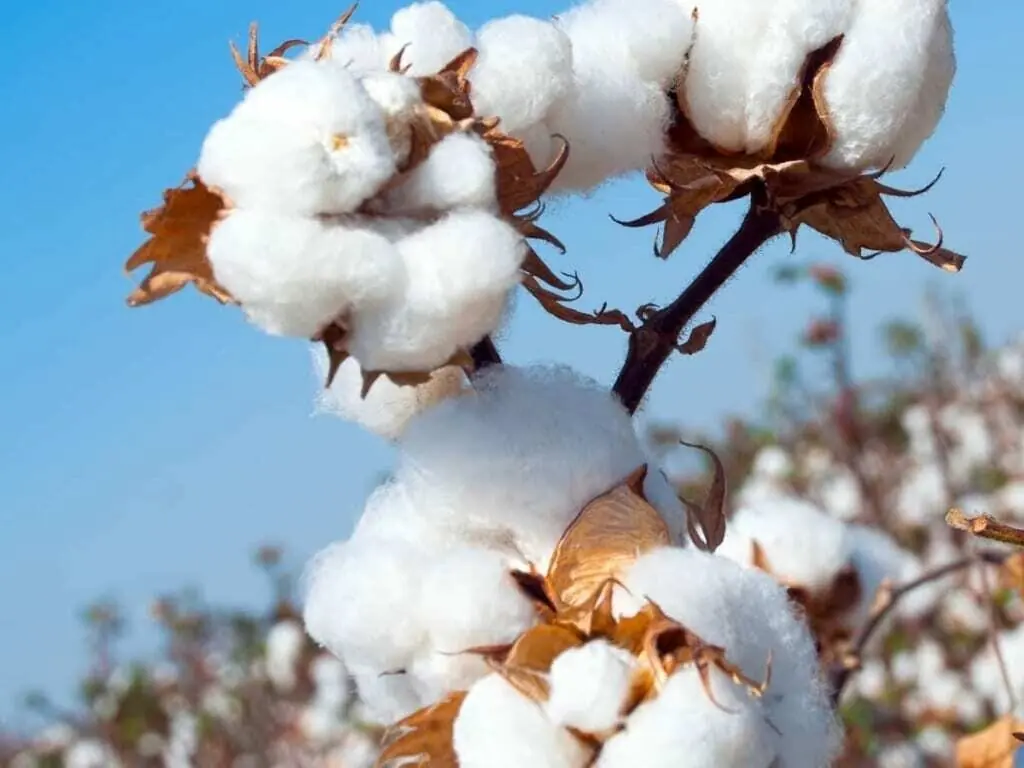
KARACHI: Cotton prices were mixed in Pakistan’s local market last week amid thin trading, with the spot rate rising by Rs600 per maund, according to the weekly market review. Prices in the New York market also moved unevenly.
Pest attacks on crops are reportedly hurting cotton quality, while business difficulties and reports of alleged financial irregularities are adding to concerns in the market. Uncertainty continues to weigh on trading.
A ginner in Tando Adam is reportedly involved in an alleged Rs650 million scam, while a trader in Faisalabad’s yarn market stands accused in a separate alleged Rs200 million case. The incidents have alarmed stakeholders in the cotton and yarn trade.
In Karachi, a well-established garment factory reportedly struggled to receive payments for imported garments and was forced to lay off 300 workers.
Reports from Faisalabad say the textile sector there is under growing strain, with some cloth-weaving units running at reduced capacity or closing altogether. Business circles say falling industrial activity has put heavy pressure on the industry, and some stakeholders describe the situation as so dire that the city is increasingly being called a “graveyard of the textile sector.”
Cotton-producing countries marked World Cotton Day on October 7, and several organisations in Pakistan held events. The Karachi Cotton Association hosted its ceremony at the Federation of Pakistan Chambers of Commerce and Industry (FPCCI).
In previous years, the ceremony was held at the Karachi Cotton Exchange building, and those affected by the dispute over the property were reportedly disappointed this year. According to the weekly review, the Evacuee Trust Property Board (ETPB), with help from the Federal Investigation Agency (FIA), has allegedly occupied the building unlawfully.
Separately, the All Pakistan Textile Mills Association (APTMA) said it will work to develop and promote the CAP brand.
Local cotton prices moved up and down last week, tracking New York cotton futures. Major textile groups leaned toward imported cotton when New York prices fell, and bought more domestic cotton when international prices rose.
Uncertainty over the quality of this season’s local crop has left mill owners in a bind, according to the weekly market review compiled by Naseem Usman. Quality is reportedly deteriorating early, and ginners face an unfavourable market. Growers are getting comparatively better prices, but fears are mounting that pest attacks could cut output in some areas.
Cotton from Balochistan is said to be of better quality, and ginners in parts of Sindh are blending it with locally sourced cotton to lift the quality of their stocks.
In Sindh’s Umerkot district, cotton acreage this year was nearly double that of last season. Over the past month, however, mealy bugs, pink bollworms and whiteflies have severely damaged the crop in several areas, and similar reports have come from other cotton-growing parts of Sindh.
Usman said he recently visited several areas in and around Umerkot, where landowners and traders in seed cotton, known as phutti, confirmed the crop had suffered heavier damage. Reports from other regions also pointed to a sharp deterioration in crop conditions.
Meanwhile, World Cotton Day was observed across cotton-producing countries. The Karachi Cotton Association (KCA) held its annual event at the Federation of Pakistan Chambers of Commerce and Industry (FPCCI). The event has traditionally taken place at the KCA building, but the association says the Evacuee Trust Property Board (ETPB) has illegally occupied it, with help from the Federal Investigation Agency (FIA), since December 13, 2025. The KCA said it was therefore forced to move the event to the FPCCI.
The rate of cotton in Sindh is in between Rs Rs18,000 to Rs 18,400 per maund. The rate of Phutti is in between Rs7,800 to Rs 9,000 per 40 kg.
In Punjab the rate of cotton is in between Rs Rs18,300 to Rs 18,800 per maund while the rate of Phutti is in between Rs8,500 to Rs 9,500 per 40 kg.
In Balochistan the rate of cotton is in between Rs18,400 to Rs 18,500 per maund. The rate of Phutti is in between Rs8,800 to Rs 9,500 per 40 kg.
Prices of cottonseed, cottonseed cake and cottonseed oil stayed relatively stable.
The KCA’s Spot Rate Committee raised the spot rate by Rs600 per maund, closing the week at Rs18,400 per maund.
Chairman of the Karachi Cotton Brokers Forum, Naseem Usman, said that international cotton prices continued to fluctuate, with New York cotton futures trading between 80 and 85 US cents per pound.
According to the weekly export sales report of the US Department of Agriculture (USDA), 165,100 bales were sold for the 2026-27 marketing year. Vietnam led the buyers with 61,800 bales, followed by Pakistan in second place with 45,900 bales and India in third with 20,800 bales.
For the 2027-28 marketing year, 56,100 bales were sold. China topped the list with purchases of 44,100 bales, while Honduras ranked second with 10,400 bales and Japan third with 1,600 bales.
Total exports stood at 161,600 bales. Vietnam was the largest importer with 39,600 bales, followed by India with 18,100 bales, Mexico with 17,900 bales and Pakistan with 16,500 bales, ranking fourth.
Meanwhile, the All Pakistan Textile Mills Association (APTMA) and the China Store Association of Pakistan (CAP) have launched a joint initiative to replace imported retail merchandise with locally manufactured products and to help Pakistani fashion brands expand into international markets. The initiative began on Friday with the first Manufacturing Retail Working Session, held at APTMA House in Lahore.
The session brought together leading retail brands and major textile manufacturers. It is part of APTMA’s broader plan, led by its Patron-in-Chief, Dr. Gohar Ejaz, which aims to raise textile exports by 3 billion US dollars within 12 months and by up to 10 billion US dollars over the next few years, through value addition, industrial cooperation and the global expansion of Pakistani brands.
The Karachi Cotton Association (KCA) organised World Cotton Day on October 7, 2026, at Federation House, Main Clifton, Karachi. The event aimed to highlight the importance of cotton worldwide and the challenges facing the world’s cotton-producing economies, particularly the difficulties in raising cotton production in Pakistan, so that the growing raw material needs of the country’s domestic textile industry can be met.
Prominent speakers from various segments of the cotton trade addressed the gathering. They included KCA Chairman Muhammad Atif Shakoor, Senior Vice Chairman Rizwan Iqbal Umer, Vice Chairman Prem Chand, Ex-Officio Member of the Executive Committee and former KCA Chairman Khawaja M. Zubair, former Executive Committee member Muhammad Arif Paracha, and Chander Lal, a member of the KCA’s Brokers Advisory Committee and a licensed cotton broker. The speakers shared their views on the challenges confronting Pakistan’s cotton trade and called on the government to take immediate, emergency measures on every possible front to increase cotton production and ensure the cultivation of quality cotton.
Addressing the event, KCA Chairman Muhammad Atif Shakoor urged the government to take all necessary steps on a war footing to increase cotton output, improve its quality, and avoid cotton imports in order to save the country’s precious foreign exchange.
Senior Vice Chairman Rizwan Iqbal Umer said that stakeholders must pledge wholehearted efforts to raise cotton production, improve its quality, and protect the interests of growers. He also stressed that all concerned should play their part in further strengthening the cotton trade and the textile industry.
Vice Chairman Prem Chand proposed that the KCA, the All Pakistan Textile Mills Association (APTMA), and the Pakistan Cotton Ginners Association (PCGA) jointly take up the matter with the government. He said they should press for higher cotton production and better quality, and for permission to import cotton seed to achieve the desired results.
Khawaja M. Zubair said that, to increase cotton production in the country, the government should ensure that farmers have access to healthy, certified cotton seed. He underlined the need to hold a seminar on cotton that would highlight the problems facing the cotton trade and the country against the backdrop of a sharp decline in production, and would draw up proposals for their resolution to be submitted for the government’s consideration.
Muhammad Arif Paracha described cotton as an environmentally friendly crop. He suggested devising a slogan for cotton that would help ensure its effective marketing and boost its demand and sales. He added that the KCA was established in 1933 to organise cotton marketing in the Indian subcontinent, which in itself demonstrated the importance of the crop.
Chander Lal said the KCA should write to the Prime Minister of Pakistan, the Federal Minister for Commerce, and the Federal Minister for Finance. The letters, he said, should highlight the importance of cotton to the country’s gross domestic product (GDP) and inform them that increased cotton production could significantly reduce the country’s trade deficit.
A large number of representatives associated with the cotton trade attended World Cotton Day, organised under the auspices of the Karachi Cotton Association.
Copyright Business Recorder, 2026

















Comments