


India is supporting terrorism, violating minority rights, Pakistan tells UNGA
- Pakistan has lost nearly 100,000 lives to terrorism since the turn of the century, says Saima Saleem
Pakistan rejected India's terrorism accusations at the UN, counter-accusing India of supporting terrorism, violating international obligations, and discriminating against minorities, while reaffirming its commitment to peace.
- Mutual terrorism accusations between India and Pakistan.
- Disputed status of Jammu and Kashmir.
- India's alleged discrimination against minorities.
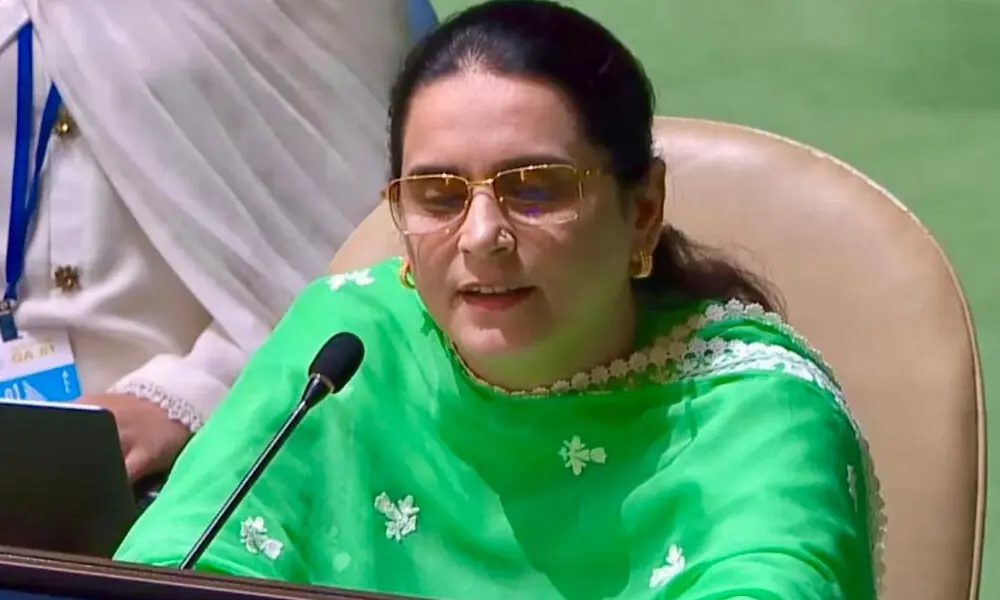
Pakistan has rejected remarks by the Indian representative at the 81st session of the UN General Assembly, saying that India was supporting terrorism, violating international obligations and pursuing policies that discriminate against minorities.
The development comes after First Secretary at India’s Permanent Mission to the UN Petal Gahlot accused Pakistan of backing terrorism.
“At the heart of the issue is the long-standing practice of cross-border terrorism by Pakistan. Our right to defend ourselves against terrorism will be exercised and continued. Terrorism by Pakistan will have consequences,” she said
Exercising Pakistan’s right of reply, Counsellor at Pakistan’s UN mission Saima Saleem said Islamabad had presented evidence of Indian financing and support for terrorist groups targeting Pakistan, including the TTP, BLA and Majeed Brigade.
“Pakistan has lost nearly 100,000 lives to terrorism since the turn of the century and suffered significant economic losses, while its counter-terrorism efforts and sacrifices have received international recognition,” she said. These figures and allegations were presented by the Pakistani delegation in response to India’s remarks.
Saleem also referred to cases involving Indian nationals in alleged assassination plots abroad, including the case of former Indian naval officer Kulbhushan Jadhav and Nikhil Gupta, who pleaded guilty in the United States in a case involving an alleged plot against a Sikh activist.
Turning to Jammu and Kashmir, she reiterated Pakistan’s position that the territory is internationally disputed and said its final status should be determined in accordance with relevant UN Security Council resolutions and the wishes of the Kashmiri people. Pakistan has consistently raised the issue at the UN and other international forums.
Saleem contrasted the situation in Azad Jammu and Kashmir with that in Indian-administered Jammu and Kashmir, alleging restrictions on political and fundamental rights in the latter.
She also accused India’s ruling authorities of promoting the Hindutva ideology and discrimination and violence against religious minorities, including Muslims, Christians, Dalits and Sikhs.
On the Indus Waters Treaty, Saleem accused India of attempting to use water as a political tool and said Pakistan considered the treaty legally binding. Pakistan has separately maintained at international forums that the treaty remains in force and that its obligations continue to apply.
Referring to the May 2025 military escalation between Pakistan and India, she claimed that India had suffered a “crushing defeat” during what she called Marka-e-Haq.
Saleem concluded by reiterating Pakistan’s stated commitment to peace, mutual respect, dialogue and the peaceful settlement of disputes.
“We will defend ourselves whenever aggression is imposed upon us, but we will never abandon the path to peace,” she said.


















Comments