


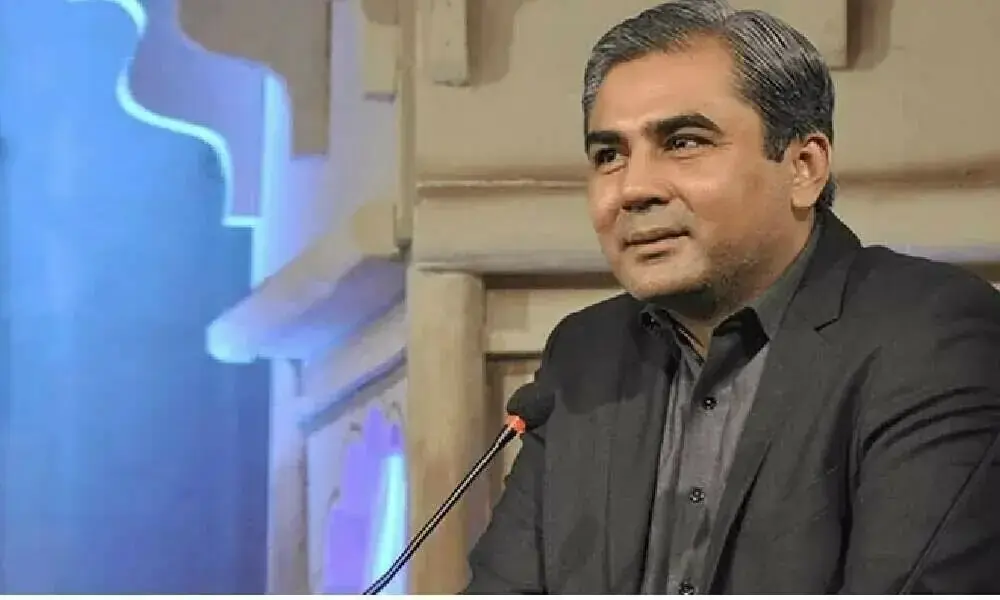
LAHORE: Interior Minister Mohsin Naqvi on Saturday said that any move to create new administrative units in Pakistan would proceed only with broad public backing, stressing that regional and ethnic identities would remain intact regardless of how boundaries are redrawn. Speaking at a National Policy Dialogue hosted by the Pakistan Political Science Consortium at the University of Management and Technology in Lahore, Naqvi said the debate over new provinces should not be framed around generational, tribal, or regional lines. Instead, he described the goal as improving governance, building a more competent administrative system, and bringing government closer to citizens.
He insisted that such a major structural change could not be decided unilaterally by one person, party, or government, and would require political consensus and parliamentary debate. “It cannot be one person’s issue or one province’s decision,” he said, adding that if the public does not want new administrative units, they simply won’t be created.
READ ALSO: Naqvi says decision on new provinces must reflect public will
Naqvi also pushed back on the idea that reform means dismantling the existing system. “It means that whatever is wrong should be changed,” he said, calling for a transparent process in which proposals are drafted, publicly debated, and ultimately put to the people for approval or rejection.
He acknowledged that any restructuring plan would need to weigh benefits, implementation methods, and financial costs, and said clarifying an earlier comment he made last month, explained that his remarks were directed at the broader administrative “system” in place since independence — not at any specific political party. He called for the process to move forward strictly through constitutional and democratic means, and urged politicians to avoid emotional rhetoric on the issue, noting that such reform would take time rather than happen overnight.
The minister argued that Pakistan’s governance system has struggled to translate policy into real outcomes for citizens. “Governments keep changing; policies keep changing; budgets come and go… but the biggest issue is how much we are able to deliver in the end,” he said.
Senior PML-N leader Khawaja Saad Rafique, also speaking at the event, argued that internal democracy within political parties should come before any discussion of new provinces. He questioned what practical difference smaller provinces would make if constitutional violations continued unchecked, noting that every Pakistani prime minister has eventually faced imprisonment.
Rafique said undermining of public mandates had already begun in Balochistan and criticised the dominance of single families within major political parties. “If disrespect for the Constitution continues, it will make no difference how many provinces we create,” he said.
Punjab Assembly Speaker Malik Muhammad Ahmad Khan called for a more balanced distribution of decision-making authority, administrative duties, and financial resources across federal, provincial, and local governments. He said devolution efforts have often failed because responsibilities were handed down without matching authority, resources, or accountability mechanisms. Khan pointed to the 18th Constitutional Amendment as a significant milestone in redistributing power between the federation and provinces, and called for continued dialogue on devolution and the role of local governments. He also emphasised civil service reform, saying the administrative structure needs to keep pace with democratic governance standards.
“The real measure of administrative reform is not merely the transfer of powers,” Khan said, adding that success should ultimately be judged by improvements in public services, transparency, and citizen participation.
Copyright Business Recorder, 2026



















Comments