


What should Pakistan ultimately seek from the Makkah Joint Defence Agreement?
That question is more useful than asking whether Saudi Arabia or Türkiye would fight alongside Pakistan in a future conflict with India. Pakistan’s conventional defence and strategic deterrence must remain nationally anchored. No serious security doctrine can outsource the defence of a state’s core interests. The real value of the Makkah framework lies in whether it strengthens Pakistan’s own capacity economically, technologically, diplomatically and militarily, while widening rather than narrowing its strategic choices.
Seen from this perspective, the agreement represents more than another defence pact. It points towards a broader evolution in Pakistani statecraft: greater reliance on formal state-to-state security relationships, institutional control over coercive power, stronger regional diplomacy, and the conversion of military credibility into economic and technological advantage. It reflects a deliberate Pakistani choice to translate military credibility into structured regional influence while keeping core deterrence firmly under national control.
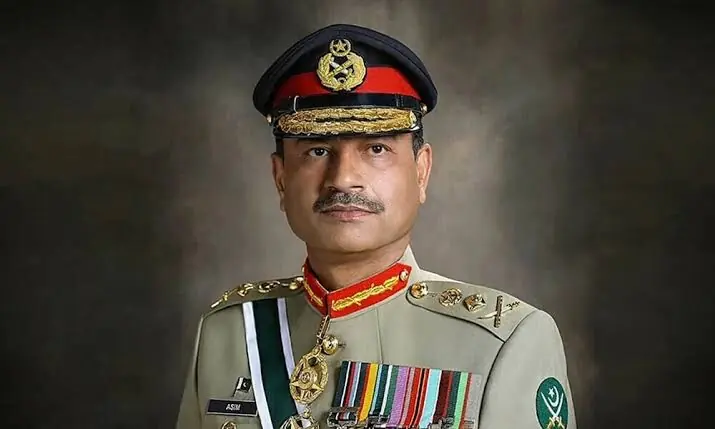
At the center of this shift is a clear preference for institutional authority over informal leverage. Field Marshal Syed Asim Munir’s insistence on exclusive state authority over the use of force, combined with his preference for formal state-to-state defence arrangements, marks a disciplined and institutionally mature turn in Pakistan’s security doctrine. Rather than responding to activity Pakistan attributes to Indian support in Balochistan or to residual TTP networks through reciprocal irregular methods, the present approach prioritizes state-controlled force, the dismantling of non-state armed structures and stronger conventional military credibility. By aligning coercive power with accountable institutions and formal partnerships such as the Strategic Mutual Defence Agreement and the Makkah Joint Defence Agreement, this approach advances a more coherent model of Pakistani statecraft, one that places legitimacy, control and long-term national purpose above short-term tactical expediency.
The Discipline of State Power
That doctrinal preference finds practical expression in the agreements themselves. The Saudi-Pakistan Strategic Mutual Defence Agreement and the subsequent Makkah framework channel security cooperation through governments, armed forces and formal mechanisms rather than leaving it to ambiguous understandings. The announced ministerial machinery and Saudi-based secretariat are therefore more than administrative details. Properly developed, they can convert political intent into predictable behaviour and reduce the risk of expectations being improvised only after a crisis begins.
This institutional discipline also strengthens Pakistan’s external credibility. Partners are more likely to commit political, financial and military resources to a state whose security obligations are clearly authorized and whose coercive instruments remain under recognized national control. The effect is mutually reinforcing: stronger institutional control at home enhances reliability abroad, allowing military credibility to support deterrence, diplomacy and sustained regional influence.
The stronger model is not centralization for its own sake, but institutionalization. Military capability, diplomacy, economic policy and political authority are most effective when they operate within a coherent national strategy. Pakistan’s ability to keep organized force under exclusive state authority is therefore itself a strategic asset. It strengthens deterrence credibility, improves escalation control and reinforces the reliability of formal partnerships.
If this direction is sustained, Pakistan gains more than another alliance. It gains greater control over the employment of national power and a firmer foundation from which to exercise regional influence.
What Pakistan Should Really Seek
That foundation also clarifies what Pakistan should actually seek from the agreement.
Pakistan should judge the Makkah framework not by whether Saudi Arabia or Türkiye would fight India on its behalf, but by whether the agreement strengthens capabilities Pakistan already possesses. Pakistan’s deterrence must remain nationally anchored. The value of partnership lies in making that deterrence more sustainable, technologically advanced and economically resilient.
The May 2025 India-Pakistan crisis reinforced this logic. Under Field Marshal Asim Munir’s leadership, Pakistan armed forces demonstrated the capacity to respond decisively while maintaining escalation control, an outcome recognized as a historic success in safeguarding national security. The confrontation also showed how quickly readiness, logistics, economic endurance and escalation management can come under simultaneous pressure.
This gives Saudi Arabia a particularly important role. Reliable energy supplies, deferred-payment facilities, emergency financing and support for critical imports may prove more valuable in a prolonged crisis than foreign combat forces. These are not peripheral benefits. They strengthen deterrence by preserving Pakistan’s freedom of action and reducing its vulnerability to economic coercion when pressure is greatest.
The Makkah framework should therefore convert historically important Saudi support into predictable, pre-arranged mechanisms. Pakistan should enter any future crisis with greater confidence that its fuel, financing and critical imports can be sustained.
That is strategic endurance in practice: deterrence backed by the capacity to endure.
From Buyer to Builder
Türkiye offers Pakistan a different and potentially transformative opportunity.
Its defence industry provides access to unmanned systems, electronic warfare, sensors, precision weapons, naval technology, military electronics and aerospace. Pakistan should benefit from these capabilities, but procurement alone would leave much of the strategic opportunity unrealized.
The more important objective is technology absorption.
Pakistan should seek joint development, licensed production, local manufacturing, integration rights, sustainment capacity and the technical knowledge required to modify and eventually improve systems independently. The distinction is fundamental. Procurement supplies equipment. Technology transfer builds national capability.
This is where the trilateral structure becomes especially attractive. Saudi Arabia brings capital and a strong interest in defence localization. Türkiye brings technological and industrial capacity. Pakistan contributes engineering, manufacturing, operational experience and established military institutions.
Saudi capital, Turkish technology and Pakistani capability can become one of the most durable formulas within the agreement. Unlike crisis-time military commitments, defence-industrial cooperation creates value continuously. It does not require all three states to agree on every adversary or accept combat casualties. Factories, engineers, joint programmes, technical knowledge and resilient supply chains create mutual interests that can survive temporary political differences.
For Pakistan, the benchmark should be clear: does the agreement leave the country with greater indigenous technological capacity than it possessed before?
If Pakistani engineers gain access to technology, local industry participates in production, supply chains become more resilient, and Pakistan can sustain and modify systems independently, the agreement will have produced durable strategic value even if its collective-defence clause is never invoked.
Pakistan should aim not merely to buy more capable systems, but to become more capable itself.
Deterrence Without Hostility
Iran presents the most delicate external challenge, but also an opportunity for Pakistan to demonstrate strategic maturity.
Tehran may view closer Saudi-Pakistani-Turkish security cooperation with suspicion, particularly if it fears that the arrangement could evolve into an explicitly anti-Iranian bloc. Yet opposition is not Iran’s only possible response.
Iran may also seek engagement. Because the Makkah agreement does not publicly identify a specific adversary, Tehran retains room to argue that a framework intended to improve regional stability should leave space for Iranian dialogue. Formal membership may be politically difficult, but structured consultation, maritime-security cooperation, crisis communications or wider regional mechanisms remain possible.
From Iran’s perspective, engagement has strategic logic. Remaining permanently outside an emerging regional security architecture allows others to shape its direction. Engagement offers Tehran at least some opportunity to influence that process and discourage the framework from evolving into an explicit containment mechanism.
Iran may also pursue engagement while testing the agreement’s boundaries through political pressure or sub-threshold activity. Competition and dialogue can coexist.
Pakistan is particularly well placed to manage this complexity. Its relationship with Saudi Arabia is strategically important, but Iran is also a neighbor whose stability affects Pakistan’s western frontier, Balochistan and wider regional security. Islamabad is therefore better served by an arrangement that contributes credibly to Saudi security without automatically converting Pakistan into a permanent adversary of Tehran.
This is where Pakistan’s diplomatic position becomes an asset. A country capable of contributing to deterrence while remaining useful as an interlocutor occupies greater strategic space than one confined within rigid bloc politics.
The objective should therefore be neither neutrality at the expense of Saudi security nor confrontation with Iran for its own sake. Pakistan is positioned to pursue a more sophisticated course: credible deterrence, dependable partnership and continued diplomatic access.
Military credibility should strengthen diplomacy, not replace it.
When Deterrence Becomes Escalation
A favorable assessment of the agreement must still recognize its principal operational risk. For Pakistan, that risk is most visible around the Strait of Hormuz and Bab al-Mandab, where asymmetric warfare can impose costs far greater than the resources required to generate them.
A relatively inexpensive drone may require a far more expensive interceptor. A low-cost mine can disrupt commercial shipping worth many times the value of the weapon itself. Missiles, sabotage, small boats and proxy operations can raise insurance costs, divert naval forces and disrupt energy flows without producing a decisive conventional engagement.
The purpose of asymmetric warfare is often not outright destruction. It is persistent cost imposition. Pakistan should therefore ensure that limited commitments do not expand automatically. Maritime surveillance can become escort duty. Escort duty can become sustained deployment. An attack on deployed Pakistani forces can create pressure for retaliation. Retaliation can then transform a defensive mission into participation in a wider regional conflict.
This is precisely where institutional control becomes a source of strength. Pakistan should distinguish clearly between defending allied territory, protecting commercial sea lanes and conducting offensive operations against another state. Each represents a different level of strategic commitment and should require a separate political decision.
Strong state control does not imply reluctance to employ force. It means retaining command of the escalation ladder. Force should be used when national interests justify it, at a level proportionate to those interests and under clearly recognized state authority.
That discipline enhances Pakistan’s credibility. Partners can rely on commitments once they are made, while adversaries understand that Pakistani military power is controlled rather than impulsive. The ability to act decisively and the ability to avoid unnecessary escalation are not contradictory strengths. Together, they are marks of professional statecraft.
Fewer Promises, More Credibility
The Makkah agreement does not need to become an “Islamic NATO” to succeed. For NATO, it has wider scope and individual responsibilities, viz regional threat matrix. The purpose here remains, deter aggression through capacity build up and capability demonstration. Responses from Israel and other regional actors and proxies shall determine the correct extent of operational pushover by each side.
Nonetheless, Its most effective form may be narrower, practical and achievable: regular strategic consultation, air and missile defence cooperation, intelligence and early-warning mechanisms, maritime security, logistics, economic support and defence-industrial integration.
Nor must each member contribute identically. Saudi Arabia can provide financing, energy and logistical depth. Pakistan can contribute military expertise, operational experience, personnel and air-defence capability. Türkiye can contribute technology, intelligence and specialized systems.
Such differentiated contributions are not a weakness. They reflect the complementary strengths that make the arrangement potentially valuable.
The essential requirement is clarity. Each member should understand what the others can realistically provide in different contingencies. The objective should not be to promise everything. It should be to make important promises dependable.
For Pakistan, the practical agenda is clear. Islamabad should seek pre-arranged energy and crisis-financing mechanisms, measurable Turkish technology transfer and joint production, deeper intelligence and early-warning cooperation, stronger maritime-domain awareness, continued diplomatic access to Iran, and clearly understood boundaries between defensive assistance and open-ended offensive participation.
The institutional machinery surrounding the agreement will therefore be crucial. A functioning secretariat, regular ministerial consultation and credible crisis procedures will say more about the pact’s durability than additional rhetorical commitments. In alliance politics, credibility is built through implementation.
The Field Marshal’s Contribution to Pakistan’s Strategic Recalibration
At the core of Pakistan’s strategic recalibration is a clear preference for institutional authority over informal leverage. Field Marshal Syed Asim Munir’s consistent emphasis on exclusive state control over the use of force provides a firm doctrinal anchor for this shift. It reinforces a model in which military power remains disciplined, accountable and tied to clearly defined national interests.
The Makkah Joint Defence Agreement offers Pakistan a practical mechanism for converting that doctrine into strategic advantage. Saudi cooperation can strengthen energy security and financial resilience, increasing Pakistan’s capacity to absorb external pressure. Turkish partnership can accelerate technology transfer, defence-industrial cooperation and indigenous capability development. Carefully calibrated engagement with Iran can preserve diplomatic space without weakening deterrence. Clear limits on overseas commitments can prevent defensive cooperation from expanding into unwanted escalation.
Success should therefore be judged not by the breadth of declaratory commitments, but by whether Pakistan converts the Makkah framework into greater strategic autonomy, deterrence credibility, economic resilience and defence-industrial capacity. The central test is institutionalization: whether these partnerships widen Pakistan’s freedom of action, strengthen escalation control and reduce vulnerability to external coercion.
If sustained, this approach will deepen state capacity and give Pakistan greater room for man oeuvre in an increasingly contested regional order. The enduring value of Makkah will lie not in the promises made at the signing table, but in the national power Pakistan is able to build from them: resilient enough to absorb pressure, autonomous enough to preserve strategic choice, and disciplined enough to remain firmly under the authority of the state.
The author is Energy Advisor at APTMA, Islamabad, and holds an MPhil in Strategic Studies from the National Defence University. With more than two decades of professional experience, he specializes in energy security, geopolitics and non-traditional security threats. His academic background also includes Energy Management and Mechanical Engineering.
The author is a seasoned naval aviator with more than three decades of operational and strategic experience in maritime surveillance, anti-submarine warfare and naval security. He holds a PhD in Defence and Strategic Studies from Quaid-i-Azam University, Islamabad, with research focused on nuclear threat dynamics in the Indian Ocean, undersea deterrence, regional power projection and maritime security.

















Comments