


Asian shares pause for US jobs, oil extends gains on Mideast risk
- MSCI's broadest index of Asia-Pacific shares outside Japan held flat and was down 0.4% for the week
Asian shares are cautious ahead of crucial US jobs data, which will heavily influence the Federal Reserve's next interest rate decision, while rising oil prices reflect ongoing Middle East tensions.
- US jobs data and Federal Reserve interest rate decisions.
- Rising oil prices amid Middle East geopolitical tensions.
- Asian market performance and investor outlook.
- Iran's potential Strait of Hormuz transit restrictions.
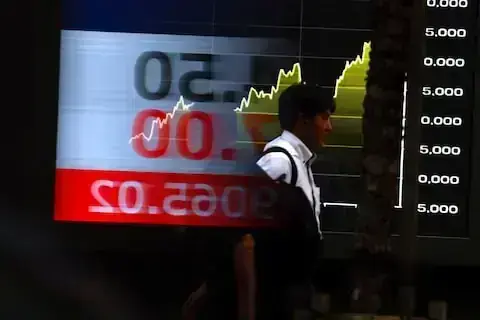

SYDNEY: Asian shares held their breath on Friday for US jobs data that could prove pivotal for next month’s interest-rate decision by the Federal Reserve, while rising oil prices served as a reminder that Middle East tensions remain far from resolved.
MSCI’s broadest index of Asia-Pacific shares outside Japan held flat and was down 0.4% for the week. Japan’s Nikkei dropped 0.9% although it was set for a weekly rise of 1.2%.
South Korea’s KOSPI slipped 0.5% and was down 5.0% for the week for a seventh straight week of declines. The index had doubled in the first half of the year, swept up by the blistering demand for AI-linked chip stocks. China’s CSI 300 rose 0.2%.
After bouts of volatility sparked by concerns over the durability of the AI-driven rally, investors are now squarely focused on the U.S. payrolls report due later in the day, which could prove crucial for the interest-rate outlook. Forecasts are centred on a rise of 80,000 jobs for July after a 57,000 gain in June, with the unemployment rate forecast to hold steady at 4.2%.
The stakes are high as markets cannot seem to make up their mind about how the Federal Reserve might move next month, with a rate hike seen as a coin toss.
“With yields and inflation still the key risks for stocks, we expect Friday’s NFP to trade as a ‘good news is bad news’ print,” said Michael Feroli, chief U.S. economist at JPMorgan, adding that a strong jobs number would reinforce higher-for-longer pricing and put upward pressure on rates.
Conversely, equities may respond positively to a soft payrolls report as yields ease and policy expectations shift toward a dovish path, added Feroli.
Nasdaq futures were flat while S&P 500 futures slipped 0.1%. European bourses are set for a lower open, with pan-region stock futures down 0.2%.
Oil climbs again
Tensions in the Middle East flared up again after Yemen’s Houthis attacked Saudi Arabia, a major oil supplier. Riyadh has warned coordinated attacks by the Houthis and Iran-backed Iraqi militias were imminent.
Brent crude futures gained 1% to $83.38 a barrel, after jumping 3.8% overnight. They were, however, still set for a weekly loss of 7.5% and remained well off their recent peak of $102 a barrel two weeks ago.
Iran is reviewing a preliminary bill that would bar U.S., Israeli and other “hostile” vessels from transiting the Strait of Hormuz. The draft bill would impose fines of up to 20% of a ship’s cargo value for violations of the proposed restrictions.
Higher oil prices lifted Treasury yields. The 2-year note yield held at 4.2496% in Asia, after rising 7 basis points overnight, while the ten-year yield steadied at 4.6757%, having gained 5 bps overnight.
The dollar was steady in Asia on Friday after bouncing overnight.
Against the Japanese yen , the dollar traded at 158.51 yen, after rising 0.4% overnight to break above the 200-day average of around 158. The US jobs report could decide the next moves in the yen after last week’s historic currency market intervention from Japan and the U.S. sparked a sharp rally.
Spot gold rose 0.1% to $4,243 an ounce, while spot silver rose 0.5% to $61.78 an ounce.






















Comments