


KE’s 640MW renewable projects excluded from draft IGCEP base case


KARACHI: K-Electric’s (KE) 640-megawatt (MW) renewable energy portfolio, despite securing regulatory approvals and competitive tariffs through transparent auctions, has been excluded from the base case of the draft Indicative Generation Capacity Expansion Plan (IGCEP) 2025, raising concerns over higher electricity costs, energy security and investor confidence, according to a study released on Thursday.
The study, titled “Successful Renewable Auctions, Uncertain Outcomes: A Techno-Economic Assessment of K-Electric’s 640MW Renewables 2026,” was jointly published by Renewables First and the Policy Research Institute for Equitable Development (PRIED).
According to the report, KE successfully concluded competitive auctions for three renewable energy projects in 2024 and secured regulatory approvals from the National Electric Power Regulatory Authority (Nepra). The projects comprise 640MW of solar and wind capacity awarded at tariffs ranging from Rs8.9 to Rs11.2 per unit (approximately 3.1 to 3.9 US cents per kilowatt-hour).
The portfolio includes a 150MW solar project at Bela awarded to Master Group at Rs11.2 per unit, a 220MW hybrid wind-solar project at Dhabeji awarded to JCM at Rs8.9 per unit, and a 270MW solar project at Deh Metha Ghar and Deh Halkani awarded to KAPCO at Rs9.8 per unit.
Despite completing the competitive procurement process and obtaining regulatory approvals, the study noted that these projects were not incorporated into the base case of the draft IGCEP 2025, Pakistan’s national power generation expansion plan, and were instead treated as an alternative scenario.
The report said the exclusion means KE cannot rely on the low-cost renewable projects for future capacity planning despite having completed the required regulatory process.
The study noted that KE’s existing generation system remains heavily dependent on imported liquefied natural gas (RLNG), which accounts for nearly 90 percent of its installed generation capacity. In addition, the utility imports nearly half of its electricity requirements from the National Grid Company through the interconnection tie-line.
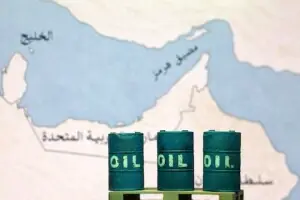
According to the report, reliance on imported RLNG exposes the utility to international fuel price volatility, supply chain disruptions and geopolitical risks, including those arising from disruptions in maritime trade routes such as the Strait of Hormuz. The dependence on imported electricity from the national grid also exposes KE to transmission constraints and capacity charges.
Using power system modelling through PLEXOS and PyPSA software, the study assessed the financial impact of integrating the renewable projects into KE’s generation mix.
It estimated that commissioning the 640MW portfolio from FY2027 would reduce KE’s total system costs during FY2025-FY2035 by approximately USD 432 million, while lowering the average electricity basket price from around 13 US cents per kilowatt-hour to 12.58 US cents per kilowatt-hour.
The study further projected that expanding renewable capacity to include 2,408MW of solar generation, 1,232MW of wind power and 200MW of battery energy storage systems (BESS) by FY2035 could reduce cumulative system costs to approximately USD 12.7 billion, generating total savings of nearly USD 1.56 billion over the planning horizon.
It also estimated that deeper renewable integration would reduce KE’s dependence on electricity imports through the national grid tie-line from around 60 percent to below 40 percent.
The report observed that KE’s Nepra-approved Power Acquisition Programme (PAP) for FY2024-FY2030 envisages the addition of 1,282MW of renewable energy, increasing renewables’ share in the company’s generation mix from about three percent currently to nearly 30 percent by FY2030.
The study argued that excluding already-approved renewable projects from the national planning framework creates regulatory uncertainty and weakens investment signals for independent power producers and financiers participating in competitive bidding processes.
Analysts said a diversified generation portfolio comprising renewable energy, battery energy storage systems, indigenous energy sources and imports from the national grid would support KE’s long-term energy security.
The study concluded that further delays in integrating the renewable projects would prolong consumers’ exposure to imported fuel costs and increase concerns over electricity affordability and supply reliability, recommending that KE accelerate diversification of its generation mix through low-cost renewable energy sources.
Copyright Business Recorder, 2026

















Comments