


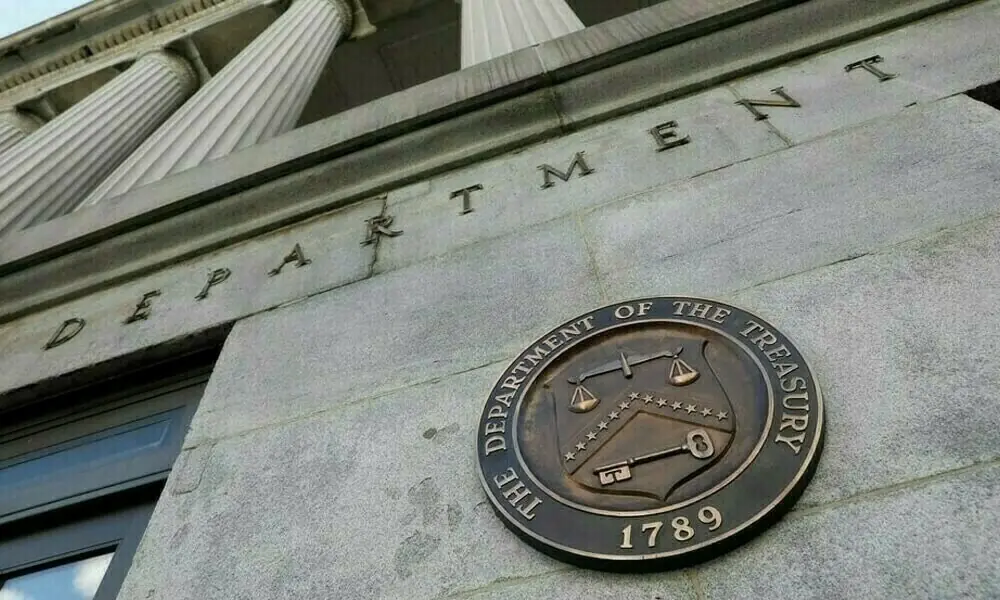

BEIJING/WASHINGTON: The United States on Friday partially removed Hong Kong-related sanctions and trade restrictions imposed by President Donald Trump in 2020 over.
China’s security crackdown on the territory, but did not restore its autonomous status, the U.S. State and Treasury departments said.
China had earlier announced that the U.S. decision to allow the expiration of Trump’s national emergency declaration over
Hong Kong would restore the territory’s special trade and economic status, but U.S. officials disputed this assessment.
The U.S. Treasury Department announced that it had allowed only the national emergency portions of Trump’s order to expire.
The order was issued during Trump’s first term in response to Beijing’s imposition of a national security law in Hong Kong.
The July 14, 2020, order, which had been extended annually for the past five years, imposed sanctions on individuals associated with Hong Kong’s security crackdown and suspended the territory’s special economic and trade privileges associated with its prior autonomous status.
A U.S. State Department spokesperson said that while the national emergency has ended, other parts of the executive order remain in effect.
“As E.O. 13936 states, Hong Kong is no longer sufficiently autonomous to justify differential treatment in relation to the PRC under the particular U.S. laws and provisions listed in the E.O.,” the State Department spokesperson added, using an acronym for People’s Republic of China.
The Treasury said the emergency expiration does not affect restrictions imposed under the Hong Kong Human Rights and Democracy Act of 2019 or the Hong Kong Autonomy Act of 2020.
A Treasury spokesperson said the two laws had significant overlap with the national emergency that has now been rescinded, adding that sanctions will remain on 38 of 49 people affected by the executive order.
“The non-renewal is consistent with sanctions modernization efforts that streamline sanctions for greater efficiency and effectiveness, including by ensuring our sanctions are not duplicative,” the Treasury spokesperson said.
Hong Kong had benefited from a special economic and trade status with the United States that was separate from U.S. dealings with China. This status was based on the principle that
Hong Kong remained a separate customs territory and maintained a high degree of autonomy after its 1997 handover from Britain to China.
The decision to let the order lapse marks a significant reversal and comes after recent trade talks between Washington and Beijing that also produced tariff reductions.
The U.S. has treated Hong Kong the same as China on tariffs and export controls since 2020, but it was not immediately clear whether the order’s expiration would affect duties imposed by
Trump since he returned to office in January 2025. Those duties were imposed based on other U.S. laws.
China’s commerce ministry nonetheless welcomed what it called a restoration of Hong Kong’s status as a step toward implementing understandings reached during recent talks between Beijing and Washington.
Trump met Chinese President Xi Jinping in Beijing in May and has invited Xi to visit the White House in September.
“The U.S. adjustment of its Hong Kong policy in a more positive direction also aligns with the widespread expectations of the international community,” the statement published on its website said.
It urged the U.S. to respect China’s sovereignty and the rule of law in Hong Kong, restore and strengthen normal trade and economic exchanges with the city, and help improve China-U.S. relations.
Critics of the security law say it has crushed the wide-ranging freedoms promised to Hong Kong when it returned to Chinese rule; supporters say it has brought stability to the city after a year of anti-government protests in 2019.





Comments