


Small businesses cannot outwork bad governance
Pakistan's economic challenges stem from systemic governance failures, forcing entrepreneurs to compensate for a broken system. Holistic governance, not isolated interventions, is crucial for small business growth.
- Pakistan's widespread digital payment adoption without corresponding business formalization.
- How systemic governance failures burden Pakistani entrepreneurs, hindering growth.
- Lessons from Istanbul and China on building coherent business ecosystems.
- The necessity of a whole-of-systems approach to governance for enterprise.
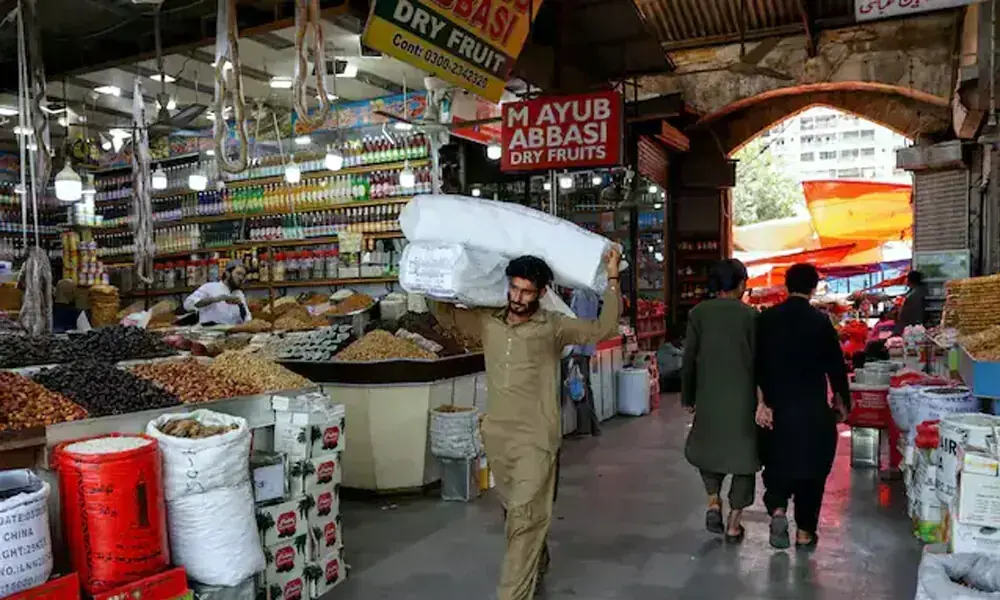
Pakistan’s economic debate remains built around a comforting succession of single-variable explanations. If credit becomes cheaper, small businesses will grow. If payments are digitized, firms will formalise. If hotels improve, tourists will arrive. If workers are trained, exports will rise. If registration becomes easier, the informal economy will recede.
Each prescription contains some truth, but the error lies in assuming that correcting one component can compensate for the dysfunction of the whole.
Recent travel by the author across rural Sindh, South Punjab, and Gilgit-Baltistan offers a useful counterpoint to the conventional description of Pakistan as a technologically backward and cash-dependent economy. From small settlements around Kunri, Mirpurkhas and Tando Allah Yar to distant towns and villages around Skardu and Gulmit, cash was rarely necessary.
Roadside shops, small restaurants, informal service providers and businesses with little visible documentary footprint routinely accepted bank transfers or mobile payments. Digital acceptance was not confined to sophisticated urban retailers. It had reached economic actors operating at the outer edges of both geography and formal regulation.
The national data point in the same direction. According to the State Bank of Pakistan, the number of QR-enabled merchants more than doubled during FY2024-25, rising from approximately 516,000 to 1.09 million. This is an important achievement, but it demonstrates considerably less than policymakers often assume.
A digital payment does not give a business a legal identity. It does not create accounts, establish taxable income, register employees, generate invoices, secure licences or produce enforceable contracts. Nor does it necessarily distinguish commercial turnover from an ordinary transfer between two individuals.
The same payment infrastructure can facilitate transactions for a documented company, an unregistered roadside business and an activity operating entirely outside the formal regulatory perimeter. Digital infrastructure can reduce transaction friction, but formalisation requires institutions.
Pakistan may therefore have digitised large parts of informal commerce without integrating those businesses into a broader productive system.
A transaction may become visible somewhere in the financial network while the enterprise itself remains commercially illegible. Its payment history does not automatically become a credit profile. Its turnover does not necessarily support supplier finance, insurance, government procurement or working capital.
Technology has performed the narrow function assigned to it, but the institutions surrounding the transaction have not converted it into enterprise capability.
Recent travel through Istanbul during peak tourist season presented the reverse paradox. Across restaurants, traditional markets, confectioners and independent retailers in Sirkeci and the surrounding commercial districts, cash was frequently preferred.
Discounts of around 10 per cent for payment in Turkish lira rather than by card were repeatedly offered.
The preference may reflect card-acquiring costs, commercial habit, the greater traceability of electronic transactions or some combination of the three. None of this permits conclusions about the tax treatment of any individual business. The relevant observation is narrower: a visible preference for cash has not prevented Istanbul from sustaining an extraordinarily dense tourism and small-business economy.
Türkiye received roughly 64 million visitors and earned approximately $65 billion in tourism revenue in 2025. Tourists continue to arrive despite cash preferences, high prices, summer congestion, uneven service and other imperfections that would ordinarily dominate Pakistan’s discussion of tourism reform.
This should invite greater scepticism towards the proposition that Pakistan can unlock tourism primarily by improving hotels or payment acceptance.
Hotels matter, but they operate inside a destination system. That system includes aviation connectivity, visas, public transport, security, walkability, historical sites, public spaces, entertainment, food, retail density, urban management and international marketing. It also includes confidence that a visitor can move between these elements without repeatedly encountering administrative or logistical failure.
Istanbul’s individual businesses are not required to create Istanbul because the city delivers customers to them. Pakistan, by contrast, frequently asks an isolated hotel, restaurant or tour operator to compensate for the absence of the destination system around it.
A good property can provide excellent rooms, food and service, but it cannot independently repair roads, operate airports, maintain public spaces, create commercial density, manage waste, enforce safety standards or establish confidence in the wider journey.
China offers an even sharper example. For an overseas visitor, its payment environment can be difficult to navigate. Everyday commerce is organised around domestic applications such as Alipay and Weixin Pay.
International cards, foreign digital wallets, familiar applications and translation interfaces may work inconsistently. Recent reforms have improved foreign access, but the system still often requires the outsider to adapt to domestic commercial architecture.
Yet China did not become a manufacturing and SME powerhouse by designing every domestic interface around the convenience of the occasional foreign visitor. It built an environment that works, at enormous scale, for firms operating within its productive economy.
Yiwu’s merchants benefit from wholesale-market density, logistics, warehousing, supplier networks, transport infrastructure, digital platforms, export intermediaries and local administrative capacity. A foreign visitor may struggle with a payment or translation interface, but the enterprise itself does not struggle to locate an entire commercial ecosystem.
China requires the outsider to adapt to a coherent system; Pakistan requires the entrepreneur to adapt continuously to an incoherent one.
The comparison is not about national character, hospitality or work ethic. Impressions of service, language ability and salesmanship are necessarily subjective.
Recent travel observations suggest that Pakistani retailers can often be more willing to bargain, improvise, communicate in English or make unusual arrangements to complete a sale than counterparts in some larger commercial centres abroad. But warmth, effort and salesmanship do not explain national economic performance.
Pakistani entrepreneurs frequently work harder at the level of the individual transaction because the surrounding system has transferred the burden of coordination onto them.
The owner must locate customers, arrange delivery, manage unreliable electricity, maintain informal credit relationships, navigate taxes, deal with officials, monitor security and protect inventory from infrastructure failure. Much of this effort is defensive. It prevents the enterprise from collapsing, but does not improve its product, productivity or scale.
In a better-functioning environment, a business can appear less industrious because more of the work has already been performed collectively.
Public transport brings workers and customers. Roads move inventory. Waste is removed. Electricity is sufficiently reliable. Commercial districts remain accessible and secure. Women can participate as workers, entrepreneurs and consumers. Courts and administrative systems provide at least a credible expectation that contracts and property rights will survive a dispute.
Where these foundations exist, an individual merchant can decline to bargain, provide indifferent service or temporarily close the shop and still remain commercially viable.
The system supplies enough demand, connectivity and predictability to tolerate ordinary mediocrity. Where they do not exist, extraordinary effort may still produce only subsistence.
Governance must therefore be understood as a whole-of-systems experience. It is not synonymous with digitisation, access to credit, tax registration or regulatory reform. It includes public transport, drainage, waste management, roads, policing, electricity, telecommunications, female mobility, local government, courts, political stability and the consistent application of rules.
None of these systems must function perfectly. A recent power interruption in the middle of Istanbul’s Spice Bazaar did not erase the commercial ecosystem surrounding it.
Customers remained present, transport continued to operate, suppliers remained connected and the destination retained its economic value.
In Pakistan, failures tend to compound. Rain damages the road. Inventory is delayed. Electricity fails. Perishable goods deteriorate. Customers cannot travel. Sales collapse. A loan instalment is missed. The financial institution then records another example of an SME with weak credit quality, and the policy response is often to design another financing facility.
The deepest cost of this environment is not fully recorded in an electricity bill, tax return or bank statement. It is the claim that institutional uncertainty places on the entrepreneur’s attention.
A small-business owner must consider whether waste will be removed, whether a road will remain passable, whether mobile services will be suspended, whether a procession will close the market, whether a regulatory interpretation will change, or whether an unrelated controversy will abruptly interrupt commercial activity.
In Pakistan, an event originating far outside the enterprise can escalate into market closures, disrupted transport, telecommunications restrictions and a collapse in footfall. The individual business has no control over the underlying controversy but must nevertheless carry its commercial consequences.
Attention devoted to institutional survival cannot be devoted to the enterprise. Working capital held against disruption cannot finance inventory. Time spent dealing with officials cannot be spent developing customers. Management capacity consumed by power, security and logistics cannot improve quality or support entry into a new export market.
Bad governance taxes enterprise in money, time and cognitive bandwidth. The burden is especially severe for small firms because large corporations can purchase private substitutes. They can employ lawyers, generators, security teams, logistics departments, tax advisers and government-relations staff.
A small firm pays for the same institutional failures through the owner’s time, working capital and foregone growth.
This is why isolated SME interventions repeatedly disappoint. Credit cannot compensate for broken logistics.
Training cannot create demand. Digitisation cannot produce legal identity. Formalisation will not become attractive when visibility merely exposes a business to additional regulation and predation. A hotel cannot independently construct a tourism destination.
The appropriate policy question is therefore not how to make Pakistani entrepreneurs work harder, borrow more, register sooner or adopt another application. They already expend an extraordinary amount of effort. The relevant question is how much of that effort is being wasted on problems that should have been solved collectively.
Where small businesses flourish, governance works harder than enterprise to preserve the environment in which commerce occurs. Where governance fails, businesses can make twice the effort and still earn a fraction of the return.
Until Pakistan understands this distinction, SME policy will continue to fund individual interventions while leaving the operating system of enterprise unrepaired.
From Yiwu to Istanbul to Pakistan’s smallest rural settlements, the lesson is consistent: small businesses flourish when the surrounding system works harder than the entrepreneur.


















Comments