


India, UK trade pact takes effect, promising tariff cuts and services boost
- India exported $13.44 billion of goods to Britain and imported $11.68 billion in 2025-26
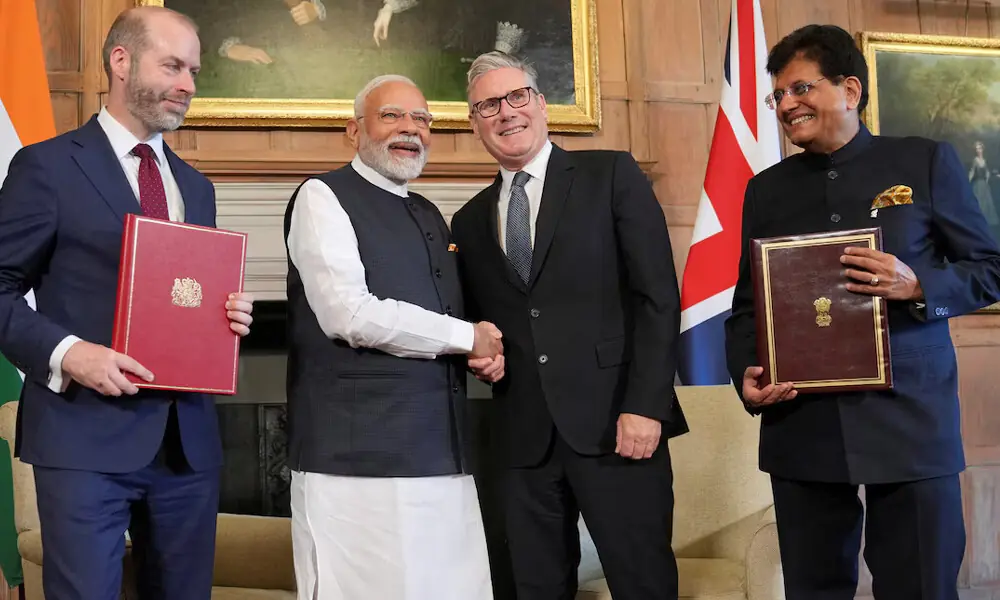

NEW DELHI: India and Britain’s comprehensive trade pact took effect on Wednesday, cutting tariffs on thousands of goods and widening access for services firms and professionals in both markets.
The India-UK Comprehensive Economic and Trade Agreement gives Indian exporters immediate duty-free access to most British tariff lines, benefiting labour-intensive sectors such as textiles, leather, footwear, marine products, gems and jewellery, and processed foods.
Britain gains wider access to one of the world’s fastest-growing major economies, with phased tariff cuts and quotas for sectors such as automobiles, and openings in procurement, financial services, education, insurance and professional services.
The agreement opens “new avenues for trade, investment and innovation,” said Piyush Goyal, India’s trade minister, adding it would create opportunities for Indian businesses.
An emboldened India holds out for better terms in US trade talks
India exported $13.44 billion of goods to Britain and imported $11.68 billion in 2025-26, while bilateral services trade totalled $35.44 billion in 2024, with India running a services surplus of nearly $7.9 billion, Indian trade ministry data showed.
Britain will scrap duties immediately on 96.8% of tariff lines, covering 97.7% of trade value. India will remove duties at once on 64.1% of tariff lines and phase out tariffs on another 21%, while excluding sensitive products.
Indian officials expect gains in sectors where British tariffs had ranged from 4% to 20%. Marine exports, textiles, leather, footwear, gems and jewellery will see duties eliminated, helping Indian suppliers compete more effectively in the British market.
India clinches agreement for Australian uranium supply
Britain is set to benefit from India’s calibrated opening in automobiles and alcoholic beverages. Passenger vehicle imports will be subject to a phased quota system, with 37,000 completely built units allowed annually at preferential tariffs.
The services package expands market access across 137 sub-sectors, including IT, business services, telecoms, finance and education, and eases temporary entry for business visitors, transferees, investors, service suppliers and independent professionals.
A linked Double Contribution Convention will exempt eligible Indian professionals and employers from paying into Britain’s National Insurance system for stays of up to five years, benefiting about 75,000 workers and 900 employers.
The pact also gives Indian suppliers access to Britain’s government procurement market, estimated at about £90 billion, while India offers reciprocal opportunities worth around $114 billion.




















Comments