


Data centres and Pakistan’s AI future
AI is the next technological revolution, with data centers as its critical foundation. Pakistan must rapidly invest in robust data infrastructure to avoid strategic irrelevance and leverage its youth for an Urdu AI ecosystem.
- Global leaders in data center infrastructure and investment.
- Pakistan's limited data infrastructure and strategic vulnerabilities.
- Building a national Urdu AI ecosystem with modern data centers.
- Addressing Pakistan's energy challenges for data center growth.
- The strategic importance of data sovereignty and policy.


The global technological landscape is entering a transformative era. After the ‘dot-com’ revolution of the 1990s, mobile era of the 2000s and the social media boom of 2010s, artificial intelligence (AI) is emerging as the next defining technological leap for humankind. Nations that fail to prepare for this transition risk not merely economic disadvantage but strategic irrelevance in the decades ahead. At the centre of this transformation lies an often overlooked but critical infrastructure: data centres.
AI systems depend upon massive computing power, high-speed connectivity, and enormous quantities of securely stored data. Data centres are, therefore, not simply warehouses of servers; they are the backbone of the digital economy and the nervous system of future AI-driven societies. Countries that develop strong data storage and processing capabilities will enjoy advantages in governance, business, education, security, healthcare, and innovation. Those left behind may find themselves permanently dependent on foreign technologies and platforms.
Globally, the United States remains the leader in data centre infrastructure, followed by China and several European and East Asian countries. Technology giants such as Microsoft, Amazon, Google, and Alibaba Group are investing billions of dollars into hyperscale data centres to support AI models, cloud computing, and digital services with storage capacity of billions of gigabytes. These centres are similar in size to an industrial zone or airport logistics complex spread over acres of land. Gulf countries, particularly the United Arab Emirates and Saudi Arabia, are also moving rapidly to position themselves as regional digital hubs.
Pakistan, however, still stands in the early stages of this race. While internet penetration, freelancing, software exports, and digital entrepreneurship have grown considerably over the last decade, the country’s large-scale data storage and AI infrastructure remain limited. According to recent industry estimates, only 20-30 data centres are operating in the country. Most sensitive and commercial data continues to be hosted abroad, creating both economic and strategic vulnerabilities.
Yet Pakistan also possesses unique advantages. With one of the world’s youngest populations and a natural inclination among its youth toward IT-related professions, software development, freelancing, and digital services, the country is well positioned to participate actively in the AI revolution. Pakistani youth have repeatedly demonstrated their ability to compete globally when provided the right opportunities and infrastructure.
To capitalise on this potential, several sectors in Pakistan need to move quickly toward adopting advanced data infrastructure. Banking and financial services are already progressing in digital transformation, but healthcare, education, agriculture, energy management, governance, and manufacturing require much greater integration of AI and cloud-based systems. Universities and research institutions also need high-performance computing facilities to support innovation and local AI model development.
Beyond their economic value, data centres can become the foundation of a national Urdu AI ecosystem. By hosting large Urdu language models, digital libraries, speech recognition systems, translation tools, and AI-powered education, healthcare, legal, and government services, they can make advanced technology accessible to the vast majority of Pakistanis who think and communicate in Urdu.
History shows that the world’s leading nations advanced by developing science, technology, and governance in their own languages while remaining globally connected. Investing in Urdu AI, supported by modern data centres, would not only preserve Pakistan’s linguistic and cultural heritage but also accelerate digital inclusion, human capital development, and knowledge-based economic growth.
A powerful historical example comes from the former Hyderabad State under Mir Osman Ali Khan, who established Dar-ul-Tarjuma (Translation Bureau) to translate scientific, medical, legal, and literary works into Urdu. Backed by generous state patronage, the initiative enabled Osmania University to teach subjects, including medicine, in Urdu while much of the state’s administration also functioned in the language.
If such a remarkable knowledge ecosystem could be built nearly a century ago, there is every reason for Pakistan to revive that vision today using AI, machine translation, and modern data centres, making the creation and dissemination of knowledge in Urdu faster, more affordable, and far more impactful.
Importantly, the advancement of AI is inseparable from robust foundational infrastructure. Modern data centres demand uninterrupted electricity, high-speed fiber connectivity, resilient cybersecurity frameworks, efficient cooling systems, and stable policy environments. Among these, energy stands out as Pakistan’s most pressing challenge.
While solar and other renewable sources are available, their adoption remains constrained. A gradual transition toward solar energy may therefore be more practical. In the interim, ensuring affordable and uninterrupted grid supply through targeted policy initiatives could provide the necessary stability for data centre growth.
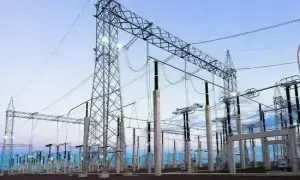
Modern data centres consume enormous amounts of electricity. As Pakistan plans for its digital future, long-term energy planning must become part of national technology policy. Dedicated power arrangements, renewable energy integration, battery storage, and efficient cooling technologies will be essential. Countries around the world are increasingly pairing data centres with solar, wind, hydro, and even nuclear energy projects to ensure sustainability and energy security.
Environmental concerns must also remain central to planning. Poorly designed data centres can place pressure on local electricity grids, water resources, and urban infrastructure. Noise pollution, heat generation, and land-use conflicts can disturb surrounding communities if projects are developed without proper zoning and urban planning. Pakistan must, therefore, adopt environmentally responsible and socially sensitive approaches from the beginning rather than repeating mistakes seen elsewhere.
At the same time, policymakers must recognise that data sovereignty in the digital age is becoming as crucial as territorial sovereignty in the traditional sense. Nations that fail to securely store and process their own data risk losing control over vital economic, governmental, and social information. For the private sector, sovereign AI is likewise emerging as both a strategic imperative and a growing concern, shaping competitiveness and trust. To address these challenges, legislation is needed not only to safeguard privacy and ensure data integrity but also to strengthen national resilience while fostering innovation and investment.
The challenge before Pakistan is, therefore, not merely technological but strategic and civilisational. If approached wisely, investment in data centres can stimulate employment, strengthen digital independence, attract foreign investment, and accelerate AI adoption across society. If neglected, the country risks widening its technological gap with the rest of the world.
Artificial Intelligence is likely to become the next great technological transformation after the internet and social media revolutions. Data centres are the foundational infrastructure upon which this future will be built. Pakistan still has time to position itself meaningfully in this emerging order, but the window for timely preparation may not remain open indefinitely.
The author has 40 years of experience in the oil and gas, power, mineral and water resource management industries. He is currently working as Regional Head at Bore and Bore Consolidate

















Comments