


Malik informs NA body: Refinery upgradation policy submitted to Cabinet
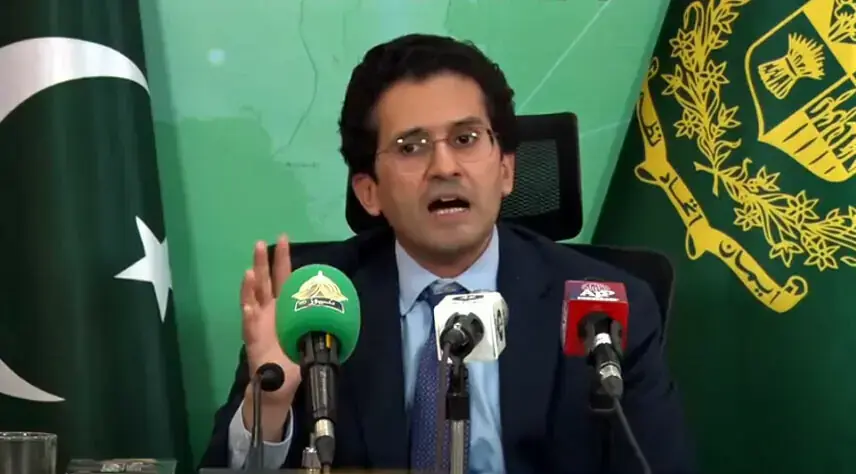

ISLAMABAD: Minister for Petroleum and Natural Resources, Ali Pervaiz Malik, said on Tuesday that the refinery upgradation policy has been submitted to the Cabinet and is expected to be approved soon, possibly by July 15 after clearance from the Economic Coordination Committee (ECC).
Testifying before the National Assembly Standing Committee on Petroleum, presided over by Syed Mustafa Mehmood, the Petroleum Minister emphasized that inefficiencies of refineries will not be passed on to consumers and that Pakistan is gradually moving toward Euro-V fuel standards.
READ ALSO: Ali Pervaiz Malik reaffirms commitment to refinery upgradation, energy security
Petroleum Minister Ali Pervaiz Malik stated that Pakistan continues to face challenges in accessing refined petroleum products in international markets, despite relatively lower taxation compared to global standards. He noted that refining adds high cost, while the availability of refined products remains constrained.
The minister reiterated that the government is moving toward deregulation of the petroleum sector and aims to gradually exit price-setting mechanisms. He added that the petroleum supply chain is being closely monitored and the current situation remains stable.
Highlighting global market dynamics, Malik said crude oil prices have declined to below pre-war levels; however, refined petroleum products such as petrol and diesel remain expensive. He noted that Pakistan imports around 70 percent of its petrol and 33 percent of its diesel requirements.
Providing context, the minister said that at the onset of the recent conflict, crude oil prices were around USD71 per barrel and diesel at USD78, but surged significantly due to increased premiums, freight, and insurance costs, with petrol prices reaching USD180–190 per barrel at peak levels.
He informed the committee that a petroleum levy of over Rs 80 per litre was imposed in line with IMF commitments, adding that removal of the levy could significantly reduce prices, but would require alternative revenue sources to avoid fiscal imbalances.
The minister also revealed that the government is considering displaying Platts benchmark prices on a daily basis to enhance transparency, while a committee formed by the Prime Minister has already held three meetings on the matter.
On policy reforms, Malik said that the refinery upgradation policy has been submitted to the Cabinet and is expected to be approved soon, possibly by July 15 after clearance from the Economic Coordination Committee (ECC). He emphasized that inefficiencies of refineries will not be passed on to consumers and that Pakistan is gradually moving toward Euro-V fuel standards.
The minister added that work is underway to digitalize the petroleum supply chain, while international consultants have been engaged to conduct studies on strategic petroleum reserves to strengthen energy security.
He further informed the committee that offshore exploration activities are expected to commence after a gap of nearly two decades, and expressed optimism that circular debt in the petroleum sector would not increase by the end of the current fiscal year, although discussions with the IMF are ongoing.
During the meeting, concerns were also raised over LPG pricing, with a committee member accusing the Oil and Gas Regulatory Authority (OGRA) of failing to enforce notified prices. Malik responded that LPG prices are linked to international propane and butane rates, noting that only 30–40 percent of domestic demand is met through local production, while the rest is imported.
He added that LPG auctions are currently suspended due to a court stay order, and the matter has been referred back to OGRA for review following government intervention through the Attorney General.
The committee chairman directed that OGRA be summoned to the next meeting to provide a comprehensive briefing on LPG pricing and regulatory enforcement.
The minister was of the view that despite limited storage capacity and resources during the recent crisis, the government successfully managed the situation, ensuring uninterrupted operations of fertilizer and power plants, while domestic gas supply was only partially curtailed during peak meal hours.
The Committee expressed serious concerns over the non-utilization and alleged misuse of Corporate Social Responsibility (CSR) funds, particularly in Sindh and Balochistan, while Petroleum Minister Ali Pervaiz Malik assured lawmakers that the country’s petroleum supply situation remains stable despite recent global disruptions.
The committee was informed by provincial officials that CSR funds started flowing to provinces from FY2020-21; however, due to the absence of clear guidelines, the funds could not be effectively utilized. Officials disclosed that approximately Rs 3 billion in CSR funds in Balochistan remain stuck, largely due to force majeure declared by exploration companies.
Committee member Talal Badr raised concerns over the use of CSR funds by the Khyber Pakhtunkhwa (KP) government, alleging that payments were made to consultants from these funds. He questioned the legality and rationale behind such expenditures, especially after it was revealed that CSR allocations meant for social welfare, including children’s training, were utilized for international arbitration.
The committee sought detailed explanations from the Director General of Petroleum Concessions in the next meeting regarding the utilization of CSR funds and alleged irregularities.
Copyright Business Recorder, 2026









Comments