


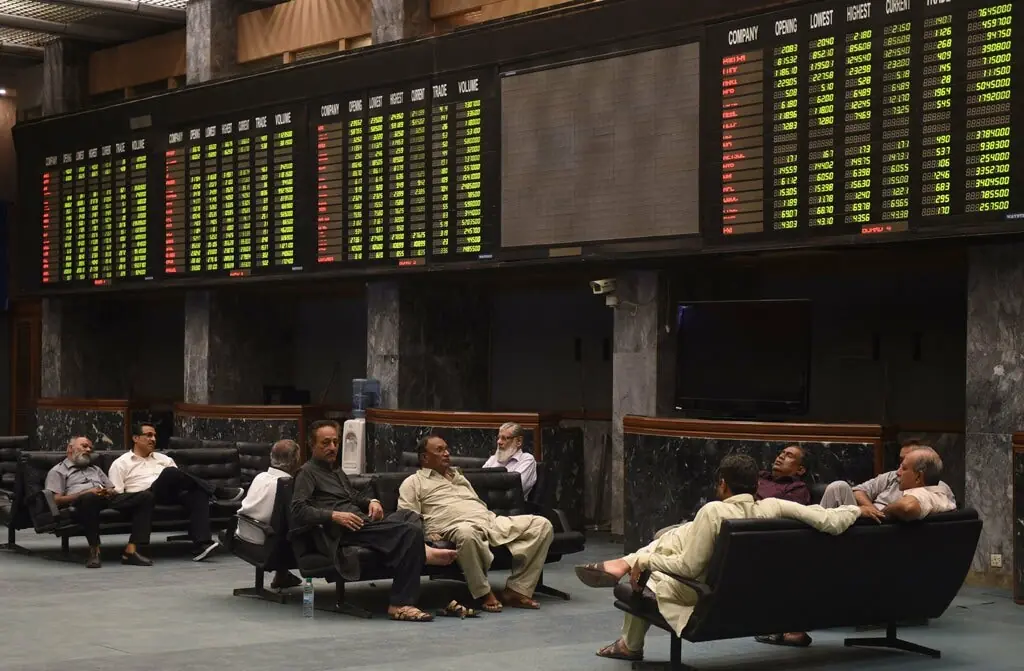

For an ordinary investor, buying shares is an act of trust, built on the hope of capital gain and the expectation that when companies earn profits, a fair share will return in the form of dividend. In Pakistan, however, this trust is often tested.
Share prices may move with market sentiment, but dividends remain uncertain, even when companies report profits and build reserves. For many small investors, the stock market begins with hope but too often ends with the same question: where is my share of the profit?
The question is simple: if companies are making money, why is that money not reaching the people who invested in them? A market cannot build trust when profits are visible but pay-outs remain invisible. Some firms may rightly retain cash for expansion, debt repayment or liquidity needs.
But when profitable and mature companies repeatedly avoid dividends without a clear explanation, the issue becomes one of market confidence, minority shareholder protection and corporate governance. The problem is not profit retention; the problem is profit retention without explanation.
Pakistan’s dividend story is uneven. Available market data show that 256 listed companies paid dividends in FY19.
The number declined to 217 in FY20 and then to 180 in FY21. In value terms, listed companies distributed around Rs357 billion in FY19, Rs308 billion in FY20 and Rs381 billion in FY21 on an ex-date basis. These numbers show that dividends are not impossible in Pakistan. They are simply concentrated in a limited number of sectors and firms. In other words, Pakistan does not have a dividend desert; it has dividend islands.
Recent banking results make this contrast clearer. Listed banks posted combined profits of around Rs168 billion in the second quarter of 2025, and for the full calendar year 2025 the banking sector reported cumulative profits of around Rs671 billion.
The leading dividend paying banks included MCB Bank, National Bank of Pakistan, UBL and Meezan Bank. This shows that when profitability, liquidity and capital strength are present, dividend payment is possible.
The public sector also gives an important signal. Federal state-owned enterprises paid dividends of around Rs149.6 billion in FY2025, compared with Rs82.8 billion a year earlier, according to the Federal SOE Annual Aggregate Report, 2025.
However, dividends from state enterprises must be read carefully because several public entities also depend on subsidies, guarantees and budget support. A dividend is meaningful only when it comes from real financial strength, not from one pocket of the public sector to another.
If banks and some state-linked enterprises can maintain pay-outs when financial strength allows, the real question is: why do many other profitable firms remain silent?
One reason is ownership structure. Many listed companies in Pakistan are controlled by families, sponsors or business groups. Majority owners often influence the board, management and major financial decisions. They may prefer to keep cash inside the company rather than distribute it equally among all shareholders.
For sponsors, retained earnings provide control over funds. For minority shareholders, however, retained earnings become a concern when the company does not clearly explain how the money is being used.
Debt is another reason. A heavily borrowed firm is usually less willing to pay dividends because cash first goes to banks, lenders and suppliers. During Pakistan’s recent period of high interest rates, many non-financial firms faced serious debt servicing pressure.
For such firms, the dividend cheque is often crowded out by the debt cheque. There is also a gap between profit and cash. A company may report profit, but its money may be stuck in receivables, inventories, delayed government payments, circular debt, import bills or expansion commitments. A firm may look profitable on paper but still lack free cash for dividend distribution.
Growth needs also matter. Some firms retain earnings to invest in new plants, machinery, technology, distribution networks or capacity expansion. This is not wrong, if retained profits generate higher future earnings.
The problem begins when retention becomes a habit without explanation. Retention is acceptable when it builds value; it becomes questionable when it hides behind vague promises.
Taxation adds another layer. In Pakistan, corporate profits are taxed at the company level, and dividends are taxed again when distributed to shareholders. FBR’s withholding tax rate card for Tax Year 2026, updated under the Finance Act 2025, confirms that dividend taxation remains an important factor in investor returns. If Pakistan wants households to move from plots, gold and bank deposits into productive capital markets, dividend-based investing should not be discouraged.
A country that wants savers to become investors should not make dividend income feel like a penalised return.
The broader macroeconomic environment also shapes corporate behaviour. Pakistani firms operate in an environment of inflation, exchange rate pressure, energy price shocks, import restrictions, tax changes and uncertain demand.
In such conditions, boards often prefer to keep cash as a safety buffer. This is understandable during a crisis. But crisis cannot become a permanent excuse. Uncertainty explains caution, but it does not justify permanent silence.
Pakistan can learn from regional practice. India does not force every listed company to pay dividends.
Instead, Regulation 43A of SEBI’s listing framework requires top listed entities to formulate a dividend distribution policy. This policy explains the circumstances under which shareholders may or may not expect dividends, the financial parameters considered by the board, and how retained earnings will be used. This is a practical model. It protects business flexibility but also gives shareholders clarity, explaining when shareholders may expect dividends, what financial parameters the board will consider and how retained earnings will be used.
International governance standards move in the same direction. The focus is not on compulsory dividend pay-out. The focus is on shareholder rights, transparency, disclosure and board accountability. Good markets do not treat dividend policy as a private conversation between sponsors and directors. They treat it as part of investor protection.
Pakistan therefore does not need a blind rule forcing every profitable company to pay a fixed percentage of profit. That may hurt firms that genuinely need cash for expansion, debt repayment or liquidity protection. But Pakistan does need a stronger dividend disclosure culture. The answer is not forced distribution. The answer is forced explanation.
The reform should begin with a simple requirement: every listed company should publish a clear dividend policy in plain language. If a profitable company does not declare a dividend, the board should provide a specific reason.
Is the cash needed for debt repayment? Is it stuck in receivables? Is it being used for expansion? Is liquidity weak? General statements should not be enough. Retained earnings should not become a black box. Shareholders deserve reasons, not rituals.
The future of Pakistan’s stock market cannot rest only on rising index levels. A market becomes deep when ordinary people trust it. Capital gains may attract traders, but dividends build investors. Pakistan does not only need profitable firms. It needs fair firms.
Shareholders are not outsiders; they are owners. Profit without pay-out may be legal. Profit without explanation is bad governance. This is the real test of Pakistan’s capital market: not only whether companies can earn profits, but whether they can share trust with those who finance them.
Copyright Business Recorder, 2026
The author is an Associate Professor at PIDE. He can be reached at Email: [email protected]




















Comments