


SBP blames high govt borrowing for diluting tight monetary policy impact
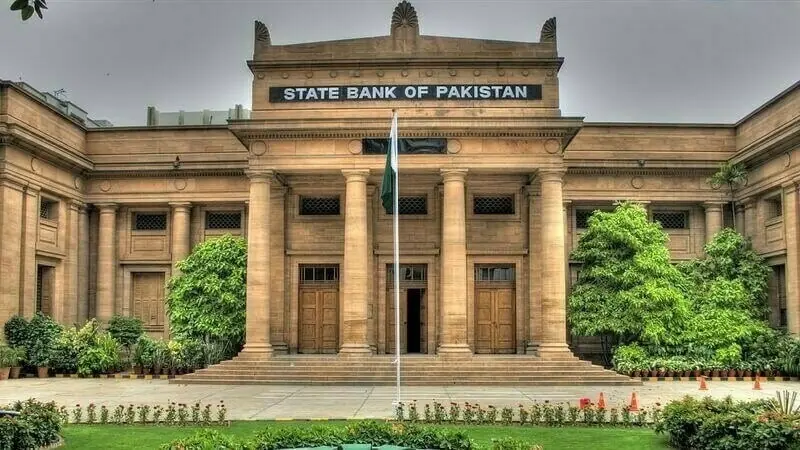

ISLAMABAD: Excessive government borrowing from the banking sector, indirect taxes, and the informal economy dilute the impact of tight monetary policy in controlling inflation, a senior official of the State Bank of Pakistan (SBP) said on Tuesday.
Dr. Fayyaz Hussain, Additional Director, Monetary Policy Department, SBP, stated this in a webinar on the topic of ‘Managing Stability During Uncertain Times: Role of Monetary Policy in Pakistan’ organised by Pakistan Institute of Development Economics (PIDE).
He said that excessive borrowing from the banking sector affects the demand and objective of tight monetary policy. Apart from this, it also crowded out the private sector from borrowing because banks have more incentive to lend money to risk-free government securities. He said that from 2022 onwards, government administrative measures, such as increasing electricity, gas, and fuel prices, made monetary tightening ineffective because it was not demand-driven.
Dr. Fayyaz pointed out that indirect taxes, such as general sales tax (GST) and excise duty, also create inflationary pressures and increase the prices of commodities.
The SBP official said that the informal sector, which accounts for 20-30 percent of the economy, is also a major impediment in diluting the impact of tight monetary policy because it is not connected to the formal financial sector and mainly deals in cash, and that’s why remain out of the ambit of monetary policy.
He admitted the fact that inflation triggered by a spike in food and energy prices could not be curtailed by monetary tightening, but added that the central bank made sure that these shocks would not translate or seep into the core inflation, which is the more persistent in creating inflationary pressures. “If fluctuations in food or energy prices become part of the core inflation or the persistent component, then it will be very difficult to bring it down toward the target range,” he observed.
Dr. Fayyaz said that if the monetary policy and fiscal policy are working in the same direction, there is a likelihood that there is more stability and inflation will remain low. He said historically, in the years when fiscal and monetary policy remain coordinated, the GDP growth remains high within the range of 5-7 percent.
He said the economy was gradually recovering, and the foreign exchange reserves had increased to USD 17.2 billion, and the central bank also reduced its forward liabilities. In January 2023, these liabilities were USD 5.7 billion, and now they have come down to USD 1.9 billion because of prudent fiscal and monetary policies, he added. He said the government is running the primary surplus for the third consecutive year, FY24, F 25, and then in FY26 and in FY27 the government is targeting a primary surplus of 2 percent of the GDP. So this time, because fiscal discipline is continuing and the fiscal policy is not expansionary, it is supporting the monetary policy in fighting inflation.
Copyright Business Recorder, 2026





















Comments