


Fuel price- let the market work
The government's inconsistent petroleum pricing, driven by US-Iran war volatility, led to whimsical policies, subsidies, and market distortions, highlighting the need for deregulation.
- Government's inconsistent petroleum pricing formula.
- Accumulation of subsidies and tax pass-throughs.
- The call for deregulation of petroleum pricing.
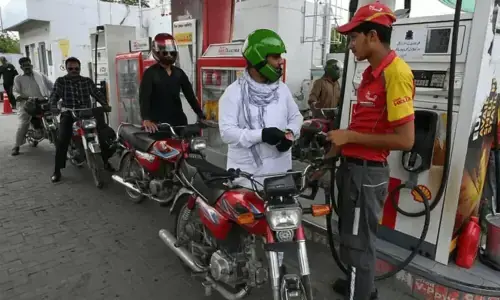
The government has kept juggling the petroleum pricing formula ever since the US-Iran war started. There was high volatility in prices, and all the government did was adopt a formula that suited it and alter it whimsically. That is not good practice.
Although the government managed the supply side well by getting oil from international waters and maintaining the supply chain within the country, it messed up on prices and taxes. The lesson to learn is to deregulate pricing.
When the war started, the government’s first reaction was to do nothing. In the process, international prices kept moving north, and the subsidy started accumulating, reaching Rs130 billion in no time. It is still in the receivables of companies in the value chain.
Seeing the subsidy, the government became cold and fully passed on all taxes and prices based on the pre-war formula. It also shifted the pricing cycle from two weeks to one week. BR Research and others criticized the authorities for their lack of empathy toward general consumers.
The government reacted and altered the pricing formula for high-speed diesel, where margins, or cracks, were abnormally high. Things started moving fine thereafter, although there was no reduction in taxes.
However, refinery margins were checked. Prices were changing weekly. Domestic and international supply was maintained.
Then the Iran-US deal talks brought prices down before they went up again for a few weeks. When prices moved up after coming down, the government conveniently went back to two-week pricing to dilute the impact of rising prices.
Now, in the last week, after a sharp dip in prices, the government has gone back to the one-week formula to allow a higher decline in prices.
Meanwhile, it has played around with IFEM, premiums and the government’s own refinery margins to arrive at final prices of its liking.
The bottom line is that the government set a goal of maintaining a certain price range and then played around with all the other variables to reach that price.
There should be an end to these whimsical policies. Some made windfall gains while others are making losses. The mix has become more complicated because of the growing flow of smuggled products from Iran.
The lesson to learn is to do away with price fixation. It is best to deregulate pricing and let the market find its equilibrium, while the government can anchor prices through the biggest refinery and the biggest OMC in the country, both of which are owned by the government itself.















Comments