


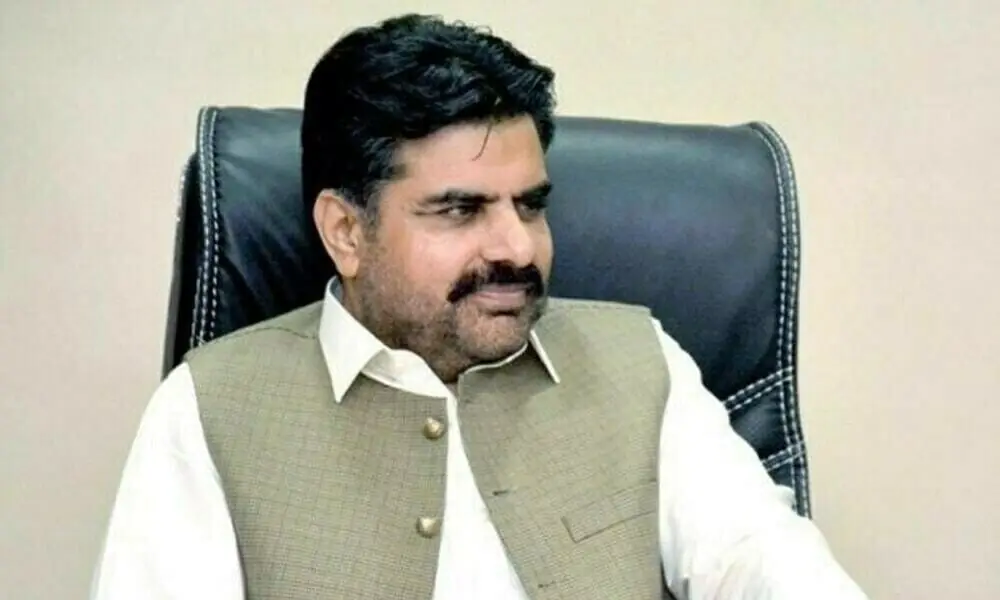

KARACHI: Sindh Minister for Local Government, Housing and Town Planning Syed Nasir Hussain Shah has said that development projects worth more than Rs2 trillion are currently under way in Karachi, with many nearing completion while others are at the initial stages. He noted that the Frontier Works Organization (FWO) is assisting in the execution of several projects, while development work is in progress on nearly 140 roads across the city.
Speaking at a meeting with industrialists at the Korangi Association of Trade and Industry (KATI), Shah said that Sindh Chief Minister Syed Murad Ali Shah had allocated Rs9 billion in development funds for Karachi’s business community, including Rs2 billion specifically for the Korangi Industrial Area.
The event was attended by KATI President Muhammad Ikram Rajput, Deputy Patron-in-Chief Zubair Chhaya, Standing Committee Chairman Masood Naqi, Senior Vice President Zahid Hameed, Vice President Muhammad Talha Ali, KITE Limited CEO Saleem uz Zaman, former chairmen and presidents including Junaid Naqi, Johar Qandhari, Danish Khan, Sheikh Umer Rehan and Ehteshamuddin, CPLC Chief Zubair Habib, Secretary Local Government Dr Waseem Shamshad Ali, KDA Director General Asif Jan Siddiqui, SBCA Additional Director Sindh Region Shakeel Ahmed, Karachi Water and Sewerage Corporation COO Asadullah Khan, MD Sindh Solid Waste Management Board Tariq Nizamani, Kanwar Qutubuddin senior government officials and a large number of industrialists and KATI members.
Nasir Hussain Shah said that water supply to KATI would be improved on a priority basis. He noted that Karachi receives water from a source located nearly 200km away, making supply management a significant challenge. He added that the Sindh government is acting on KATI’s proposals regarding Pumping Station-II (PS-2) for the Korangi Industrial Area.
He also stated that a Garbage Transfer Station (GTS) is being developed on the causeway in line with international standards and includes Pakistan’s first mechanised landfill facility. The Sindh government, he said, is working with international organisations to mitigate the effects of climate change through various initiatives.
Discussing the Yellow Line Bus Rapid Transit project, Shah revealed that Chief Minister Murad Ali Shah and Sindh Transport Minister Sharjeel Inam Memon had proposed increasing the number of buses and improving urban infrastructure through the allocated project funds instead of constructing a dedicated corridor that could worsen traffic congestion. He acknowledged that the Sindh government has reservations regarding the current design of the Yellow Line project.
The minister further announced that a committee comprising officials from the Sindh Building Control Authority (SBCA) and the Karachi Development Authority (KDA) had been formed to resolve issues relating to Mehran Town. The committee, in consultation with KATI, will prepare recommendations for granting industrial status to the area.
Highlighting Karachi’s economic importance, Shah described the city as the “economic lifeline” of Pakistan.
He said that despite perceptions that provinces gained extensive authority after the 18th Constitutional Amendment and the NFC Award, Karachi and Sindh received only limited allocations under the Public Sector Development Programme (PSDP) between 2013 and 2018, and only 3 to 4 percent promised projects only 1 to 2 percent were executed.
He alleged that the federal government largely neglected Sindh, particularly Karachi, during this period. He added that while some projects were approved during the Pakistan Democratic Movement (PDM) government in 2022, Sindh was simultaneously hit by two major natural disasters that damaged nearly 70 percent of the province’s infrastructure, forcing the provincial government to redirect resources towards reconstruction and development.
Shah also expressed confidence that the Pakistan Peoples Party (PPP), which received increased public support in the last general elections, would achieve a sweeping victory in Sindh in the 2029 elections.
KATI President Muhammad Ikram Rajput praised the Sindh government, particularly the Local Government and Urban Development Department, for completing Shahrah-e-Bhutto and several other development projects in Korangi. He said these initiatives represent a major step forward in improving Karachi’s infrastructure, urban development and economic activity.
Rajput said that major infrastructure projects such as Shahrah-e-Bhutto would help reduce traffic congestion, improve connectivity and create new opportunities for industrial areas, businesses and residents.
He identified water scarcity as one of the most pressing challenges facing industries in Korangi. Due to insufficient water supply from the Karachi Water and Sewerage Corporation, industrial units are forced to rely on costly water tankers, significantly increasing production costs and undermining the competitiveness and sustainability of local industries.
He urged the authorities to ensure a reliable and uninterrupted water supply to industrial areas on a priority basis in order to support investment, industrial growth and exports.
Rajput also welcomed the Sindh government’s decision to allocate Rs2.1 billion for development projects in the Korangi Industrial Area, describing it as a positive initiative. However, he noted that the area’s infrastructure challenges are so extensive that additional funding will still be required.
Deputy Patron-in-Chief Zubair Chhaya said that Rs600 million from the provincial grant would be spent on resolving sewage and drainage issues in the Korangi Industrial Area. He called on the Sindh government to support the long-term maintenance of the infrastructure.
Chhaya also raised concerns over the construction of a modern dumping site near the Korangi Causeway and Shahrah-e-Bhutto, warning that it could create environmental and operational problems for the area. He suggested identifying an alternative location and also called for improved planning of connectivity between the Malir Expressway and Karachi Airport. He further proposed constructing a flyover in Shah Faisal Colony instead of Azeempura.
Standing Committee Chairman Masood Naqi urged the government to grant industrial status to Mehran Town, noting that legal obstacles had previously prevented progress but that the courts had now delivered a verdict, paving the way for action. He said granting industrial status to the area would also generate significant additional revenue for the Sindh government.
Naqi reiterated KATI’s concerns regarding the Yellow Line project, arguing that the current design could severely affect infrastructure in the industrial zone and disrupt industrial operations. He called on the Sindh government to revise the project’s design in consultation with stakeholders.
Copyright Business Recorder, 2026
















Comments