


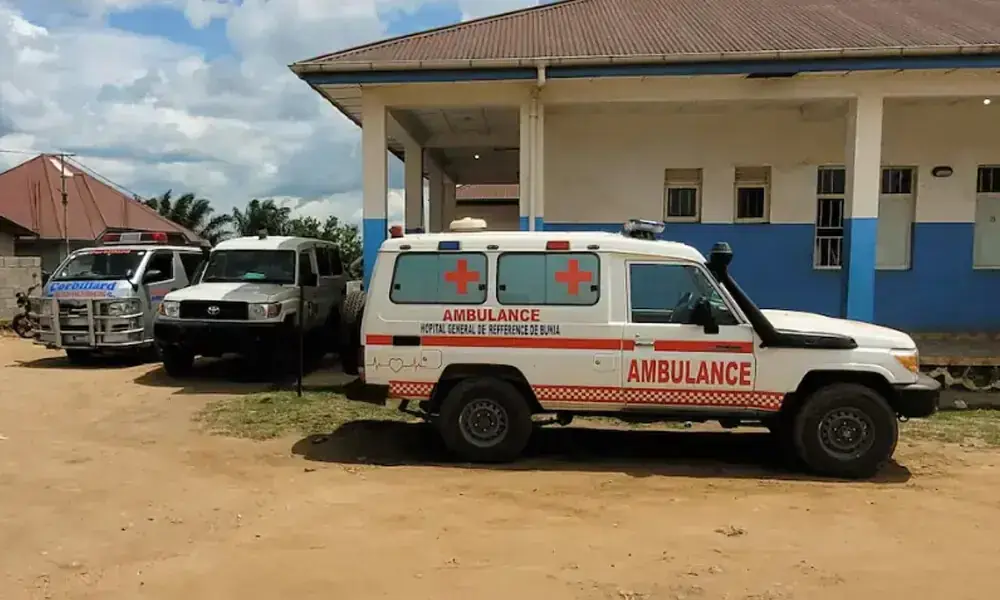

MONGBWALU (DR Congo): Unlike other residents of Mongbwalu, a town at the heart of the eastern Democratic Republic of Congo’s latest devastating Ebola outbreak, Laureine Sakiya believes that the blood-letting virus exists after seeing some of her neighbours die.
“The authorities need to bring us vaccines,” the 26-year-old woman told AFP.
But no vaccine or treatment exists for the Bundibugyo strain of Ebola responsible for the vast central African country’s 17th outbreak of the disease, believed to have already killed 204 people.
Already suspicious of the Congolese state following decades of neglect and conflict, many in the outbreak’s epicentre in the northeastern Ituri province are split between criticism of the government’s response and denial of the disease’s very existence.
Gold-diggers and hawkers criss-cross mineral-rich and conflict-torn Ituri on the regular. Mud-covered motorbikes of travelling Congolese are a regular sight in Mongbwalu, some 100 kilometres (60 miles) from Uganda and just 200 kilometres away from unstable South Sudan.
In the space of several weeks, the outbreak has spread to several provinces nearby and on to Ugandan soil, with the World Health Organization declaring the epidemic an international emergency.
Of the 322 people suspected to have contracted Ebola in Mongbwalu — where many of the outbreak’s first cases were recorded — 88 have died, according to the latest toll from the authorities.
In the local hospital, a modest building nestled within the hillside town’s trees and high grass, healthcare workers are rinsing both floor and walls with a chlorine solution.
All are clad from head to toe in hazard suits with facemasks and goggles, to guard against a disease spread through close physical contact and bodily fluids.
But handwashing is done in plastic buckets — a sign of the tardiness of the response to an outbreak many fear could be among the worst in the virus’s history.
Local aid groups are on the ground, while medical charity Doctors Without Borders has loaned Mongbwalu’s hospital tents to isolate suspected victims in.
Past Ebola outbreaks have sparked violent incidents on the part of locals either wary of the state’s response or sceptical of the disease. Some believed that the latest epidemic was of a “mystical malady”, a common belief in some remote areas of the DRC.
“At the beginning, people believed it was a coffin affair,” said Jonathan Imbalapay, a civil society leader in Mongbwalu.
The first suspected case was identified in Bunia, the Ituri provincial capital. After the man’s death, the victim’s family brought the body back to Mongbwalu.
But the 80-kilometre journey on the eastern DRC’s infamously rickety and bumpy roads damaged the coffin, exposing the Ebola-ridden corpse to the world.
Traditional leaders and some locals wanted to burn the compromised casket.
After tests in a provincial laboratory failed to pinpoint Ebola as the source, the disease and accompanying psychosis were both allowed to spread in Mongbwalu.
It was only when samples arrived at the biomedical research laboratory in the capital Kinshasa — nearly 1,800 kilometres away as the crow flies — that the Ebola outbreak was confirmed.
Adam Hussein, a 35-year-old representative for Mongbwalu’s traditional faith healers, fretted about Ebola denial and called on everyone to take precautions.
“I worry about those who say that this disease is invented,” he said.

























Comments