


Power generation stutters
Pakistan's power generation faces severe challenges due to slow recovery, critical RLNG shortages, and a changing demand profile. This forces reliance on expensive fuels, leading to higher costs and potential load shedding.
- Pakistan's slow power generation recovery and shortfalls.
- Severe RLNG shortages impacting power plant operations.
- Increased reliance on expensive fuels and tariff hikes.
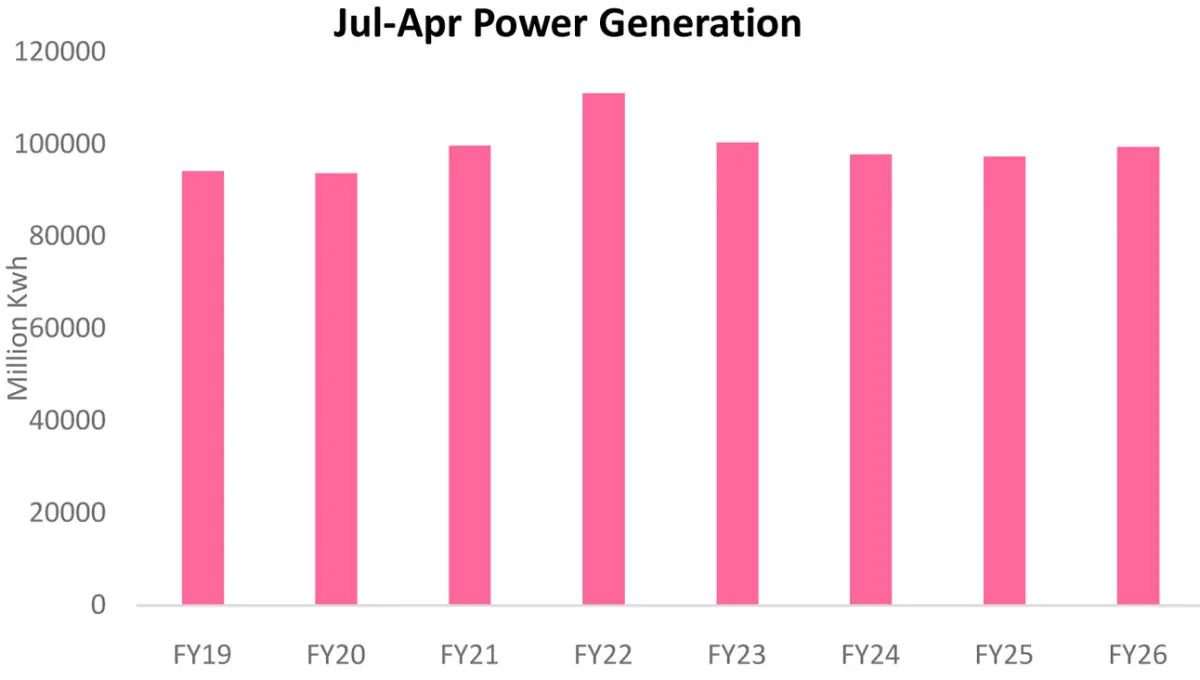
Pakistan’s national grid power generation continues to recover at a frustratingly slow pace. At 99 billion kilowatt hours during 10MFY26, cumulative generation remained nearly 8 percent below the peak recorded in the same period of FY22.
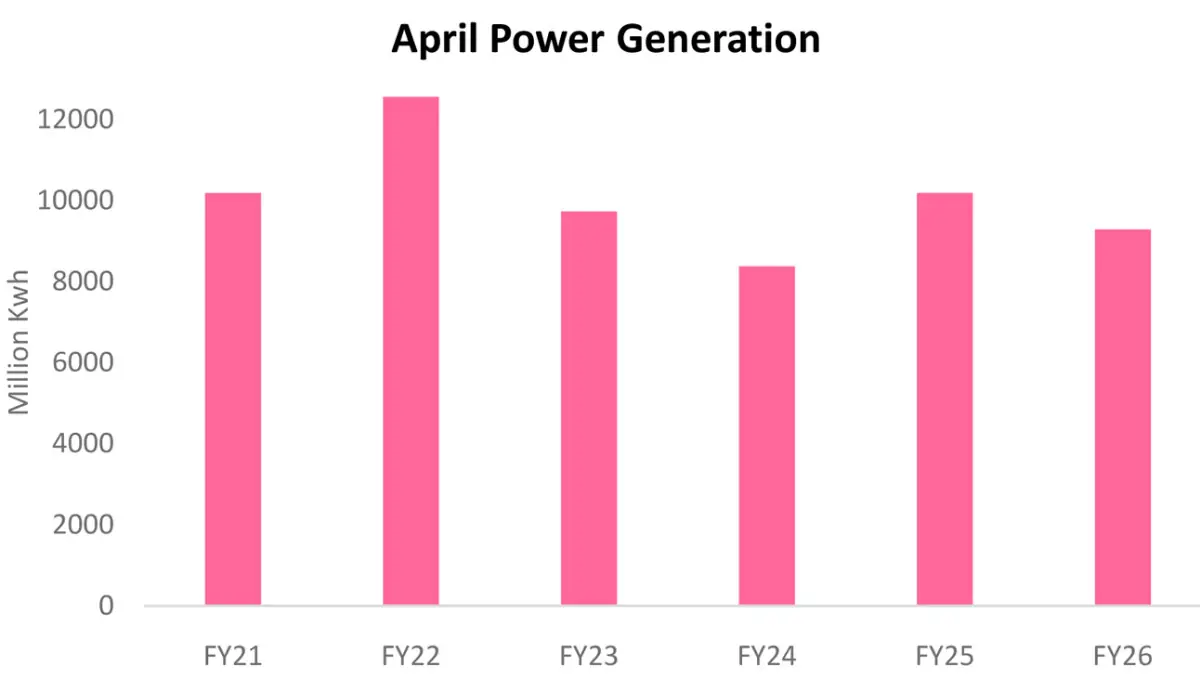
Output was even lower than FY21 levels and only marginally higher than last year, underscoring how far the system still is from reclaiming earlier demand highs despite repeated tariff cuts and the return of industrial consumers to the grid.
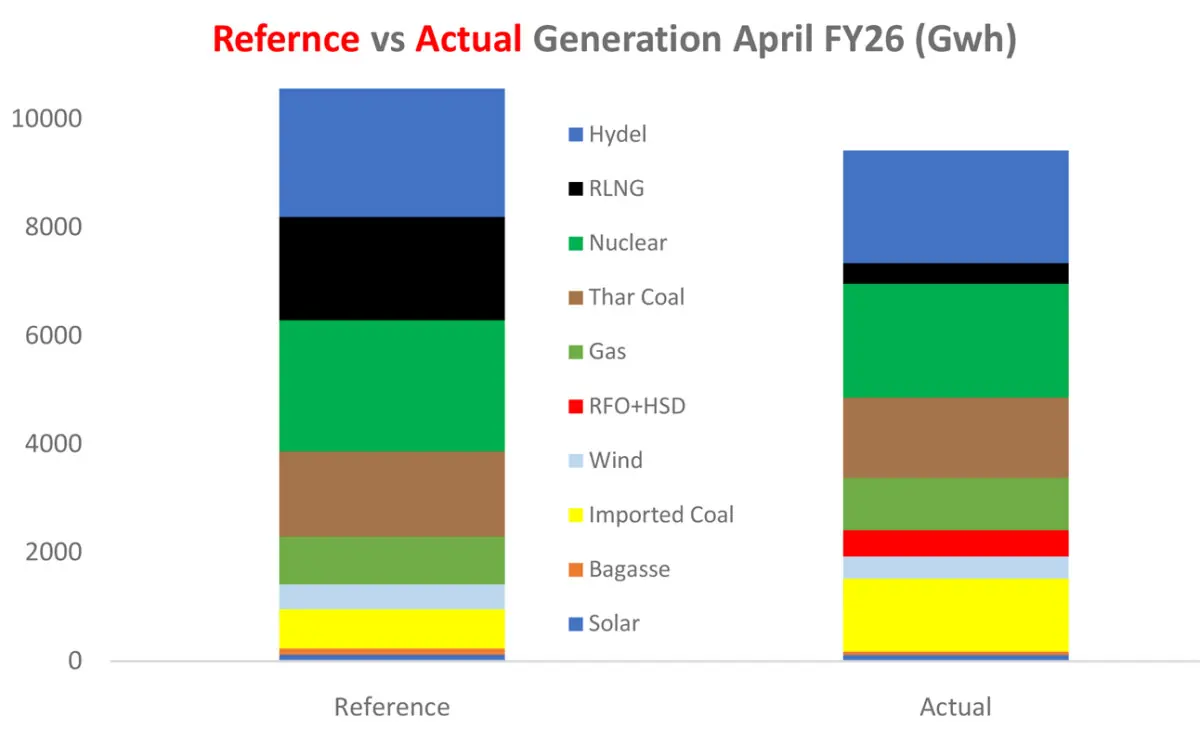
If the previous two months hinted at some stability returning, April reversed that momentum rather sharply. Actual generation stood at 9.4 billion units against a reference of 10.6 billion units, leaving an 11 percent shortfall, arguably the largest negative deviation from reference seen in recent memory.
The shadow of the US-Israel conflict now sits firmly across the entire energy chain, and Pakistan’s power sector has not escaped unscathed.
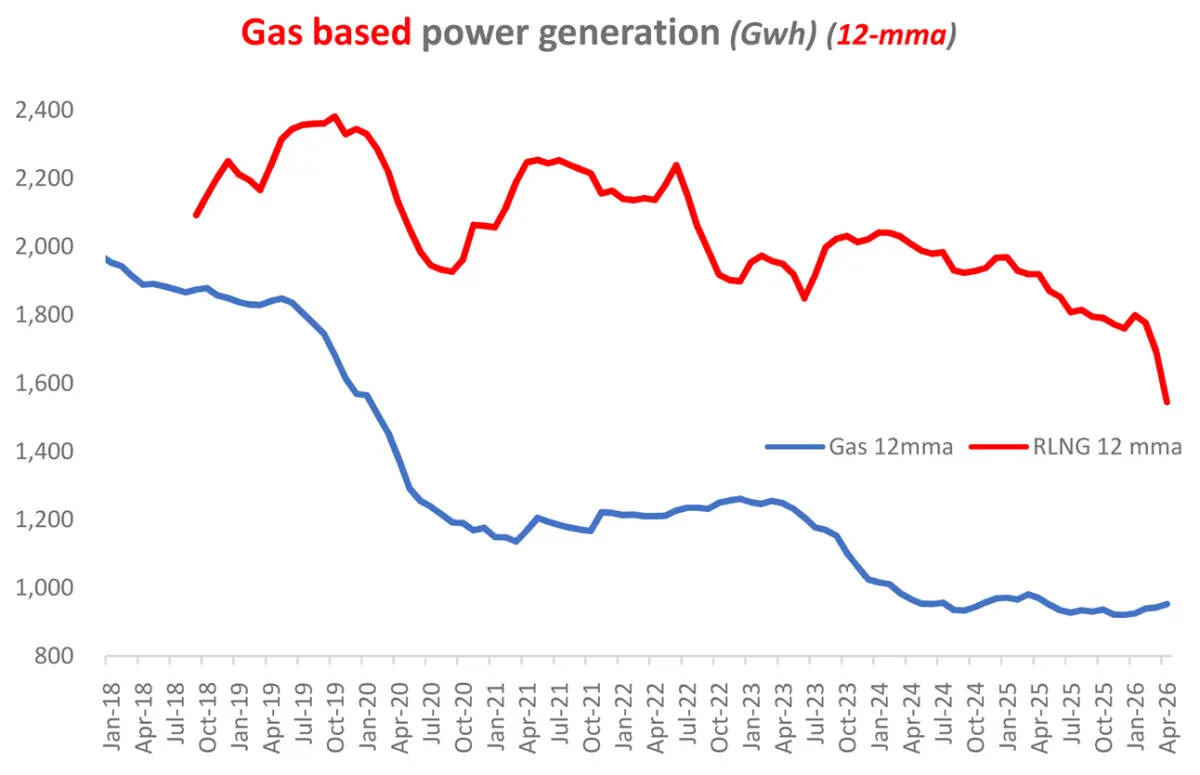
The biggest disruption came from RLNG. For the second consecutive month, RLNG-based generation collapsed well below planned levels as Qatar’s force majeure left little to no imported LNG available for power generation.
RLNG’s share in the generation mix dropped to just 4 percent against a reference share of 18 percent. Actual RLNG generation stood at merely 380 million units, less than a fourth of reference levels and the lowest in 111 months, effectively the lowest since Pakistan started importing LNG.
In reality, even those 380 million units did not come from imported RLNG. Domestic natural gas was diverted toward RLNG-based plants, with generation parked under the RLNG category simply because the pricing structure remains similar to gas-fired generation.
The implication is clear. Pakistan’s most flexible and efficient thermal fleet is now effectively running without the fuel it was designed for.
The fallout from this shortfall was visible across the fuel mix. Hydel generation also underperformed, remaining around 12 percent below reference levels at a time when the system desperately needed low-cost flexibility.
With both RLNG and hydel failing to deliver as planned, the burden shifted toward imported coal and furnace oil plants, which together exceeded reference generation by nearly 1.1 billion units simply to keep the lights on.
That came at a cost. Fuel charges overshot reference levels by roughly Rs1.7 per unit, leading to the fifth consecutive positive monthly fuel cost adjustment. The difference this time, however, is that the pressure is no longer merely a function of expensive fuel. It is increasingly a function of inflexibility.
Pakistan’s electricity demand profile now looks fundamentally different from what it did even two years ago. Midday grid demand continues to collapse during peak solar hours, despite overall electricity consumption rising materially. The rapid spread of off-grid and behind-the-meter solar has hollowed out daytime demand, creating an even deeper duck curve than before.
The real challenge begins after sunset.
The evening ramp requirement has become enormous. Under normal circumstances, RLNG plants would have absorbed much of that burden due to their operational flexibility. But with RLNG supplies drying up, the ramping responsibility has shifted to slower, less efficient, and more expensive generation sources.
This is where the system’s deeper structural weaknesses begin to show.
The problem going forward is that there are very few easy substitutes for RLNG. No amount of diverting domestic natural gas can fully replace the lost capacity.
The dependable generation capacity of domestic gas-fired plants is roughly one-fourth that of RLNG-based plants. Even if every available gas unit runs at full throttle, supply shortages during peak hours are likely to persist over the coming months.
Which leaves the system with only two realistic choices. Either increasingly expensive generation sources will continue to be dispatched to maintain supply, or load shedding will intensify during evening peaks.
In both cases, upward pressure on fuel adjustments and periodic tariff revisions now appear inevitable for the foreseeable future.






















Comments