


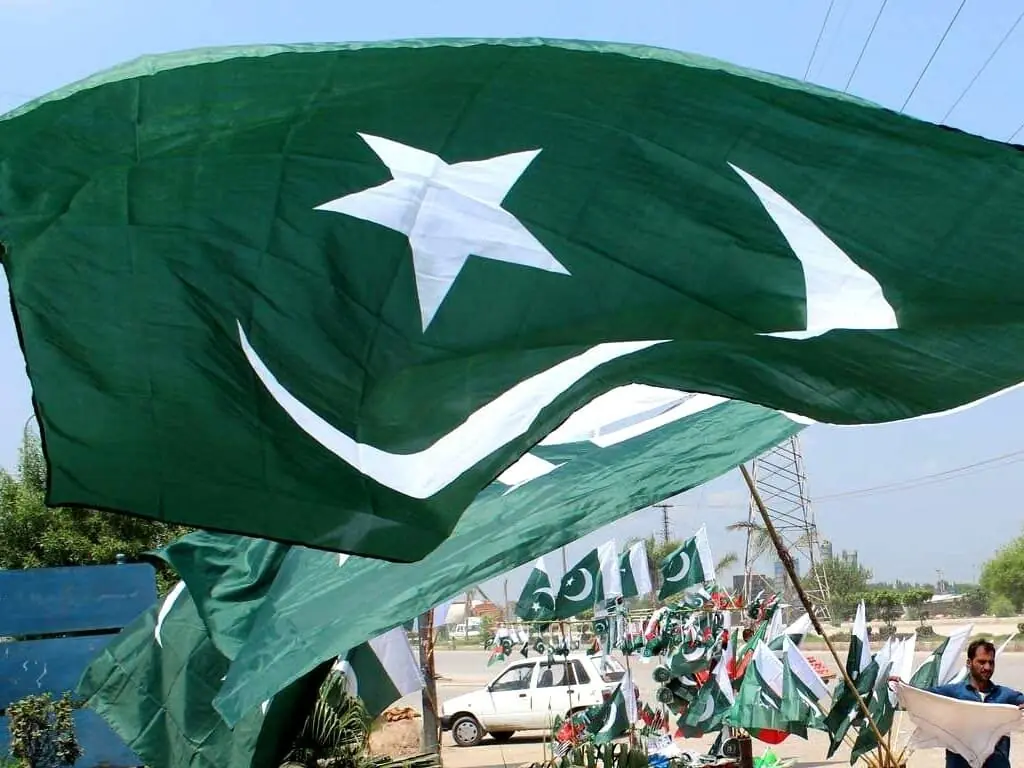

Nations must work together to rise and prosper. Divisions are always deadly. Unification has played a key role in the economic emancipation of People’s Republic of China (PRC). While individuals are important, it is the team that delivers at the end of the day.
There is a concept of Group Power and teamwork. In the words of Allama Iqbal; ‘Every individual is the rising star of the nation.’ In other words, no one can be left out to perish.
Dr Mehboob-ul-Haq, the great economic mind of the country, believed that the rising tide raises all boats big or small. Joint responsibility and domestic dimensions must be considered in tandem.
The Islamic Republic of Pakistan (IRP) started off well. In the formative years, nation building was taken seriously. Liaquat Ali Khan, the first Prime Minister (PM), left his estate behind to lead the country carved out of the Indian Sub-continent. Before settling his own family, he wanted to settle the hordes of refugees who came to settle in the new land.
After his assassination in 1951, the family had no roof over their head. Till today, they remain unsettled and continue to struggle for their property rights.
The unity of the nation was fractured with the first martial law of October 1958. Since then, nation-building has been stalled. Events of the seventies were tumultuous. Jinnah’s Pakistan was dismantled. What remained had to be rebuilt all over again.
Colonial institutions had to be reformed to restart the nation’s building process. Unfortunately, the period was short-lived. In July 1977, the boots were back. IRP has still not recovered from the Zia dark ages which caused complete collapse of civilian institutions.
The recent events in the Middle East have rekindled hope for the nation. There is a common belief that our time has finally come, but the big question is: Are we prepared for it? PRC under the leadership of Mao and then Deng took decades to prepare the nation and so did the Islamic Republic of Iran (IRI) whose Human Development Index is highest amongst the Ummah. While the sole superpower of the world is on the decline, PRC and Russia continue to rise. Both these regional emerging powers are in close proximity to IRP.
Recently, GREF (Golden Ring Economic Forum), an economic unification forum, celebrated its tenth founders’ day. By some estimates, this Golden Ring comprising China, Russia, Pakistan, Iran, Türkiye has a market potential of USD 6.5 trillion. It is indeed an Asian Century of which IRP is an important part mainly because of its location. The Belt & Road Initiative (BRI) of PRC has been launched from here.
Market access and connectivity play an important role in economic development. Pakistan, Iran, and Türkiye were part of RCD (Regional Co-operation for Development), which can now be expanded to include China and Russia to form a larger and effective economic bloc.
While IRI and Türkiye have liberated themselves of external influences, IRP continues to struggle. Major divisions still exist, which need to be bridged.
To achieve Group Power, everyone must be included and heard dissent must be tolerated not hounded and overruled. The Japanese believe in achieving consensus for which they are willing to be patient and open-minded. It is termed as ‘Consensual Decision-Making’ process.
In the US corporate world, the approach is consultative; the leader decides after taking inputs from subordinates. Ad hoc decisions with no inputs are short-lived and always difficult to implement.
In IRP implementation remains a big challenge as decisions suffer from exclusion of important players in the decision-making process. Without serious open-minded inclusion there can be no team or Group Power. For ‘Ma’arka-e-Taraqi’, the approach must be different, divisions must be understood and removed.
Copyright Business Recorder, 2026
The writer is an ex-Chairman Pakistan Science Foundation; email: [email protected]



















Comments