


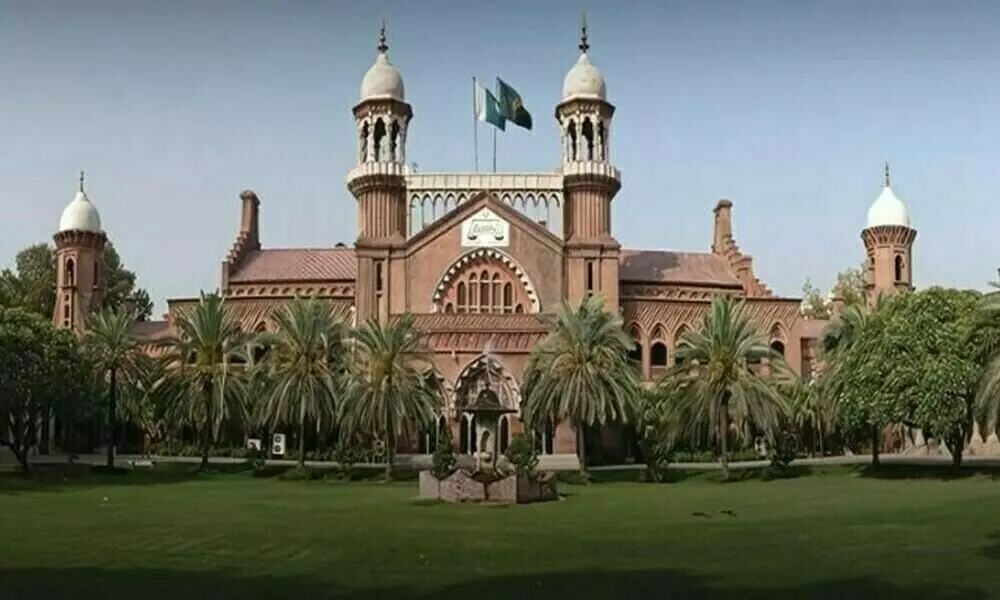

ISLAMABAD: The Lahore High Court, Multan Bench, has categorically held that agricultural income is beyond the taxing jurisdiction of the Federal Government and falls exclusively within the provincial domain under Entry 50 of the Fourth Schedule of the Constitution of Pakistan, 1973.
In this regard, the LHC has issued a judgment in the Income Tax Reference number 51 of 2024.
As per facts of the case the department attempted to tax declared agricultural income on which provincial agricultural income tax was not paid by treating it as “income from other sources” under section 111 and 39 of Income Tax Ordinance, 2001; however, the Court upheld the findings of CIR(A) and the Tribunal noted that the taxpayer had duly discharged provincial agricultural income tax liability after the assessment.
Rather, the Tribunal had observed that even if the agricultural income tax is not paid, then the assessing officer would refer the matter to provincial authorities instead of imposing federal income tax.
The LHC has decided the question of law against the department and in favor of the taxpayer. Therefore, the reference application has been dismissed.
The Lahore High Court has set a clear legal boundary on the taxation of agricultural income, ruling that once a taxpayer establishes payment of provincial agricultural income tax, the federal tax authorities cannot reclassify such income as “income from other sources” under the Income Tax Ordinance, 2001.
The judgment, issued by a division bench at the Multan Bench, comprising Justice Muhammad Raza Qureshi and Justice Ahmad Nadeem Arshad, dismissed a reference filed by the Commissioner Inland Revenue against Dr. Abid Hussain, upholding earlier relief granted to the taxpayer.
The case arose from tax year 2009, where the taxpayer had declared a total income of Rs. 801,696, including Rs. 750,000 as agricultural income claimed as exempt. The Federal Board of Revenue (FBR) authorities challenged this claim, arguing that the taxpayer had failed to demonstrate payment of agricultural income tax to the Punjab Revenue Department. Consequently, the assessing officer treated the declared agricultural income as taxable under Section 111 and recalculated the total taxable income at Rs. 1.55 million, raising a tax demand of Rs. 387,927.
The taxpayer contested the assessment before the Commissioner, Inland Revenue (Appeals), who set aside the tax demand in 2016. The Appellate Tribunal Inland Revenue (ATIR) later upheld this decision in January 2024, prompting the department to file a reference before the high court under Section 133 of the Income Tax Ordinance.
Before the court, the central question was whether the tribunal had erred in annulling the assessment order without considering the alleged non-payment of agricultural income tax, and whether such income could be taxed as “income from other sources.”
During the proceedings, the taxpayer produced documentary evidence, including challan Form No.32-A, confirming payment of agricultural income tax for the relevant period. The same document had also been presented before lower appellate forums.
Rejecting the department’s objections, the court held that once proof of payment of provincial agricultural income tax is placed on record, it carries evidentiary value unless proven otherwise. The bench observed that the department’s contention regarding the inadmissibility of such evidence was legally unsustainable.
The court further reinforced the constitutional position that taxation of agricultural income falls exclusively within the domain of provincial governments. Referring to settled law, including a 2023 judgment, the bench reiterated that the federal government has no authority to tax agricultural income under the Income Tax Ordinance, except in cases where a taxpayer fails to establish payment of provincial agricultural tax.
In such cases, the court noted, the amount may be treated as unexplained income and taxed accordingly. However, where proof exists, federal reclassification is impermissible.
The judgment also endorsed the tribunal’s view that accepting the department’s position would effectively result in double taxation, as the income would remain liable to provincial tax while also being subjected to federal tax — a situation deemed contrary to law.
Concluding that the taxpayer had successfully established payment of agricultural income tax, the court held that the findings of the appellate forums were valid and did not warrant interference. All questions of law were decided against the tax department, and the reference application was dismissed.
Copyright Business Recorder, 2026

























Comments