


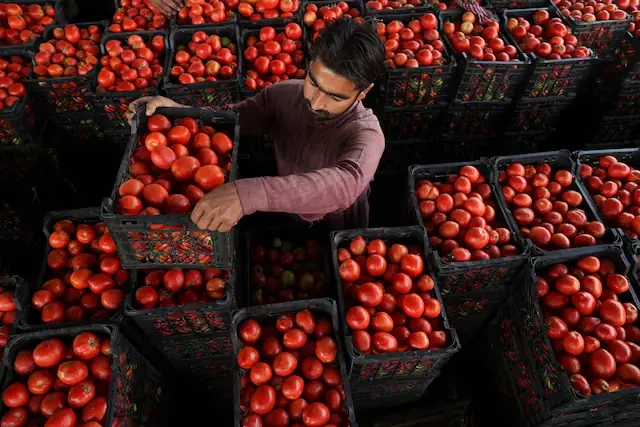
Pakistan is moving to align its trade and climate policies as part of measures to build a more resilient and sustainable food supply chain, amid growing concerns over efficiency, affordability, and climate-related disruptions.
In this regard, a meeting was held between Federal Minister for Commerce Jam Kamal Khan and Romina Khurshid Alam, who recently assumed charge as Coordinator to the Prime Minister on Climate Change, along with a delegation representing Pakistan’s food chain sector.
The meeting focused on aligning Pakistan’s trade and climate policies to ensure a resilient, efficient, and sustainable food supply chain amid evolving global and domestic challenges, read an official statement.
Participants emphasised that while food availability and accessibility remain relatively stable in the country, affordability and supply chain efficiency require immediate attention. The delegation highlighted the need to minimise disruptions to essential industries, particularly the dairy and food sectors, which are highly sensitive to energy fluctuations and logistical inefficiencies.
Jam Kamal underscored the government’s commitment to keeping economic activity uninterrupted, especially in critical sectors, while promoting smarter energy utilisation and improved logistics management. He noted that sustainable trade growth depends on strengthening domestic supply chains and enhancing coordination between federal and provincial stakeholders.
Meanwhile, Romina Khurshid stressed the importance of integrating climate resilience into food systems, pointing out that climate-smart agriculture, efficient resource utilisation, and reduced wastage are key to long-term food security. She highlighted the government’s focus on encouraging behavioural change, energy conservation, and environmentally responsible practices across industries.
The delegation also shared insights on fuel consumption patterns, transport inefficiencies, and the need for optimised freight systems, including better utilisation of trucking capacity and greater reliance on rail networks. Both sides agreed that policy measures should focus on efficiency improvements rather than restrictive approaches, ensuring that economic momentum is maintained.
Special attention was given to promoting alternative mobility solutions, digital supply chain management, and public-private collaboration to enhance productivity while reducing environmental impact.
The meeting concluded with a consensus on developing a coordinated framework between commerce and climate institutions, aimed at strengthening Pakistan’s food systems, supporting industry continuity, and advancing sustainable economic growth.















Comments
Comments are closed for this article.