



NEW YORK: US natural gas futures eased about 1percent on Wednesday as the gas market followed a drop in global energy prices on reports of a possible plan that could end the Iran war.
Front-month gas futures for April delivery on the New York Mercantile Exchange fell 3.0 cents, or 1.0percent, to USD2.913 per million British thermal units.
In the cash market, average prices at the Waha Hub in West Texas remained in negative territory for a record 34 days in a row as pipeline constraints trapped gas in the Permian, the nation’s biggest oil-producing shale basin.
Average gas output in the US Lower 48 states rose to 109.6 billion cubic feet per day so far in March, up from 109.2 bcfd in February, according to LSEG data. That compares with a monthly record high of 110.6 bcfd in December 2025.
Even though March is part of the winter season when utilities usually pull gas from storage to meet heating demand, mostly mild weather in recent weeks has allowed energy firms to start injecting gas into storage.
But analysts forecast energy firms likely made their last storage withdrawal of the winter during cooler weather last week, cutting stockpiles from about 3percent above normal during the week ended March 13 to near-normal levels during the week ended March 20.
Looking forward, meteorologists forecast the weather would remain warmer than normal through April 9, keeping heating demand low in coming weeks.
LSEG projected average gas demand in the Lower 48 states, including exports, would rise from 110.8 bcfd this week to 111.3 bcfd next week. Those forecasts were higher than LSEG’s outlook on Tuesday.
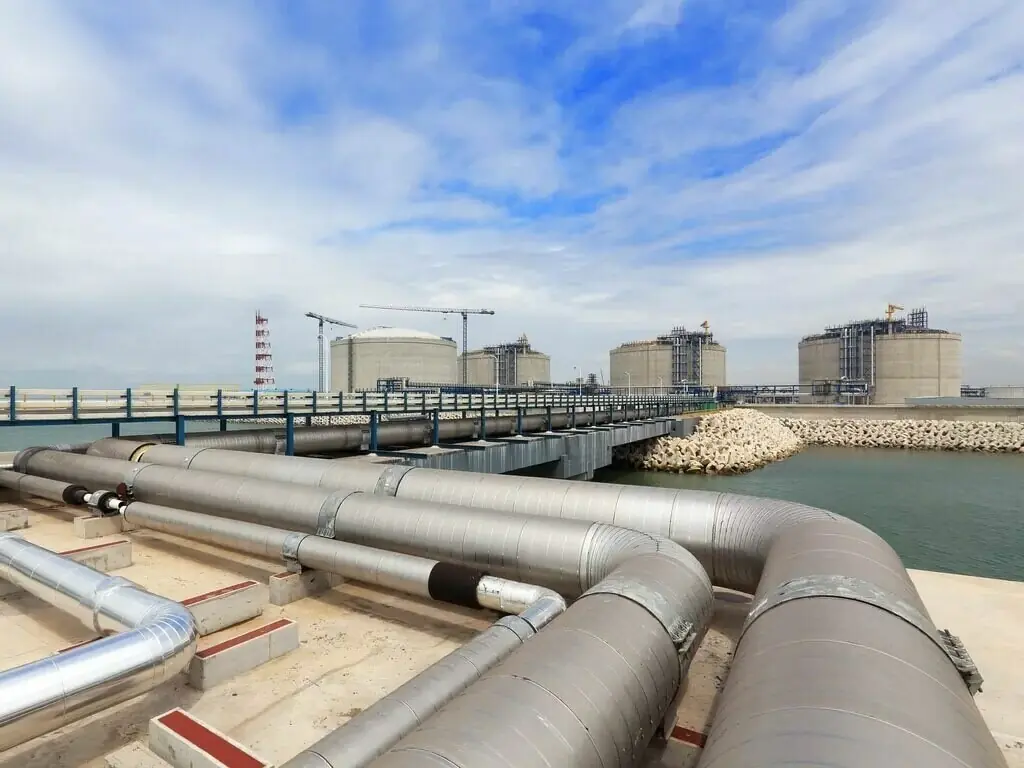
Average gas flows to the nine big US liquefied natural gas export plants slid to 18.5 bcfd so far in March, down from a record 18.7 bcfd in February. The US became the world’s biggest LNG exporter in 2023, surpassing Australia and Qatar, as surging global prices fed demand for more low-cost US gas. Past gas price spikes were due primarily to supply disruptions linked to Russia’s 2022 invasion of Ukraine.
In recent weeks, the war in Iran caused global gas prices to surge again by knocking out LNG supplies from Qatar, which provides about 20percent of the world’s LNG.
Prices in the US have not reacted to the Iran war by nearly as much as prices elsewhere.
The US produces all the gas it needs domestically and US LNG plants are already operating at maximum capacity.
So, no matter how high global gas prices go, the US cannot export much more LNG.
Since the US and Israel started bombing Iran on February 28, US gas prices have climbed about 1percent, versus around 55percent in Europe and 91percent in Asia.
Around the world, gas was trading near USD17 per mmBtu at the Dutch Title Transfer Facility benchmark in Europe and USD21 at the Japan-Korea Marker benchmark in Asia.
























Comments
Comments are closed for this article.