


Bernstein warns Indian rupee could breach 98/USD, cuts Nifty target on Iran conflict risks
- The firm’s base case is for hostilities in the Middle East to conclude within a month
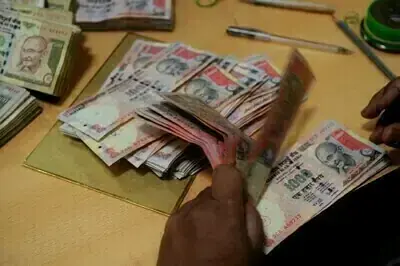
Spillovers from war in the Middle East threaten to push the Indian rupee past 98 per dollar and hurt Indian stocks, according to analysts at Bernstein, highlighting the country’s vulnerability to shocks stemming from a sharp rise in energy prices.
The firm’s base case is for hostilities in the Middle East to conclude within a month, while its bear case bakes in the war extending for a year.
If the conflict lasts much of 2026, “the repercussions could be catastrophic,” Bernstein analysts’ Venugopal Garre and Nikhil Arela said in a Wednesday note, citing supply risks, double-digit inflation and economic growth in the 2%-3% range.
The base case would leave India’s benchmark Nifty 50 index at around 26,000 by year-end, a 2% cut from Bernstein’s earlier target.
The bearish scenario, meanwhile, could push the index below the 20,000 mark and weaken the Indian rupee beyond 110 to the dollar, which would be about 17% weaker than current levels of near 94.
Even if a lengthy conflict is avoided, the Bernstein analysts see a realistic chance of the Indian rupee breaching 98 per dollar this year, with pressure primarily stemming from India’s current account balance, which for the final quarter of fiscal year 2025-26 is expected to be in a deficit.
“One thing looks increasingly possible: if the crude levels sustain even in April, India will see its first real test in (the) last 12-13 years,” the note said.
India’s Nifty and Sensex indexes have both lost 7% in March, while the Indian rupee has hit successive record lows since the start of the U.S.-Israeli war with Iran, which sent crude oil prices surging and severely disrupted energy exports from the Middle East.
The worst-case scenario, according to Bernstein, would resemble India’s experience after the Great Financial Crisis of 2008 which led to a sharp cut in India’s economic growth, sent inflation soaring and sparked a sharp depreciation in the local currency.
“In the end, it all boils down to geopolitics rather than fundamentals, since those start dictating the markets overwhelmingly during times of distress like these, and fundamentals go out the window,” the firm’s India strategy note said.
















Comments
Comments are closed for this article.