


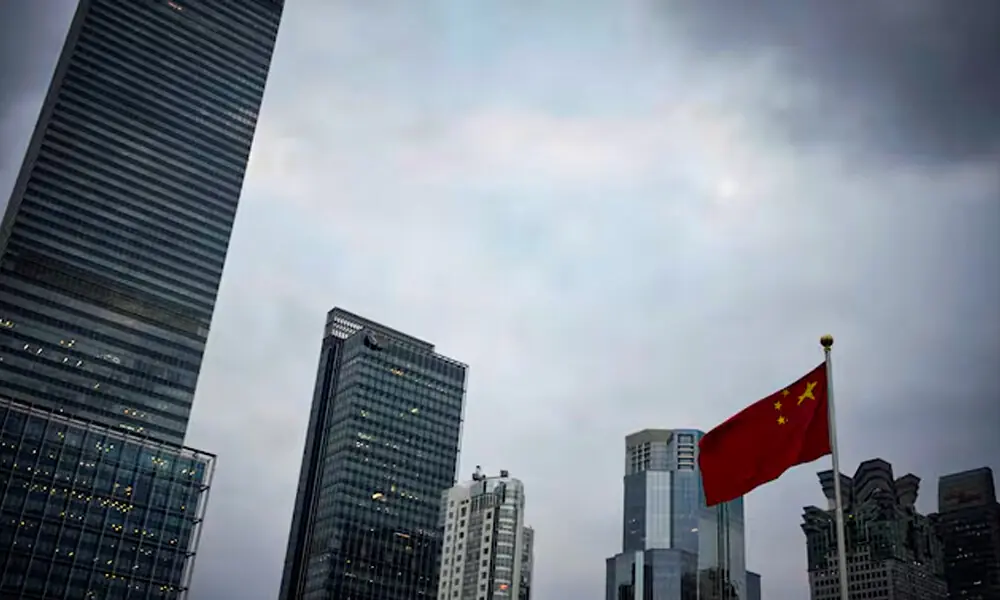

China’s march forward continues. The People’s Republic has embarked on an economic transition based on technological self-reliance to be achieved by 2030. It is part of their five-year development plan (2025 to 2030). In October last year while attending the International Pittsburgh Coal Conference in Beijing, I came to know that the country intends to stop the use of coal by the year 2030.
Little did I know that there was an all-inclusive leap forward program by this deadline. After the Communist revolution in 1949, the People’s Republic of China (PRI) has followed a clear road map for advancement of its national objectives. Clear focus has been on socio-economic development and common good. Poverty has been tackled as a foremost challenge to be overcome.
Through its ambitious BRI (Belt & Road Initiative) PRI plans to globally expand the distribution network of its products. CPEC (China Pakistan Economic Corridor) is part of this effort for global connectivity. Economic transition is only possible through technological self-reliance; there is clarity at all levels. Unfortunately, in the land of the pure no such road map exists.
Pakistan opened its innings with clearly documented five-year development plans. Planning Commission of Pakistan was well manned with experts. It was headed by Deputy Chairman reporting directly to the Chairman who was also the President of the republic. Assessment of needs was carried out followed by implementation either through PIDC (Pakistan Industrial Development Corporation) or private sector initiatives. Entire framework was prepared well before the October 1958 takeover by the Field Marshal.
Jinnah decided to follow the Western route of technology development in which scientific research in a laboratory was the starting point followed by application and technological understanding to produce marketable products.
It was a linked chain starting with science leading to technology and finally production and marketing. After the Second World War (WW II) study of physics was dominant. Jinnah wrote to the leading scientists of the time. Dr Rafi Chaudhry was identified who after completing his PhD from Cambridge University was teaching at Aligarh. On the invitation of the father of the nation Dr Chaudhry came to Pakistan to head the Physics department at Government College.
He established the first high tension Physics laboratory in Asia. It is located across the road from the main entrance of the Civil Secretariat complex. Dr Chaudhry was the father of Physics in the new land that ultimately emerged as the 7th Nuclear power of the world. Dr Abdul Salam, the Nobel laureate, was his student. Pakistan was the first country in Asia to go into space followed by production of Silicon for Solar cells and ball point pens.
Fortunately, the ball-point pens were developed and produced in the private sector by Syed Engineers led by the brilliant engineer Syed Ajmal Hussain. Unfortunately, we were unable to use our Silicon for commercial production of Solar cells in Asia. PRI now leads the world in this area.
While our scientific research remained restricted to technical publications China focused on marketable products. There was a clear road map to reach the marketplace for commercialization and application of research.
As Chairman Pakistan Science Foundation (PSF), I represented the country in several international forums. In one of the symposiums the Deputy Minister of Science and Technology presented China’s road map for development.
He knew the subject well but could not express himself in English while our head of the delegation only had command of the language. Technocrats are needed to develop technology as such all technical ministries should be headed by them. Compared to PRI our road map for technological self-reliance is seriously flawed without which economic transition will remain a pipe dream.
Technological self-reliance is another misunderstood subject in the land of the pure. Iran learnt it the hard way. After the revolution in 1979 the Iranian Air Force (IAF) was grounded mainly due to lack of availability of small consumable and replaceable parts of USA origin.
The Semiconductor Research Centre in Tehran was set-up which worked closely with the manufacturing facility in Sheraz to overcome this dependence. Today the country is producing its indigenous drones and missiles. The latest F-35 series of fighter aircrafts of USAF (United States Air Force) has several electronic components produced commercially in Japan.
In case of disruption of supplies, they can be produced locally. While the US has technological self-reliance it lacks commercial viability for large scale production of these vital parts. Today PRI has emerged as the manufacturer of the world now it desires to develop its own technologies by 2030. It plans to lead not follow.
In a world driven by technology only change is permanent. Management of Technology (MOT) basically requires understanding of change mechanisms. Status-quo is no longer an option.
Those who come in the way of change in fact inflict harm. Despite good intentions of the individuals at the helm, nations continue to suffer at the altar of stagnation managed and defended by champions of status-quo. Like PRI the IRP needs an effective road map for technological self-reliance.
Copyright Business Recorder, 2026
The writer is an ex-Chairman Pakistan Science Foundation; email: [email protected]




















Comments
Comments are closed for this article.