


EDITORIAL: Pakistan’s ambassador to the United Nations was right to reject criticism of Islamabad’s counter-terrorism strikes inside Afghanistan and to highlight the uncomfortable reality behind the current tensions: militant groups attacking Pakistan continue to operate from Afghan territory while India has repeatedly sought to exploit that environment to destabilise Pakistan through proxy networks.
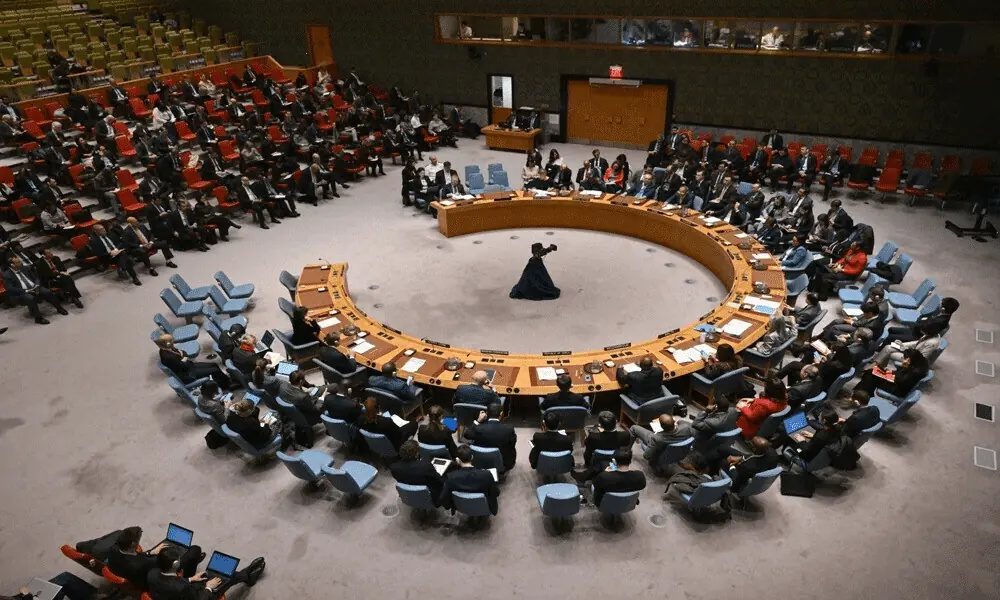
The exchange at the UN Security Council followed criticism from India and remarks by Afghanistan’s UN mission representative regarding Pakistan’s cross-border strikes. Islamabad’s response was direct.
The operations conducted in late February targeted camps and support facilities belonging to groups such as the Tehreek-e-Taliban Pakistan and ISIL-K, organisations responsible for repeated attacks on Pakistani civilians, security personnel and infrastructure. Pakistan’s envoy emphasised that these operations were carried out under the recognised right of self-defence and were directed exclusively at militant infrastructure threatening Pakistan.
The real issue extends far beyond the legal debate over those strikes. It concerns the continued presence of terrorist organisations inside Afghanistan and the failure of the authorities in Kabul to dismantle them despite repeated assurances.
For years Pakistan has urged the Afghan Taliban to honour commitments that Afghan territory would not be used to launch attacks against neighbouring states. Yet cross-border infiltration and militant operations have continued, imposing a heavy toll on Pakistan’s security and stability.
This reality has been acknowledged in multiple international assessments. United Nations monitoring reports have repeatedly pointed to the presence of militant groups in Afghanistan, including the TTP and ISIL-K. These organisations exploit Afghanistan’s fragile security environment to organise and launch attacks across the region. Pakistan has therefore found itself confronting threats that originate beyond its borders but strike directly at its citizens and institutions.
What makes the situation more troubling is the role that India has played within Afghanistan’s security landscape. Pakistan’s representative at the Security Council did not hesitate to point out what Islamabad has long maintained: New Delhi has used Afghanistan as a platform to advance a destabilisation strategy against Pakistan. Pakistani authorities have consistently argued that India provides support and encouragement to militant groups hostile to Pakistan, particularly the TTP and the Balochistan Liberation Army.
India’s intervention during the Security Council debate reflected a predictable line of argument. Its representative condemned Pakistan’s air strikes and referred to civilian casualties while remaining silent on the existence of militant networks that repeatedly target Pakistan from Afghan territory. That selective approach avoids confronting the central issue that has driven the current escalation.
Pakistan’s response must therefore be understood within the context of national defence. No country can indefinitely absorb attacks originating from across its borders without taking action to neutralise the threat. Islamabad has consistently maintained that its operations are directed solely at terrorist camps and logistical bases and not against the Afghan population.
Pakistan’s dispute is therefore not with the people of Afghanistan, who share longstanding social, economic and cultural ties with their neighbours across the border. The problem lies with militant organisations that exploit Afghan territory and with the persistent failure to dismantle their infrastructure. Unless these sanctuaries are eliminated, tensions along the border will continue to recur.
China’s offer to help ease tensions between Pakistan and Afghanistan reflects growing recognition that the situation requires careful management. Dialogue and mediation remain important tools for reducing tensions.
Yet diplomacy can only produce lasting stability if it addresses the central security concern that Pakistan has repeatedly raised: the presence of militant networks operating from Afghan territory.
Pakistan’s message at the United Nations was therefore both necessary and overdue. Terrorist sanctuaries along its western frontier cannot be ignored, and continued attacks on its territory will inevitably provoke a response. Regional stability will depend on whether the Afghan authorities confront these militant networks and whether external actors abandon attempts to manipulate Afghanistan’s security environment against Pakistan.
Copyright Business Recorder, 2026

























Comments
Comments are closed for this article.