


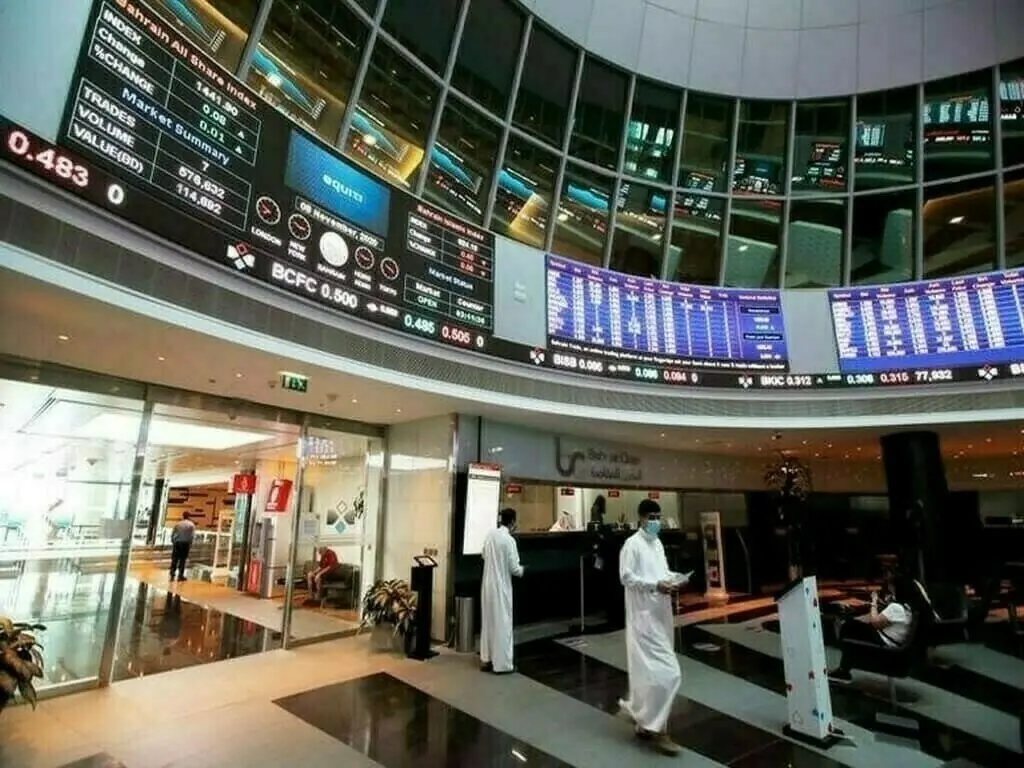

DUBAI: Most Gulf stock markets ended higher on Tuesday, mostly led by financial shares, after President Donald Trump said the US-Israeli war on Iran could end soon even as mutual threats persisted.
Dubai’s main share index jumped 2 percent, led by an 8.3 percent surge in top lender Emirates NBD (ENBD) - its biggest intraday gain since December 2024.
Among other gainers, Dubai Financial Market, which operates the emirate’s stock exchange, jumped 8.2 percent. However, the gains were limited by a 4.1 percent slide in blue-chip developer Emaar Properties and a 3.2 percent decrease in budget airliner Air Arabia amid ongoing caution over the Middle East conflict.
In Abu Dhabi, the index gained 1.4 percent, helped by a 5.8 percent rise in Abu Dhabi Islamic Bank
and an 8.7 percent surge in Abu Dhabi Commercial Bank . In steps aimed at stabilizing markets, the UAE Securities and Commodities Authority said last week that Abu Dhabi’s ADX and Dubai’s DFM exchanges suspended trading on March 2 and 3, while the two exchanges said they would temporarily set a 5 percent floor on securities declines.
The Qatari index advanced 2.5 percent, with the Gulf’s biggest lender Qatar National Bank gaining 4.3 percent and petrochemical maker Industries Qatar up 4.6 percent. Expectations of a near-term resolution could improve sentiment, which has recently turned risk-off. While regional markets may remain sensitive to ongoing frictions, firmer sentiment could help establish a floor and support a sustained rebound, said Joseph Dahrieh, Managing Director at Tickmill.
The cost of insuring against default on sovereign debt issued by several countries in the region fell on Tuesday, with five-year CDS spreads tightening after rising sharply on Monday. Bahrain’s five-year CDS tightened 21 basis points (bps) to 249 bps, Saudi Arabia’s fell 6 bps to 82 bps, while Egypt’s and Dubai’s both narrowed 11 bps, to 357 bps and 61 bps respectively, S&P Global Market Intelligence data showed.
Saudi Arabia’s benchmark index gained 0.9 percent, with Al Rajhi Bank rising 2 percent.
Investors have been adjusting their portfolios away from the UAE market as they reassess its relatively low risk premium, especially after the strong rally seen earlier this year before the conflict, said Chiro Ghosh, head of research at SICO bank.




















Comments
Comments are closed for this article.